

Aluminium sheet, chequer plate, sections, bar, flat bar and angle
Our aluminium range covers plain sheet, chequer plate and perforated sheet, sections, round and square bar, flat bar, a T section and our own cold-formed angles. Most of our work is in grade 5754 (EN AW-5754), which our product names often give under its Polish designation, PA11. Three of the sections are listed as 6060, and two of the round bars as 6082 and 2007 respectively. This page sets out the sizes we stock, how the alloys and tempers differ, how much aluminium sheet weighs, what to bear in mind when cutting and welding, and how to combine aluminium with stainless steel without galvanic corrosion. Aluminium sheet cut to size can be ordered in our cut-to-size sheet calculator, which shows the price instantly. We deliver within Poland only, and prices are in Polish złoty (PLN).
Aluminium products and sizes in our range
Most product names state the grade, but not all of them do. If it is missing and the part is to be welded, bent or anodised, check with our customer service team before you order.
| Product | Sizes available | Grade stated in product name |
|---|---|---|
| Aluminium sheet (plain) | 1000 × 2000, 1250 × 2500 and 1500 × 3000 mm sheets, 1–10 mm thick | PA11 or 5754 (not on every item) |
| Aluminium chequer plate (treadplate) | 3 mm thick, 1000 × 2000, 1250 × 2500 and 1500 × 3000 mm sheets | PA11 (1250 × 2500 and 1500 × 3000 mm) |
| Aluminium perforated sheet | 1000 × 2000 mm sheet, 1, 1.5 and 2 mm thick; hole patterns RV 3-4, RV 4-6, RV 5-8, RV 10-15, QG 8-12, QG 10-15 | – |
| Aluminium sections | 30 × 20 × 2, 30 × 30 × 2, 40 × 20 × 2, 40 × 40 × 2, 50 × 30 × 3, 60 × 20 × 2, 60 × 40 × 3, 60 × 40 × 4, 70 × 50 × 4, 80 × 80 × 4, 80 × 80 × 5, 100 × 60 × 3, 140 × 60 × 4, 180 × 60 × 3 mm (the last figure is the wall thickness) | 6060 for 50 × 30 × 3, 140 × 60 × 4 and 180 × 60 × 3 |
| Aluminium round bar | Ø 25, Ø 50, Ø 180, Ø 200 mm | EN AW-2007 (Ø 180), 6082 (Ø 200) |
| Aluminium square bar | 40 × 40 mm | – |
| Aluminium flat bar | 30 × 20, 40 × 15, 70 × 50, 100 × 40 mm | – |
| Aluminium T section | 30 × 30 × 3 mm | – |
| Cold-formed aluminium angle | chequered inner face, 3 mm thick; equal angles from 25 × 25 to 100 × 100 mm in 5 mm steps; unequal angles 40 × 20, 60 × 25, 90 × 60 and 120 × 150 mm | – |
Plain aluminium sheet: sheet sizes and thicknesses
| Sheet size | Thicknesses available (mm) |
|---|---|
| 1000 × 2000 mm | 1, 1.5, 2, 3, 5, 8, 10 |
| 1250 × 2500 mm | 1, 1.5, 2, 2.5, 3, 4 |
| 1500 × 3000 mm | 1, 1.5, 3 |
Our cold-formed aluminium angles are our own products. They are sold in set lengths stated in the product description: 1 m as standard, with selected sizes also in 1.5, 2, 2.4, 2.5 and 3 m lengths. Size and length are given in the product name and description. Aluminium Camlock couplings are covered on our page about hygienic fittings.
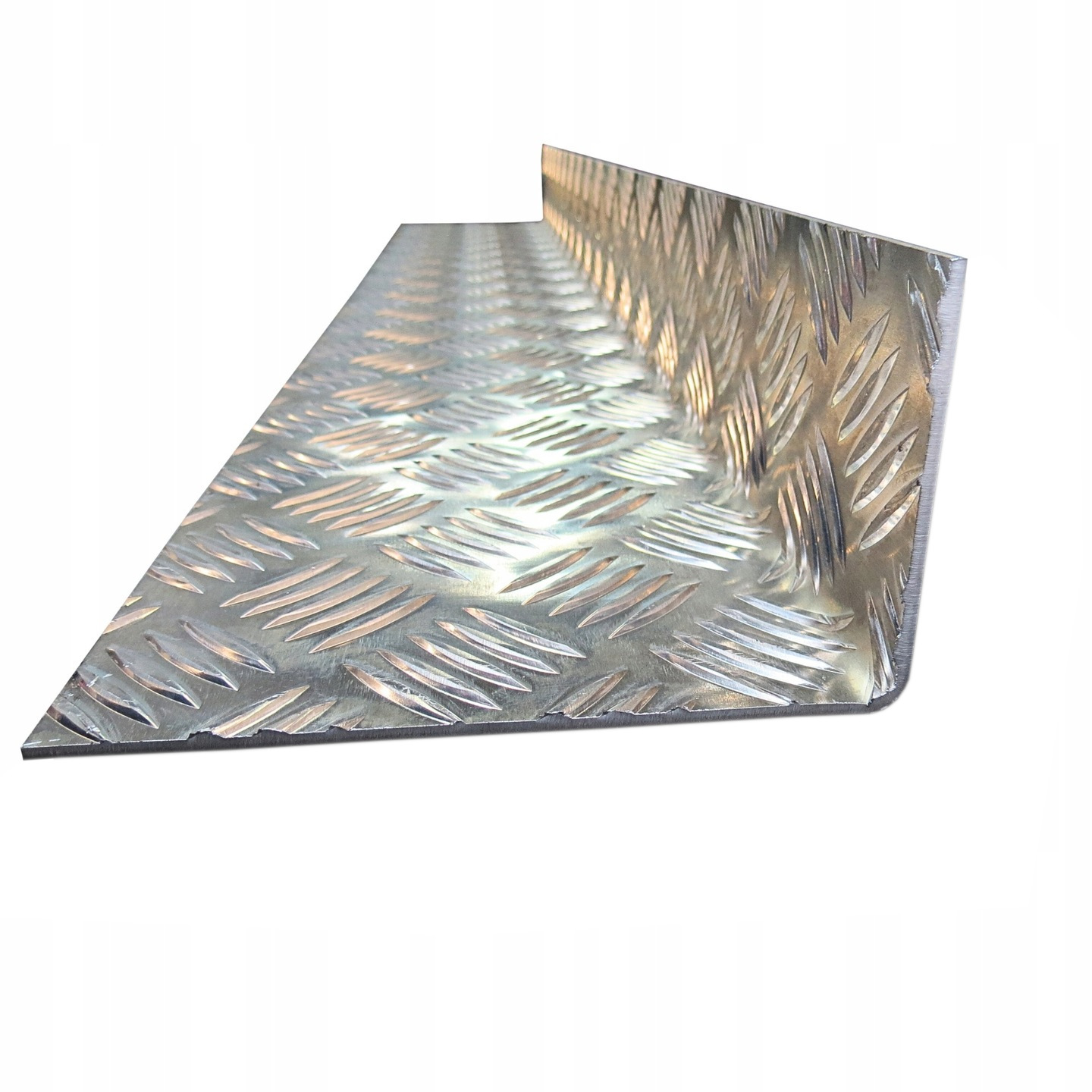
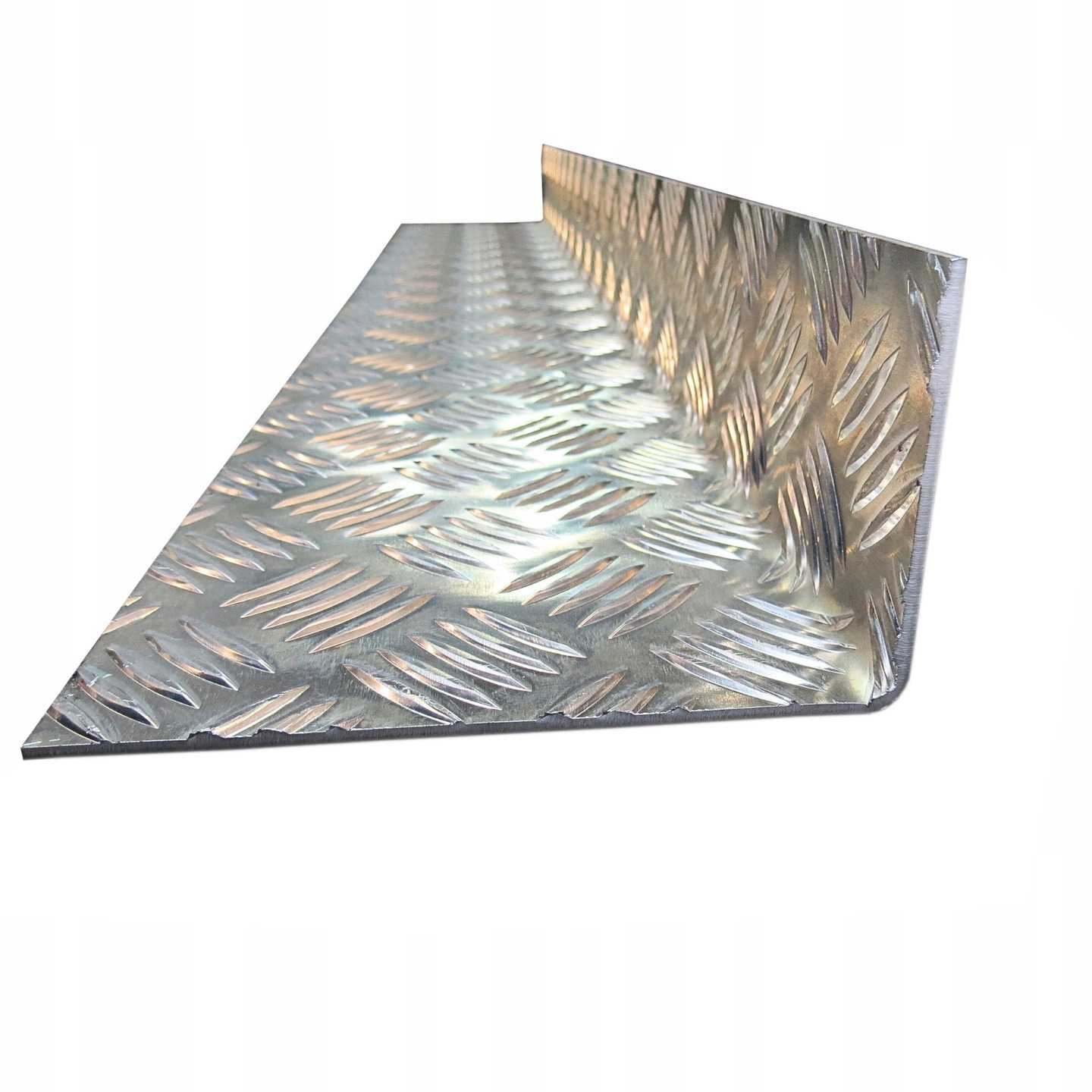
Kątownik aluminiowy ryflowany wewnętrznie 100x100x3
In stock · 9989 pcs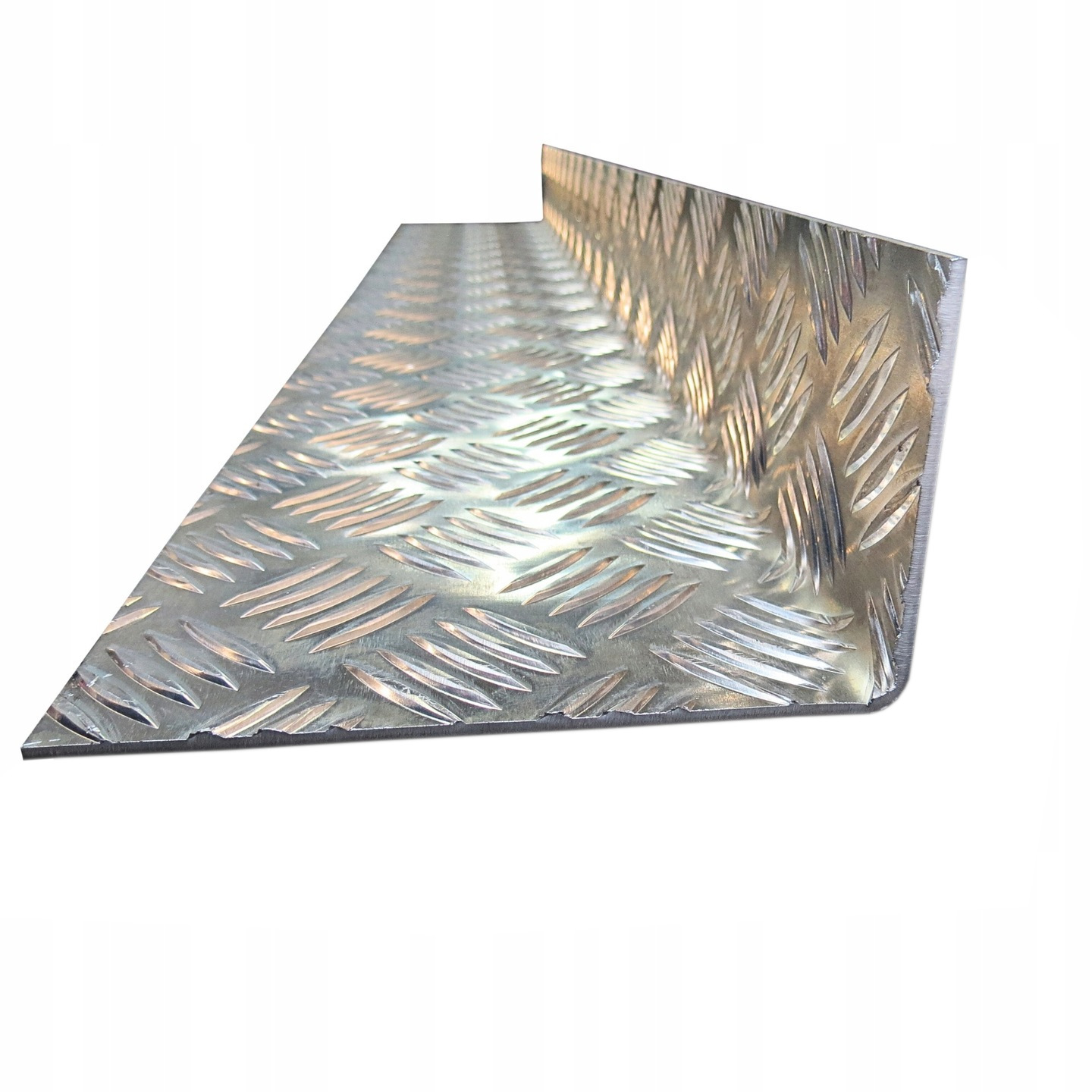
Kątownik aluminiowy ryflowany wewnętrznie 100x100x3 150CM
In stock · 9980 pcs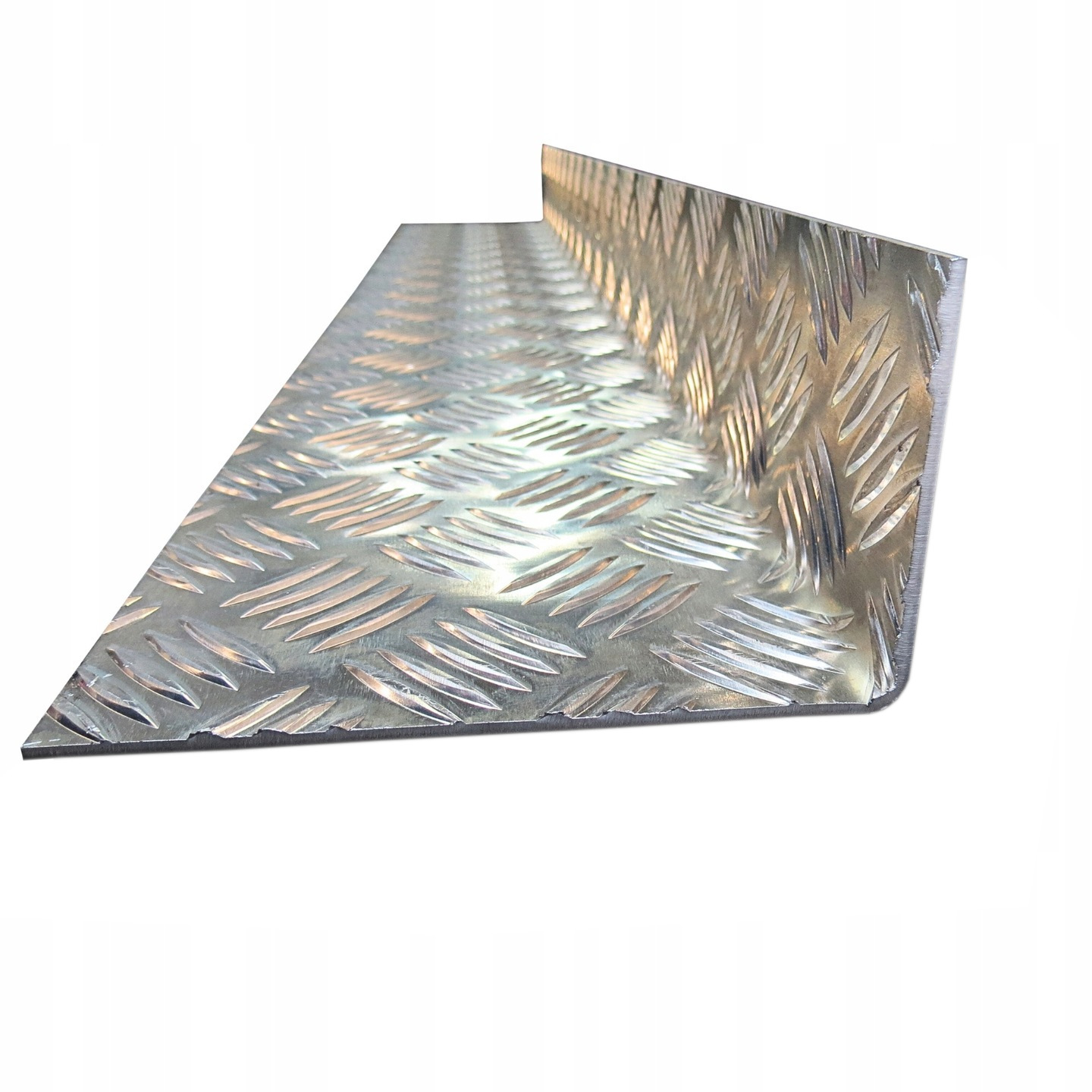
Kątownik aluminiowy ryflowany wewnętrznie 100x100x3 200CM
In stock · 9990 pcs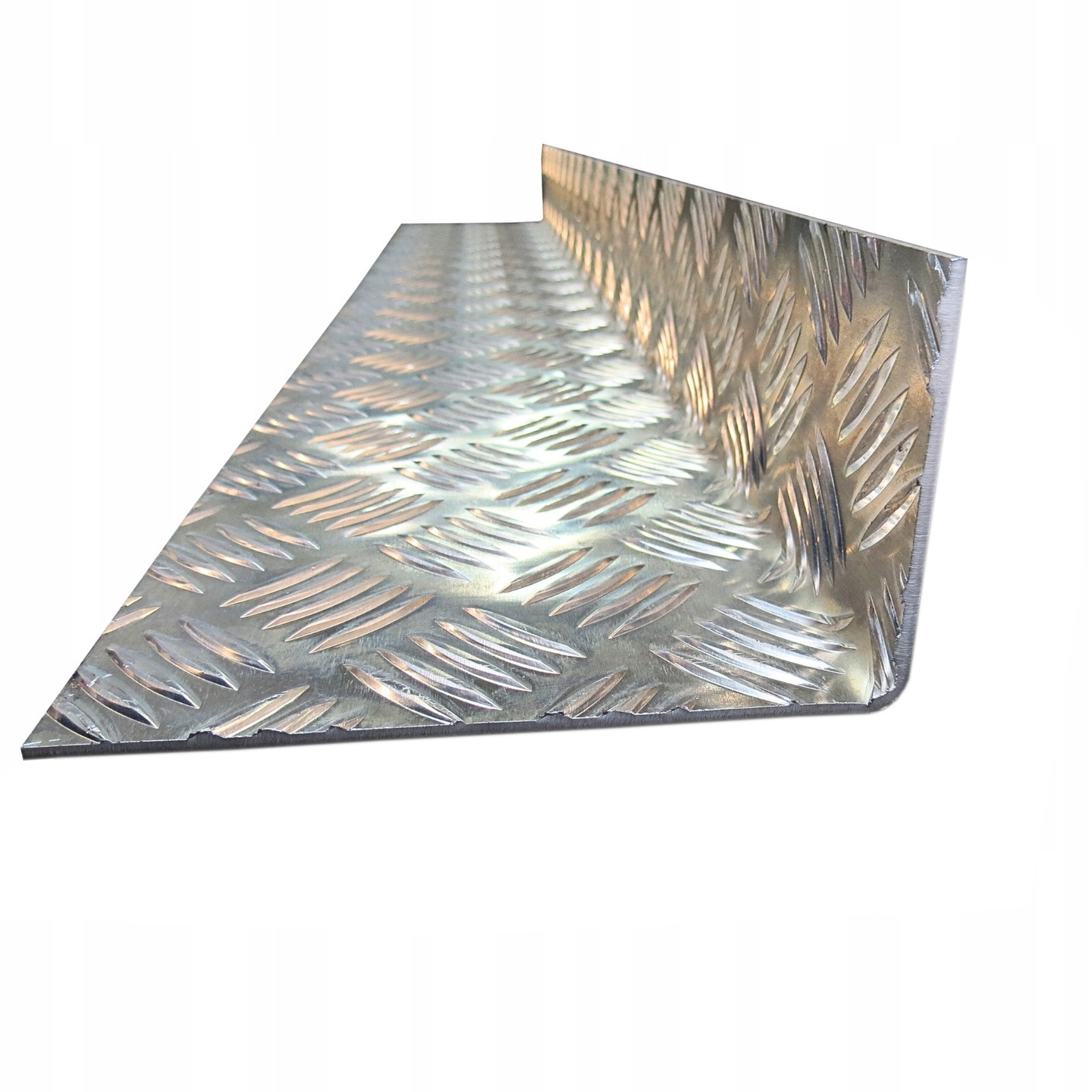
Kątownik aluminiowy ryflowany wewnętrznie 120x150x3
In stock · 10000 pcs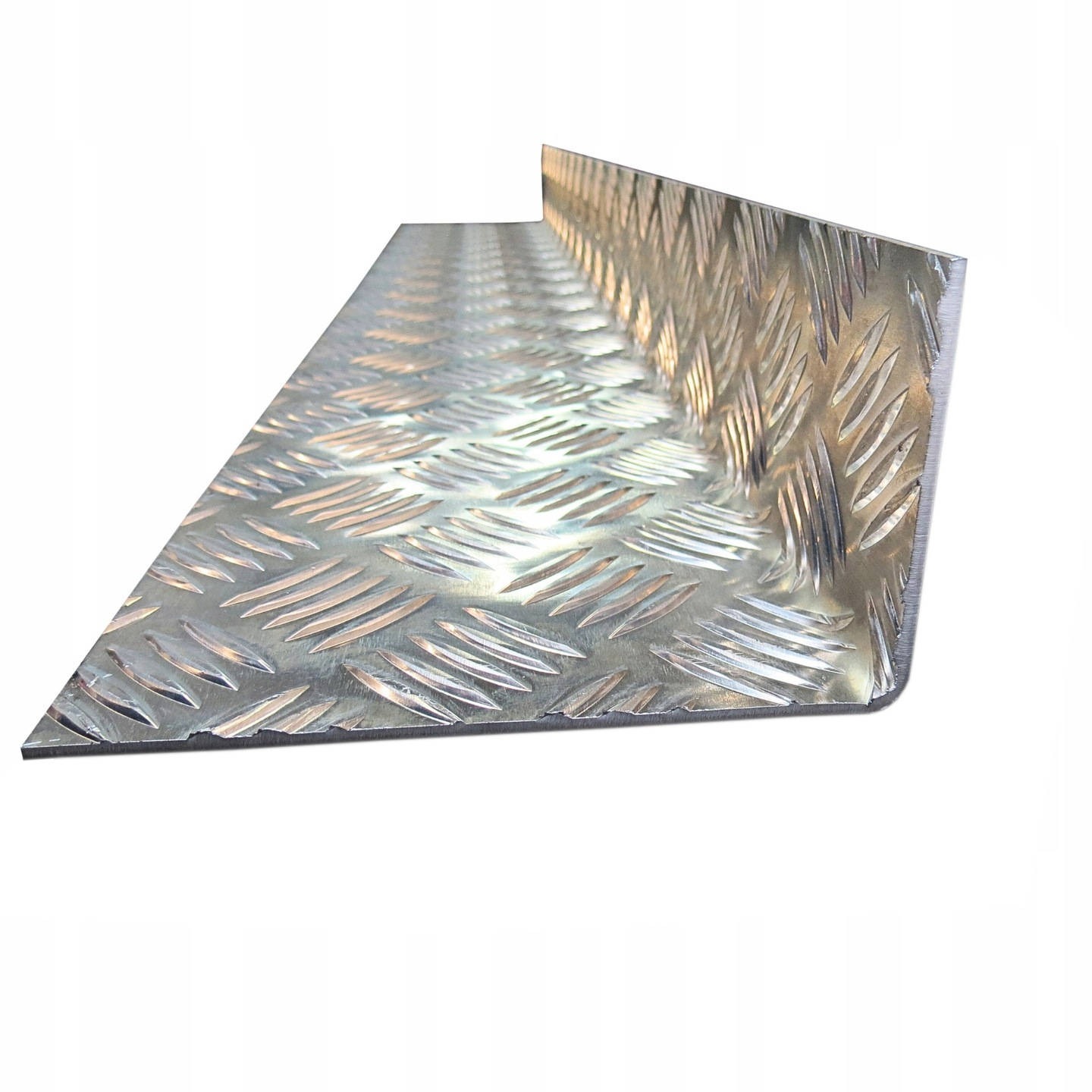
Kątownik aluminiowy ryflowany wewnętrznie 120x150x3 150CM
In stock · 9986 pcs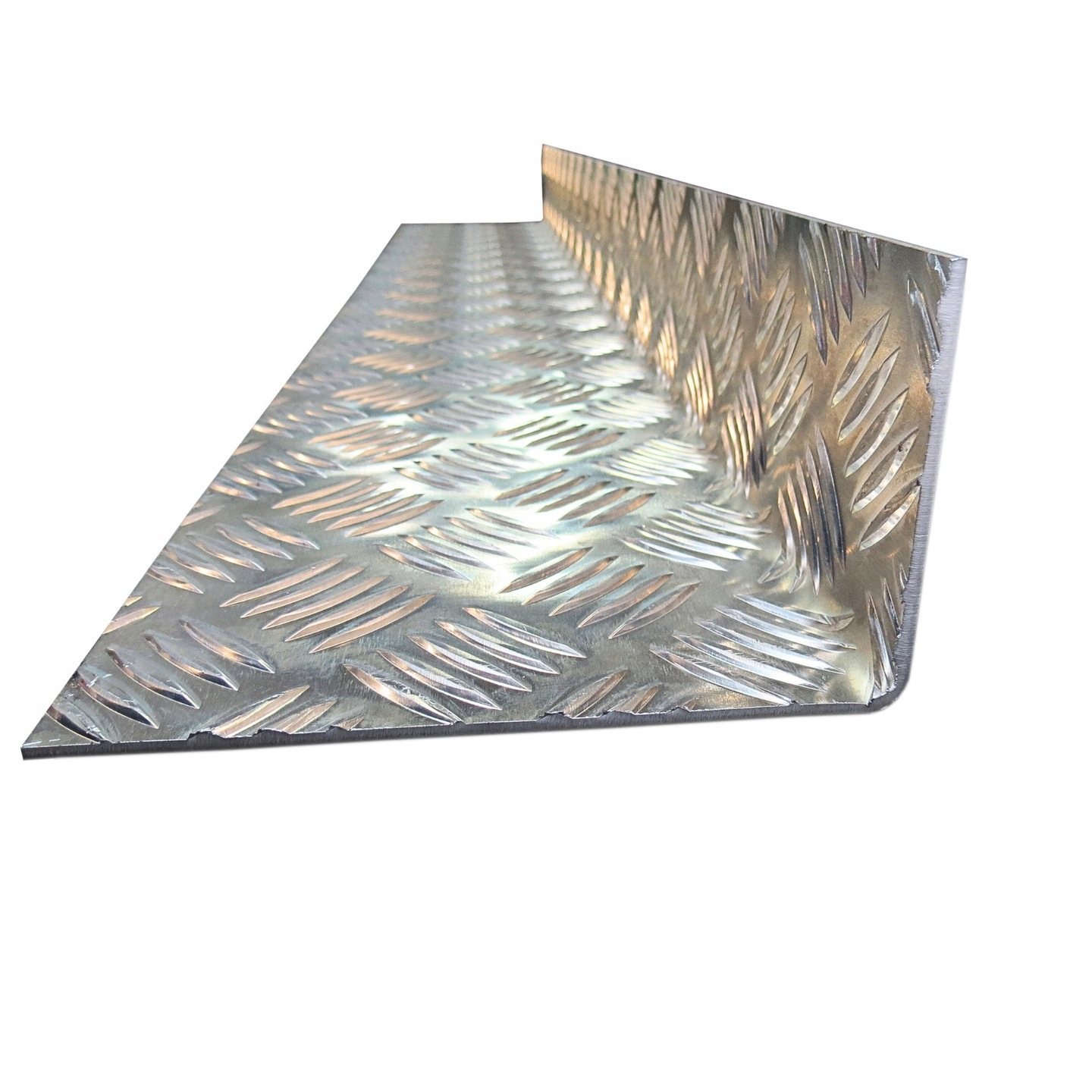
Kątownik aluminiowy ryflowany wewnętrznie 25x25x3
In stock · 9994 pcs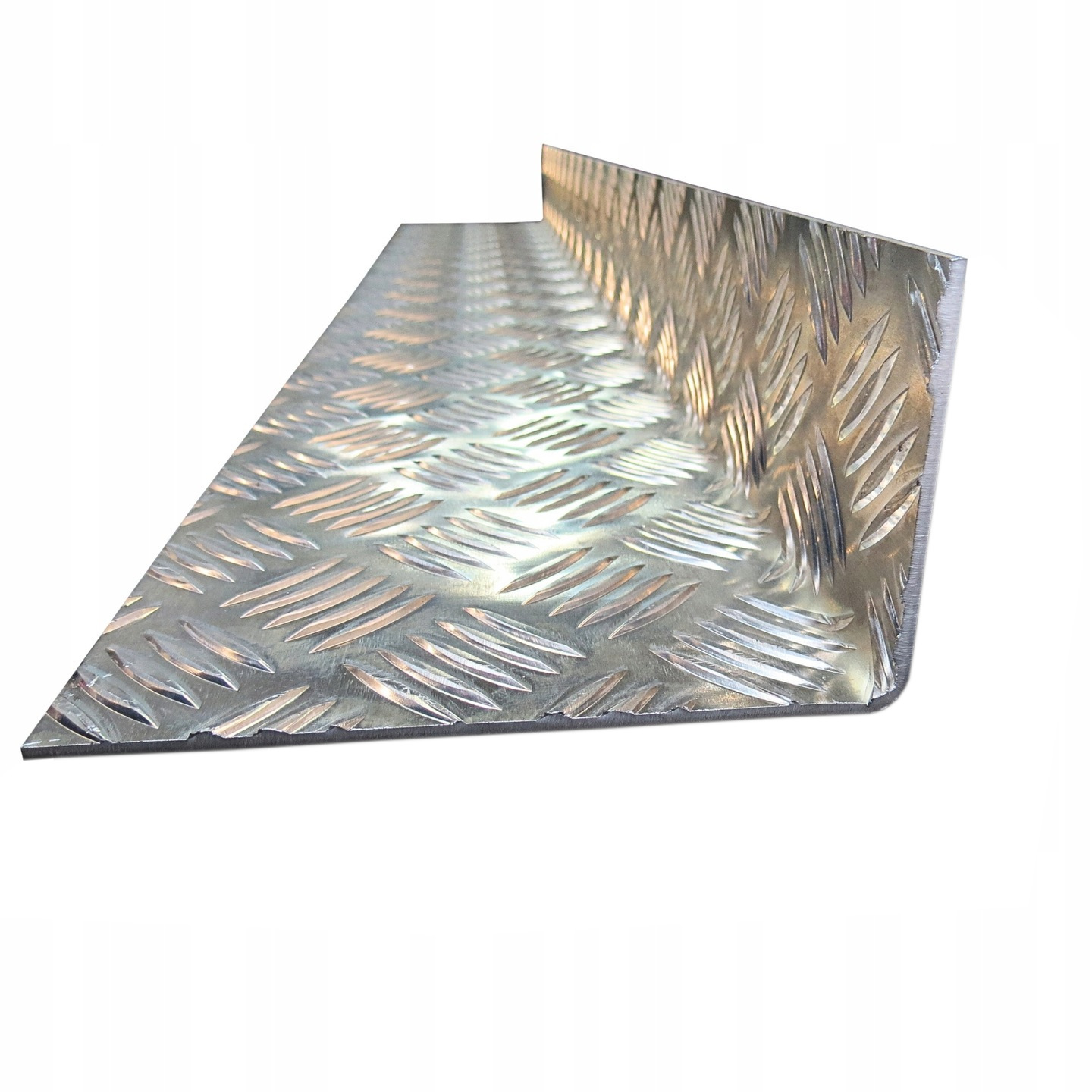
Kątownik aluminiowy ryflowany wewnętrznie 30x30x3
In stock · 9969 pcs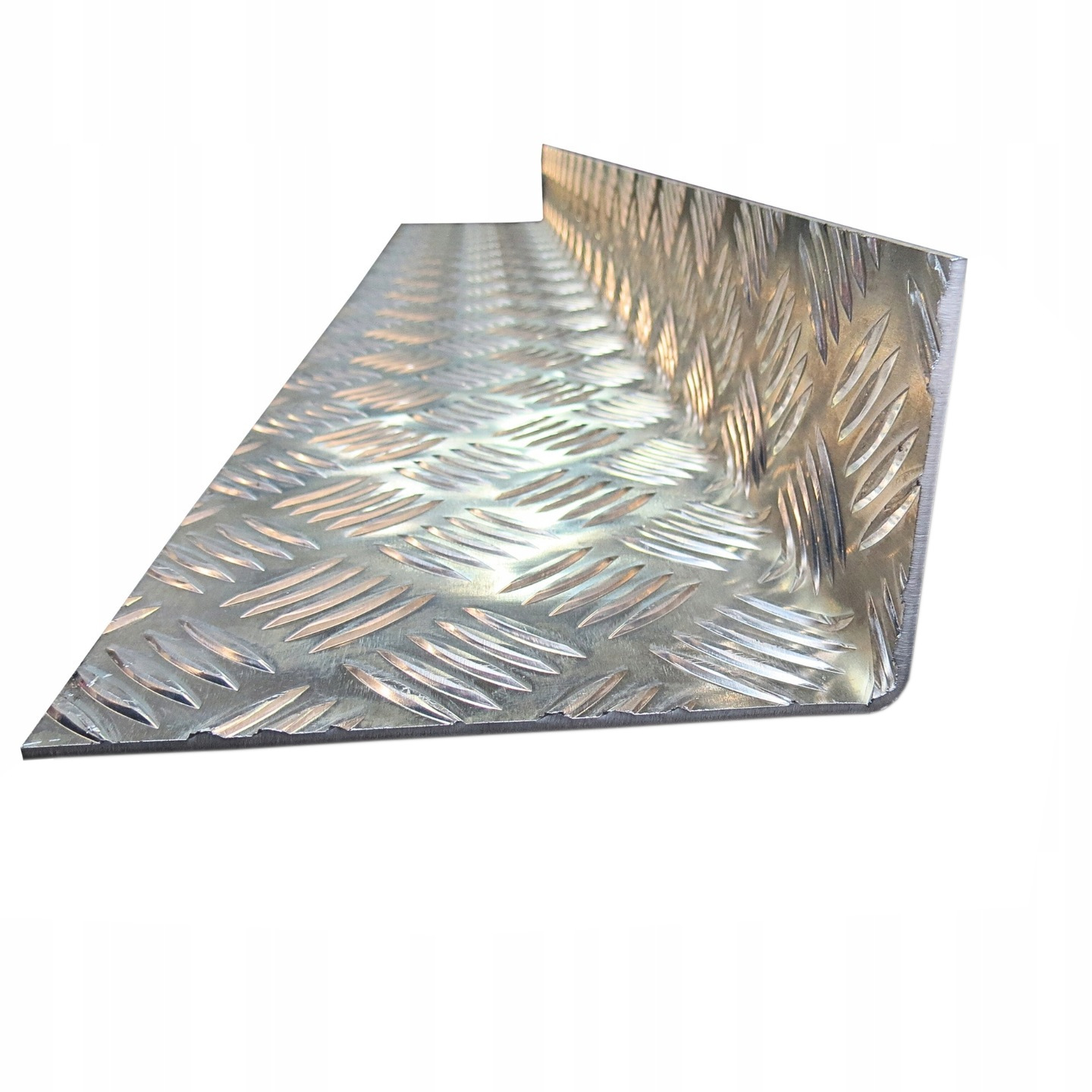
Kątownik aluminiowy ryflowany wewnętrznie 30x30x3
In stock · 9995 pcsAluminium alloys: 5754 (PA11), 6060, 6082 and 2007
Aluminium alloys fall into two groups: casting alloys (EN 1706) and wrought alloys (EN 573-3). Sheet, sections and bar are made from wrought alloys, which the standard divides into eight series. The first digit identifies the main alloying element: 2xxx – copper, 5xxx – magnesium, 6xxx – magnesium and silicon. Aluminium alloys have a higher strength-to-weight ratio than steel. Every alloying addition, however, reduces corrosion resistance – copper and silicon the most, manganese and magnesium the least.
| Alloy | Other designations | Series, main alloying element | Density | Typical applications | In our range |
|---|---|---|---|---|---|
| EN AW-5754 / PA11 | AlMg3, 3.3535, A95754 | 5xxx, magnesium 2.6–3.6% | 2.66 g/cm³ | chequer plate, shipbuilding, vehicle bodies, food processing, welded chemical plant | plain sheet and chequer plate, cut-to-size sheet calculator |
| EN AW-6060 | – | 6xxx, magnesium and silicon | 2.70 g/cm³ | complex extruded sections, windows and doors, interior fittings, heat sinks, machine parts, furniture | sections 50 × 30 × 3, 140 × 60 × 4, 180 × 60 × 3 |
| EN AW-6082 | 3.2315, AlSi1MgMn | 6xxx, magnesium and silicon | 2.70 g/cm³ | highly stressed structures, trusses, bridges, cranes, transport | round bar Ø 200 |
| EN AW-2007 | AlCu4PbMgMn, 3.1645 | 2xxx, copper; lead 0.8–1.5% | – | mechanical engineering, jigs and fixtures, bolts, nuts | round bar Ø 180 |
5754 aluminium (PA11, AlMg3)
PA11 is the designation used in the Polish standard PN-H-88026:1979. Its equivalent is EN AW-5754, also known as AlMg3 (DIN 3.3535). Alloy 5754 is covered by standards including EN 485-2, EN 573-3, EN 754-2, ISO 6361 and ASTM B209. It offers excellent corrosion resistance, particularly to seawater and industrial atmospheres, and excellent arc weldability. Typical applications are chequer plate, shipbuilding, vehicle bodies and food processing.
6060 and 6082 aluminium
6060 is a medium-strength, heat-treatable alloy. It has very good corrosion resistance, very good weldability and a very good anodising response; machinability is rated as acceptable. It is most commonly supplied in the T5 temper and is the usual choice for complex extruded sections.
6082 has the highest strength of the 6000 series and is a structural alloy. In the T6/T651 temper it machines well. Weldability is very good, but strength is reduced in the weld zone. Thin-walled, intricate shapes are difficult to extrude in 6082. For decoratively anodised sections, 6060 is the more common choice, as extruded 6082 has a less smooth surface finish.
2007 aluminium (free-machining alloy)
EN AW-2007 is the most widely used free-machining aluminium alloy, intended for high-speed automatic lathes. It contains lead and has low corrosion resistance, so anodising of finished parts is recommended. It is not the first choice for parts used outdoors.
Tempers: H111, H114, T5 and T6
The temper designation follows the alloy number, for example 5754 H111 or 6082 T6. The same alloy has different properties in different tempers. The 5xxx series is not heat-treatable and gains its strength from strain hardening (H tempers). Alloys 6060 and 6082 are heat-treatable (T tempers). In suppliers’ datasheets, 5754 chequer plate is most often listed as H114 or H111. For any technical order, always specify the temper you need.
| Designation | Meaning |
|---|---|
| F | as fabricated |
| O | annealed (soft) |
| H | strain hardened, for example H111, H114, H22, H24 |
| T | heat treated |
| T5 | cooled from an elevated-temperature shaping process and artificially aged |
| T6 | solution heat treated and then artificially aged |
Aluminium chequer plate and perforated sheet
We stock aluminium chequer plate (also sold as treadplate) 3 mm thick, in 1000 × 2000, 1250 × 2500 and 1500 × 3000 mm sheets. Chequer plate thickness is quoted in two ways: as the base thickness or as the overall thickness including the raised pattern, for example 3 / 4.5 mm. When comparing quotes, check which of the two figures is meant. Our customer service team can confirm the pattern and the overall thickness of our sheets.
Aluminium perforated sheet comes in 1000 × 2000 mm sheets, 1, 1.5 and 2 mm thick. The hole pattern is stated in the product name: RV 3-4, RV 4-6, RV 5-8, RV 10-15, QG 8-12 or QG 10-15. The rules for designating perforations are set out in EN ISO 7806; dimensions of sheets with round holes are covered by DIN 24041 and with square holes by DIN 24042. If you need the exact hole diameter, pitch or open area, ask our customer service team before ordering.
Blacha 1,5x1000x2000 aluminium 5754
In stock · 11 pcsBlacha 1,5x1500x3000 aluminium PA11
In stock · 7 pcsBlacha 10x1000x2000 aluminium PA11
Only 2 pcs leftBlacha 2,5x1250x2500 aluminium 5754 PA11
Only 1 pcs leftBlacha 3x1500x3000 aluminium PA11
In stock · 10 pcsBlacha 5x1000x2000 aluminium PA11
Only 3 pcs leftBlacha 8x1000x2000 aluminium PA11
Only 1 pcs leftBlacha aluminiowa 1x1000x2000 PA11
In stock · 10 pcsAluminium sheet cut to size
Cut-to-size aluminium sheet can be ordered in our cut-to-size sheet calculator. Select aluminium, choose the thickness and enter the dimensions in millimetres. The price is based on the weight of the piece (dimensions × thickness × density × price per kg), and you see it before you place your order.
- Grade: listed in the calculator as ‘PN PA11 / EN 5754’, the same for all thicknesses.
- Thicknesses: 1, 1.5, 2, 3, 4 and 5 mm.
- Smallest piece: 100 × 100 mm. Largest: 1000 × 1450 mm.
- Shape: square or rectangle. Other shapes are laser cut and quoted individually.
- Lead time: up to 3 working days.
- The sheet is supplied without protective film. Scratches of varying extent and depth may be present.
The calculator does not cover aluminium chequer plate. Need a different size, profile cutting, bending, welding or a variant that is not on the list? Send us a request for quotation. Stainless steel sheet cut to size is ordered the same way – see stainless steel cut to size.
Aluminium sheet weight
To calculate the weight of a sheet: thickness in mm × length in m × width in m × density in g/cm³ = weight in kg. The density of 5754 is 2.66 g/cm³, and of 6060 and 6082, 2.70 g/cm³. Stainless steel is 7.93–8.0 g/cm³, so aluminium weighs about a third as much as stainless steel. Do not use stainless steel figures to estimate the weight of aluminium.
Example: a 1 × 1000 × 2000 mm sheet weighs approximately 5.3–5.4 kg. Our shop gives the theoretical sheet weight based on a density of 2.7 g/cm³, which gives 5.4 kg. A 2 mm aluminium sheet of 1000 × 2000 mm therefore weighs approximately 10.6–10.8 kg. For chequer plate, the shop adds 7.5% to the calculated weight.
Cutting, bending and welding aluminium
Our aluminium fabrication services are mainly carried out on 5754 (PA11). Other grades can be cut to order.
- Laser cutting: Bystronic BySmart Fiber fibre laser, working areas 1000 × 2000, 1250 × 2500 and 1500 × 3000 mm, aluminium up to 30 mm. Aluminium needs precise settings to avoid melting at the cut edge. Profile cutting is quoted on request – use the form at the bottom of this page.
- Bending: Durma AD-S30175 press brake, up to 175 tonnes, bending lengths up to 3 m. 5754 (PA11) is ductile and bends easily, but it is soft, and excessive pressure can leave tool marks. Where there is a risk of marking, we use a protective film for mark-free bending.
- Welding: TIG and MIG. We weld lightweight structures, enclosures and industrial components.
- Machining: turning, CNC milling, drilling and threading, with typical workshop tolerances of 0.02–0.05 mm.
- Other machining and fabrication services – just ask. Our services are described on the Jan Nierdzewny services page (in Polish).
Aluminium is demanding to weld: it heats up quickly and the welding parameters have to be set correctly. The alloy matters. 5754 has excellent arc weldability and 6060 very good weldability. 6082 also welds very well, but loses strength in the weld zone, which has to be allowed for in the structural design. If you need welding in an alloy other than 5754 (PA11), agree it with our customer service team before ordering. We also make our own aluminium products, such as a welded aluminium cabinet (top in 3 mm chequer plate, sides in 3 mm plain sheet, doors in 5 mm sheet) and an aluminium container corner. Our machines and how we handle jobs are described on our pages about cutting stainless steel, stainless steel sheet bending and stainless steel welding.
Aluminium and stainless steel: galvanic corrosion
Aluminium is often combined with stainless steel, for example stainless steel bolts in aluminium sheet. Galvanic (bimetallic) corrosion requires three conditions at the same time: a difference in potential, an electrically conductive connection between the metals and an electrolyte (moisture) bridging both of them. It is the less noble metal that is attacked. In the galvanic series in seawater, aluminium sits well below stainless steel 1.4404 (316L). In this pairing, aluminium is the anode, so it is the aluminium that may corrode. The potential difference alone, however, does not tell you how great the risk is – only that it has to be taken into account.
| Combination in atmospheric exposure | Rating |
|---|---|
| Large area of aluminium, small stainless steel part (for example stainless steel bolts in aluminium sheet) | good |
| Large area of stainless steel, small aluminium part | uncertain to poor |
Source: Euro Inox, “Stainless Steel in Contact with Other Metallic Materials”, Table 7. Fasteners should be made of the more noble metal, and designs with a small anode and a large cathode should be avoided. In building and construction, joints between stainless steel and aluminium are not critical as long as the ratio of stainless steel area to aluminium area does not significantly exceed 1:1.
- Short periods of moisture do not usually cause galvanic corrosion. What matters is how long the joint stays wet.
- The risk rises sharply in permanently damp crevices and sheltered areas, and where standing water and dirt collect.
- In atmospheric exposure, protecting a narrow zone along the contact line is usually enough.
- Fill a permanently damp gap between aluminium and stainless steel with a flexible sealant. A brittle sealant that cracks can make matters worse.
- In seawater, aluminium alloy parts connected to stainless steel are at risk, even though 5754 itself has good resistance to seawater.
Stainless steel for assemblies combining aluminium and stainless can be found in our stainless steel sheet, stainless steel tube, stainless steel bar and flat bar and stainless steel balustrade fittings ranges. Choosing the right grade of stainless steel is covered on our page about stainless steel grades.
How to order aluminium from us
- We sell and deliver within Poland only, and prices are in Polish złoty (PLN).
- Collection in person is free of charge from Dębica, ul. Rzeszowska 139, or Mielec, ul. Racławicka 6 (Poland). See Dębica and Mielec.
- Sheets are always shipped on a pallet, up to 1000 × 2000 mm and up to 500 kg. Larger sheets, such as 1250 × 2500 mm, are quoted individually, and for these the basket offers collection in person only. Details: delivery.
- Metal stock, goods cut to size and pallet shipments are paid in advance: BLIK, Przelewy24 or bank transfer.
- Aluminium angles are sold in the lengths stated in the product description.
- Products sold by the metre are ordered in full metres only: 1, 2, 3 or 4 m. We cut them to the lengths you need – enter them in the ‘How should we cut it?’ field or in the order notes.
- Goods cut to your dimensions cannot be returned. Full, uncut lengths of 1, 2, 3 and 4 m can be returned.
- With a business account, you see prices excl. VAT once your Polish tax ID (NIP) has been verified.
What to check when ordering aluminium
- Weight: aluminium has a density of 2.66–2.70 g/cm³, stainless steel 7.93–8.0 g/cm³. Do not apply stainless steel weight tables to aluminium.
- Temper: the same alloy in H111, H22 or H24 (or T5 and T6) has different properties. Specify the temper on any technical order.
- Chequer plate: check whether the quoted thickness is the base thickness or the thickness over the pattern.
- 2007 outdoors: this is a free-machining alloy with low corrosion resistance and not the first choice for parts used outdoors.
- Welding 6082: strength is lowered in the weld zone.
- Decorative anodising: 6060 is chosen for sections more often than 6082.
- Contact with stainless steel: do not join the two metals in a permanently damp location without sealing the gap.
- Calculator pieces come without protective film, so scratches are possible. If appearance matters, take this into account when ordering.
“I order all kinds of non-ferrous metals from Jan Nierdzewny… quality, fast turnaround, friendly service” – Roman L., Google review (translated from Polish).
Frequently asked questions
What is PA11 aluminium – is it the same as 5754?
Yes, they are equivalents. PA11 is the designation from the Polish standard PN-H-88026:1979, and EN AW-5754 is the European designation. You will also see AlMg3 and 3.3535. In the sheet calculator, the grade is listed as ‘PN PA11 / EN 5754’.
How much does a 2 mm aluminium sheet, 1000 × 2000 mm, weigh?
Approximately 10.6–10.8 kg, depending on the density used (2.66 or 2.7 g/cm³). Our shop gives the theoretical weight based on a density of 2.7. The same sheet in stainless steel weighs about three times as much.
Can aluminium be welded?
Yes. We weld aluminium by TIG and MIG, mainly 5754 (PA11). Aluminium heats up quickly and needs correctly set parameters. Alloy 5754 has excellent arc weldability. Alloy 6082 also welds very well, but loses strength in the weld zone – allow for this in the structural design. If you need welding in an alloy other than 5754 (PA11), agree it with our customer service team before ordering.
What is the difference between 6060 and 6082 aluminium?
Both are heat-treatable and have the same density. 6060 is a medium-strength alloy that is easy to extrude into complex sections and anodises well. 6082 has the highest strength of the 6000 series and is used for load-bearing structures. For decorative anodising, 6060 is the more common choice.
Can I get a 3.1 certificate for aluminium?
We supply an inspection certificate 3.1 to EN 10204 (often called a mill test certificate) free of charge, on request, for products where the manufacturer issues one. Please check with our customer service team before ordering whether it is available for the aluminium item you need. For material cut to size, including pieces from the sheet calculator, our customer service team confirms whether a certificate is available – tick the certificate option and mention it in the order notes, or ask us beforehand. More information: 3.1 certificate.
What sizes of aluminium chequer plate do you stock?
We stock 3 mm chequer plate in 1000 × 2000, 1250 × 2500 and 1500 × 3000 mm sheets. The 1250 × 2500 and 1500 × 3000 mm sheets carry the grade PA11 in the product name. The cut-to-size sheet calculator does not cover chequer plate – other sizes are quoted on request. Please note that goods cut to size cannot be returned.
Can I fix aluminium sheet with stainless steel bolts?
Yes, this is a favourable combination: a small stainless steel part on a large area of aluminium. The reverse – a small aluminium part on a large area of stainless steel in damp conditions – is risky. Fill permanently damp crevices with a flexible sealant.
Need a different grade, temper or a larger quantity? Contact our customer service team on +48 533 251 824 (Monday to Friday, 7am to 3pm Polish time) or at bok@jannierdzewny.pl. Further details are on our contact page.
Need a different size, a larger quantity or cutting services? Send us an enquiry and we will reply with a quote, usually within one working day.