

Stainless steel balustrade fittings: handrail brackets, glass clamps, base plates, base covers and wire rope
Stainless steel balustrade fittings are the components that turn lengths of tube or box section into a finished balustrade: elbows, connectors, handrail brackets, glass clamps, glass adaptors, crossbar holders, base plates, base covers, end caps and decorative balls. We stock more than 120 of them, almost all in grade 304. Alongside them you will find wire rope, thimbles, wire rope clips and turnbuckles, plus tube, box section and bar sold by the metre and cut to length. Everything can be ordered in a single basket, giving you a complete stainless steel balustrade kit for self-assembly. This page covers system sizes, grade and finish selection for indoor, outdoor and coastal use, the causes of rust-coloured staining and common installation mistakes. We deliver within Poland only, and prices are in Polish złoty (PLN).
Our range of stainless steel balustrade fittings
The system is built around two sizes: 42.4 mm tube and 40 × 40 mm box section. Elbows, connectors, mounting plates, brackets, crossbar holders, glass clamps, glass adaptors and end caps are made to fit them. Some fittings also suit Ø40 mm tube and 16 × 1.5 mm tube. The fittings are in grade 304 (1.4301), mostly with a brushed finish.
| Fitting | Sizes and versions | Notes |
|---|---|---|
| Push-in elbows (fit inside the tube) | for 42.4 × 2 mm tube: swivel (rounded), swivel (semi-rounded), adjustable (hinged), push-in rounded (polished), push-in sharp-cornered; 40 × 40 × 2 mm elbow; adjustable elbow for 16 × 1.5 mm tube | the product description states the tube it fits, for example ‘For tube: 42.4 × 2 mm’ |
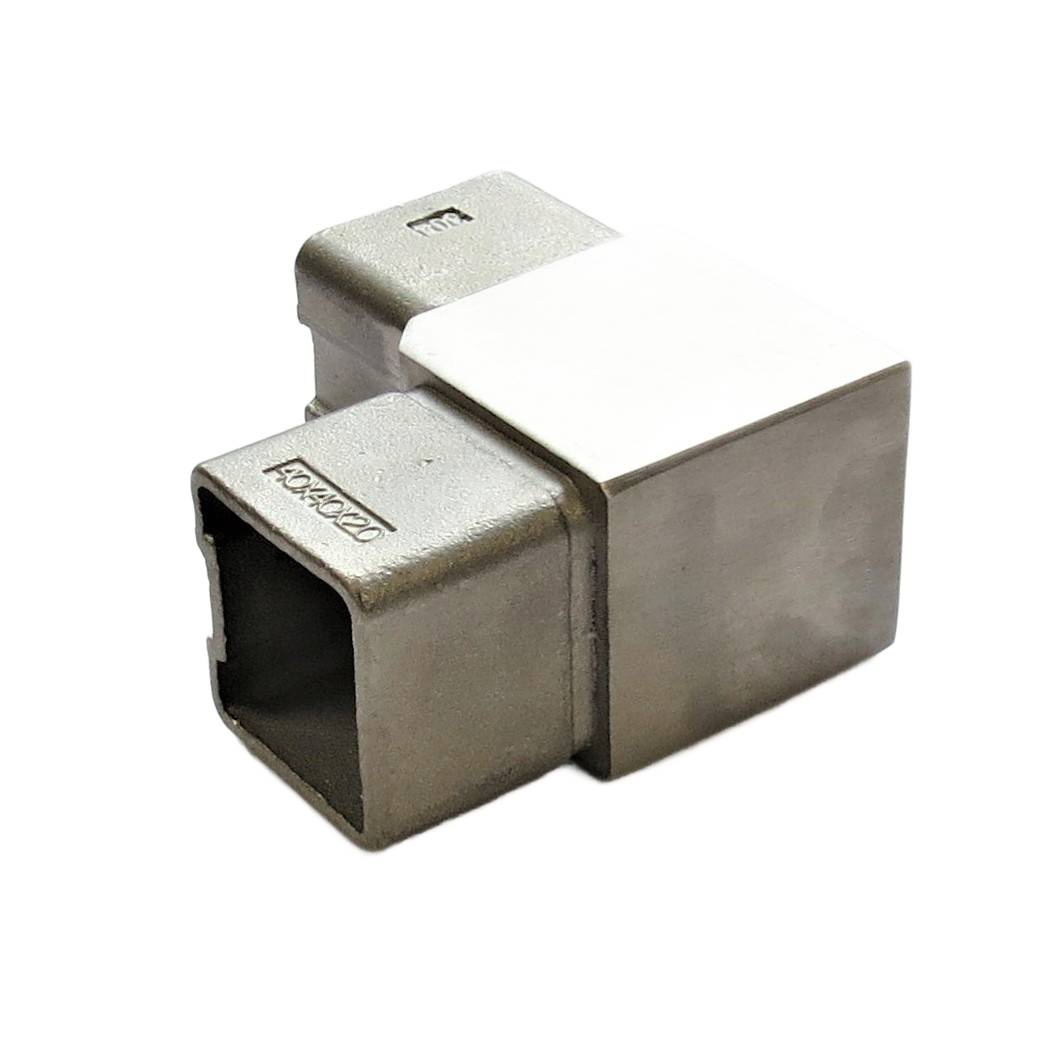
| Connectors | for 42.4 × 2 mm tube, solid for 40 × 1.5 mm tube, for 40 × 40 × 2 mm box section, solid for 16 × 1.5 mm tube | join lengths of handrail or infill |
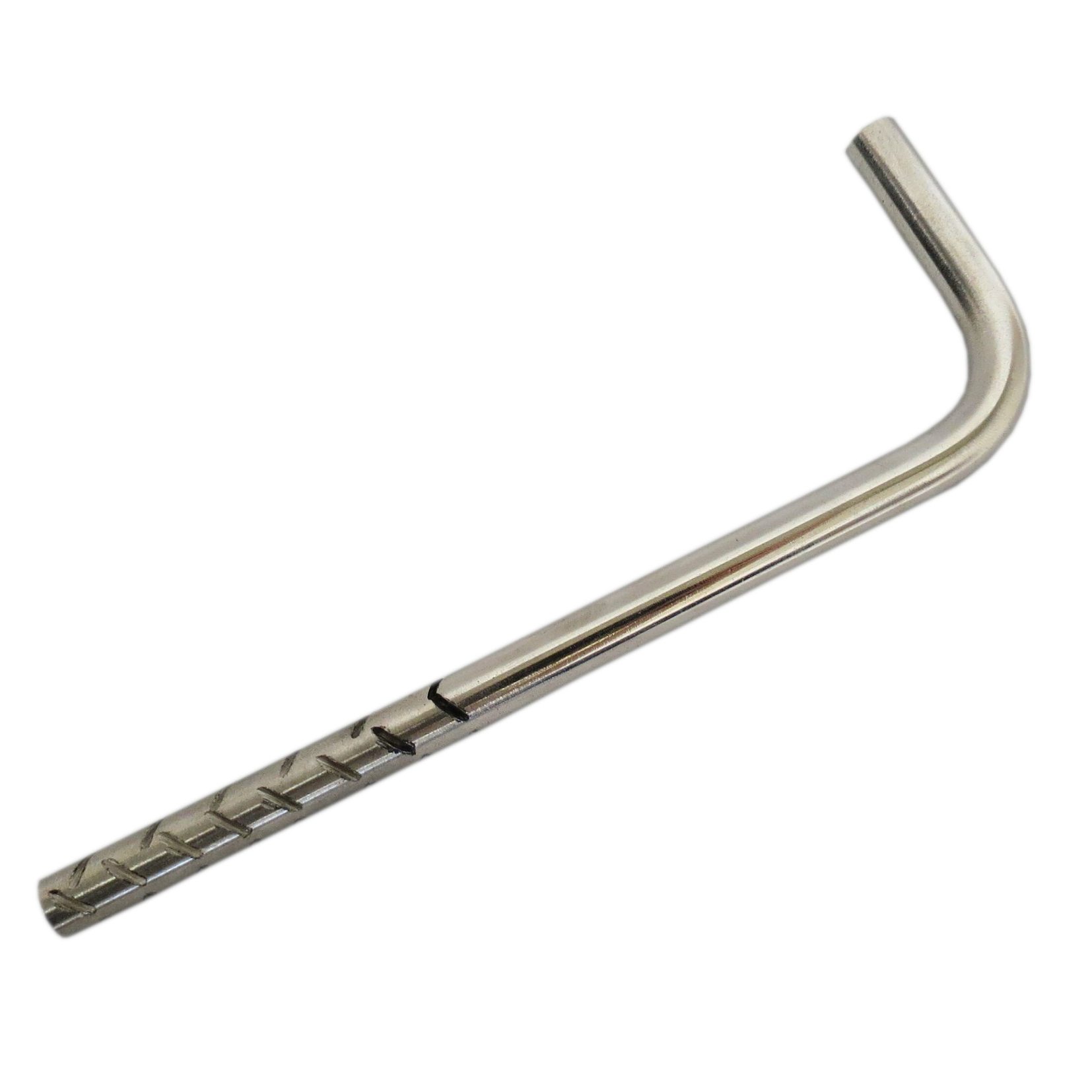
| Handrail brackets | L-shaped with plate for 42.4 × 2 mm tube and for box section, adjustable push-in, universal push-in (Ø14 mm bar) for 42.4 × 2 mm and 42.4 × 2.5 mm tube, 40 × 40 mm corner bracket, handrail bracket from Ø10 mm bar | the universal bracket for 42.4 × 2.5 mm tube is also available in grade 316 |
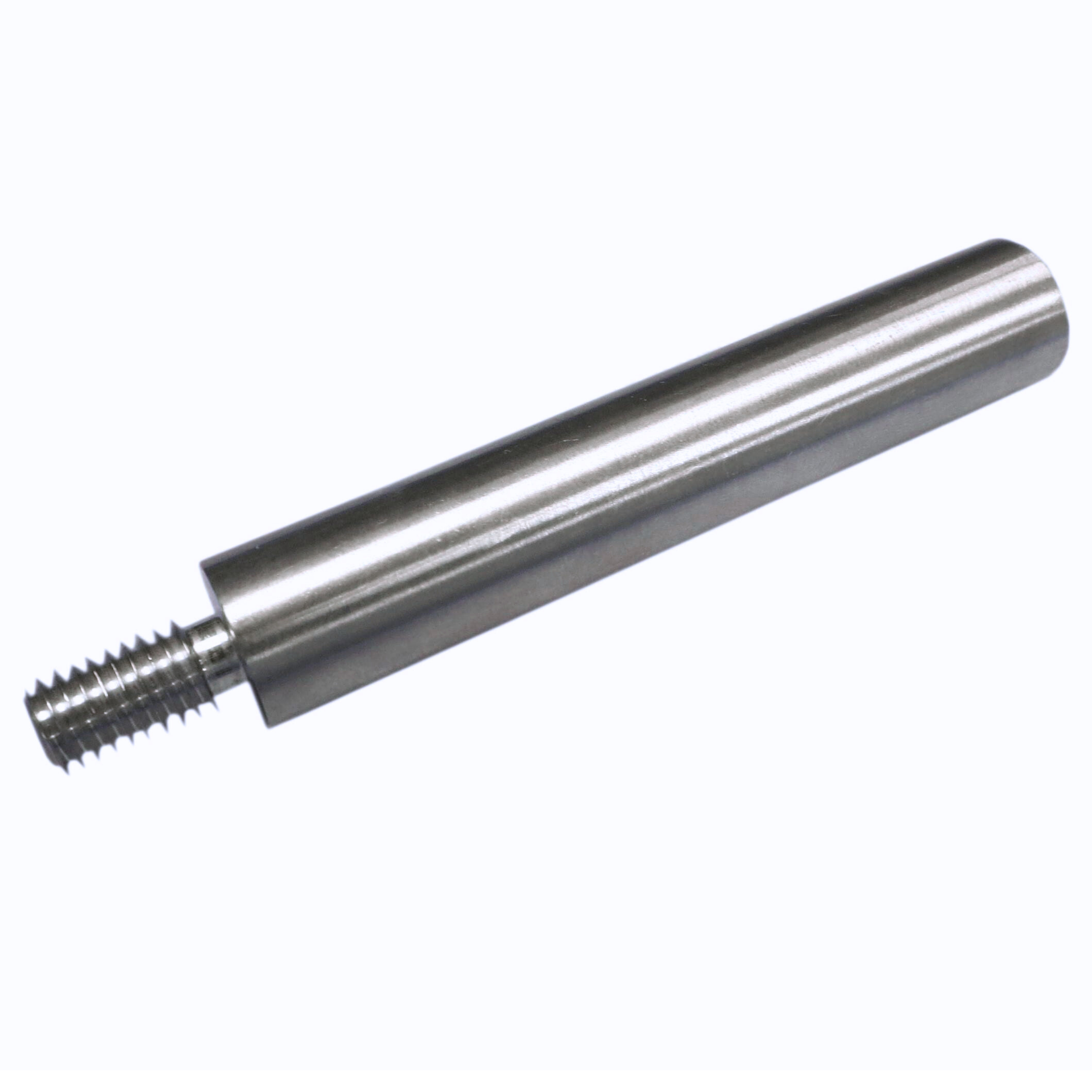
| Handrail supports | adjustable, for tube and for box section | Ø14 mm bar / M10, length 91 mm, plate 63 × 25 × 3 mm |
| Mounting plates and bars | plates for 42.4 × 2 mm tube and for 40 × 40 × 2 mm box section | for fixing brackets and infill |
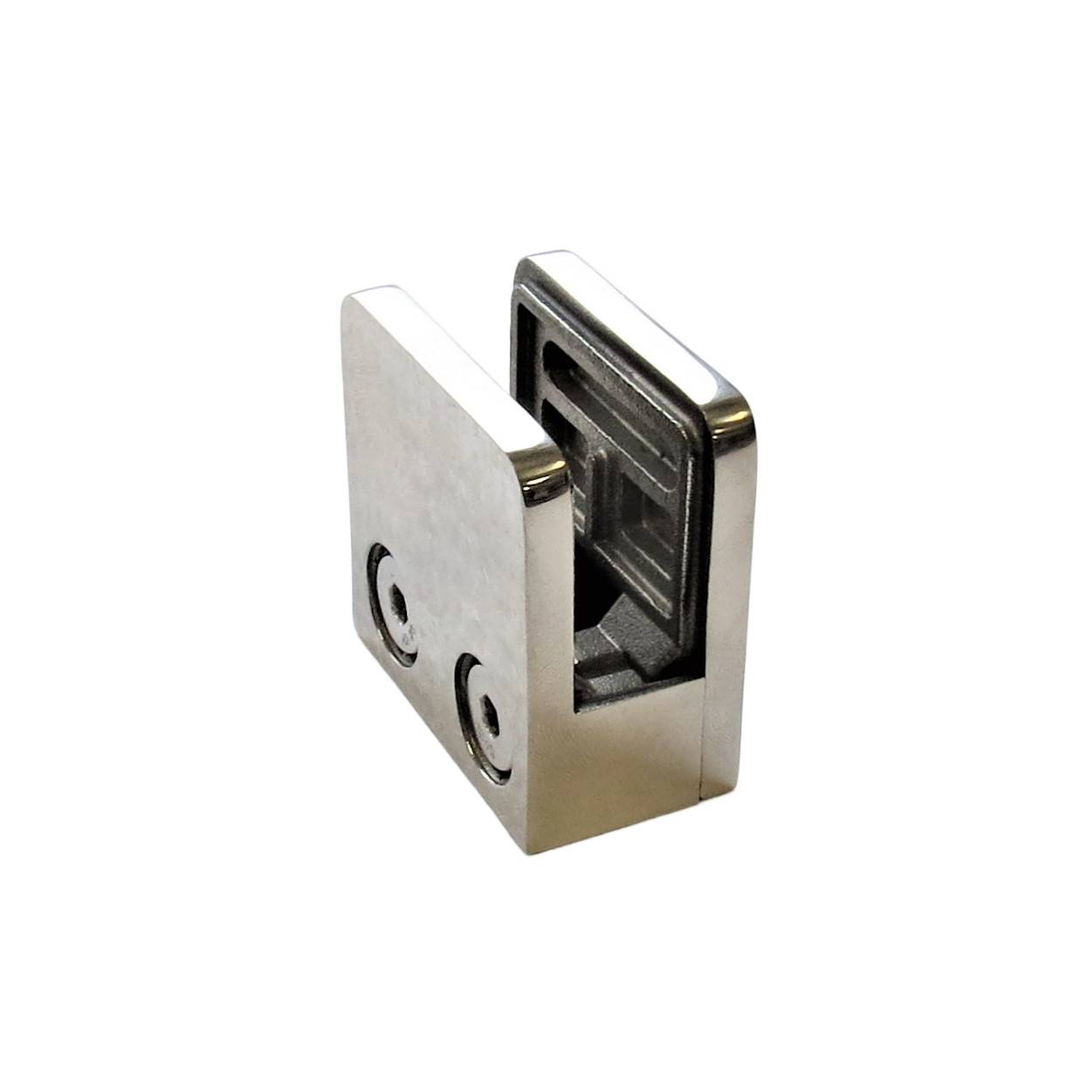
| Glass clamps | 40 × 50 mm and 45 × 45 mm, for tube and for box section, 45 × 45 mm corner clamp (90°); round Ø60 mm clamp for 42.4 mm tube (listed with the glass adaptors) | stainless 40 × 50 and 45 × 45 mm clamps take 6, 8 or 10 mm glass, rubber inserts sold separately; Ø60 mm clamp supplied with inserts |
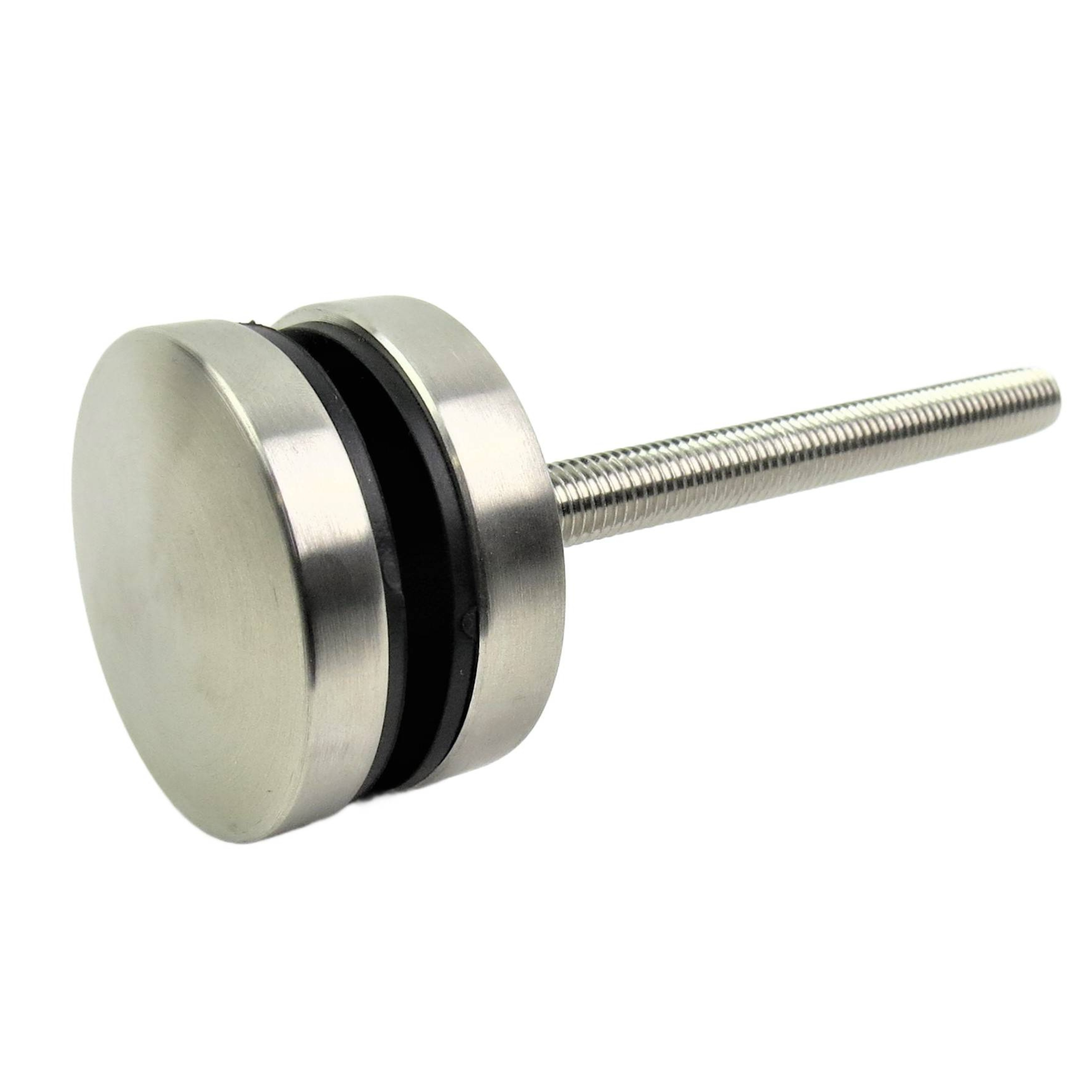
| Glass adaptors (point fixings) | Ø30 mm / M8, Ø50 mm / M8, Ø50 mm / M10, 40 × 40 mm / M10, for 40 × 40 mm box section and for 42.4 mm tube | Ø50 mm gaskets and Ø30 mm rubber sold separately |
| Crossbar holders | Ø12 mm and Ø16 mm, for 42.4 mm tube and for 40 × 40 mm box section; 20 × 10 mm through holder | for bar infill |
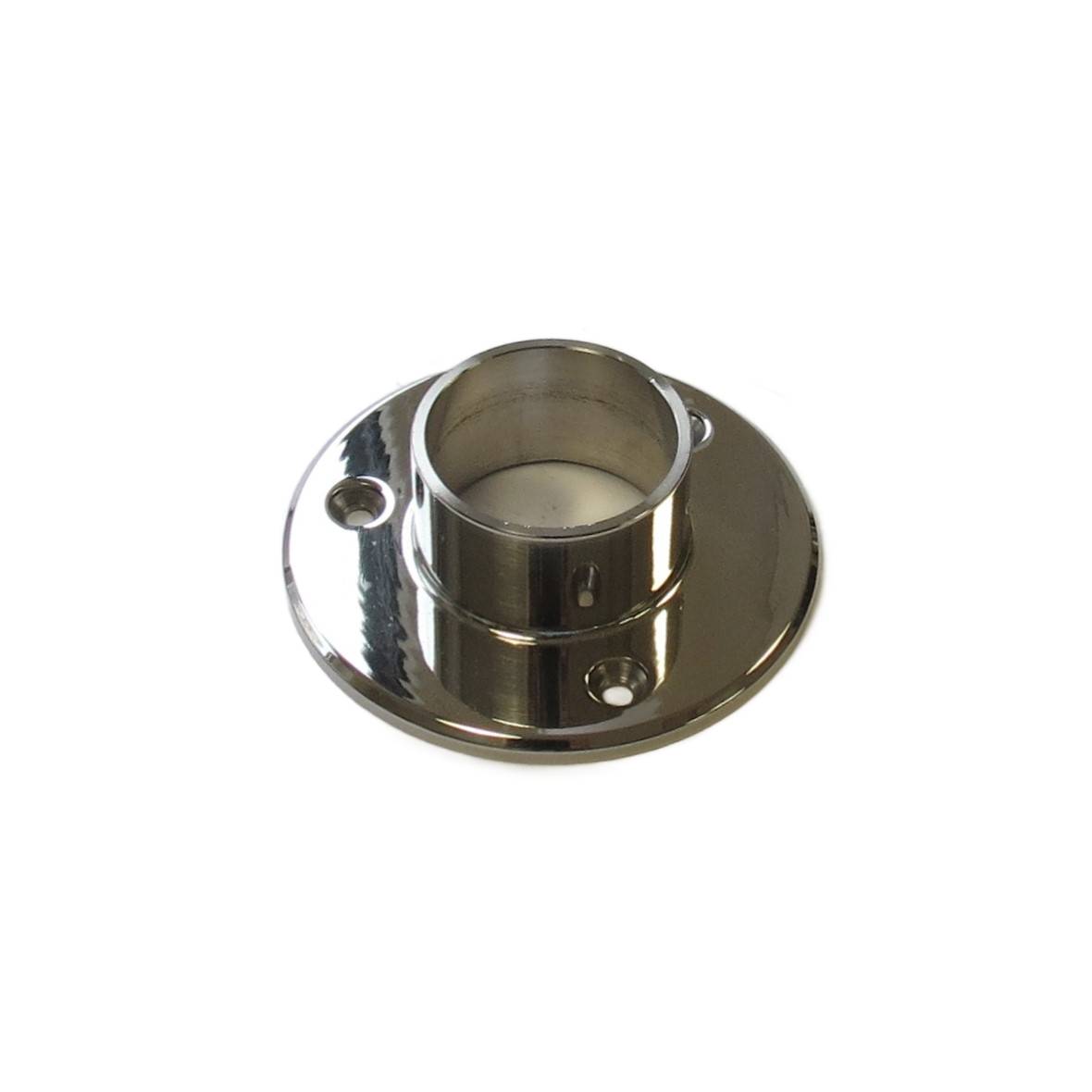
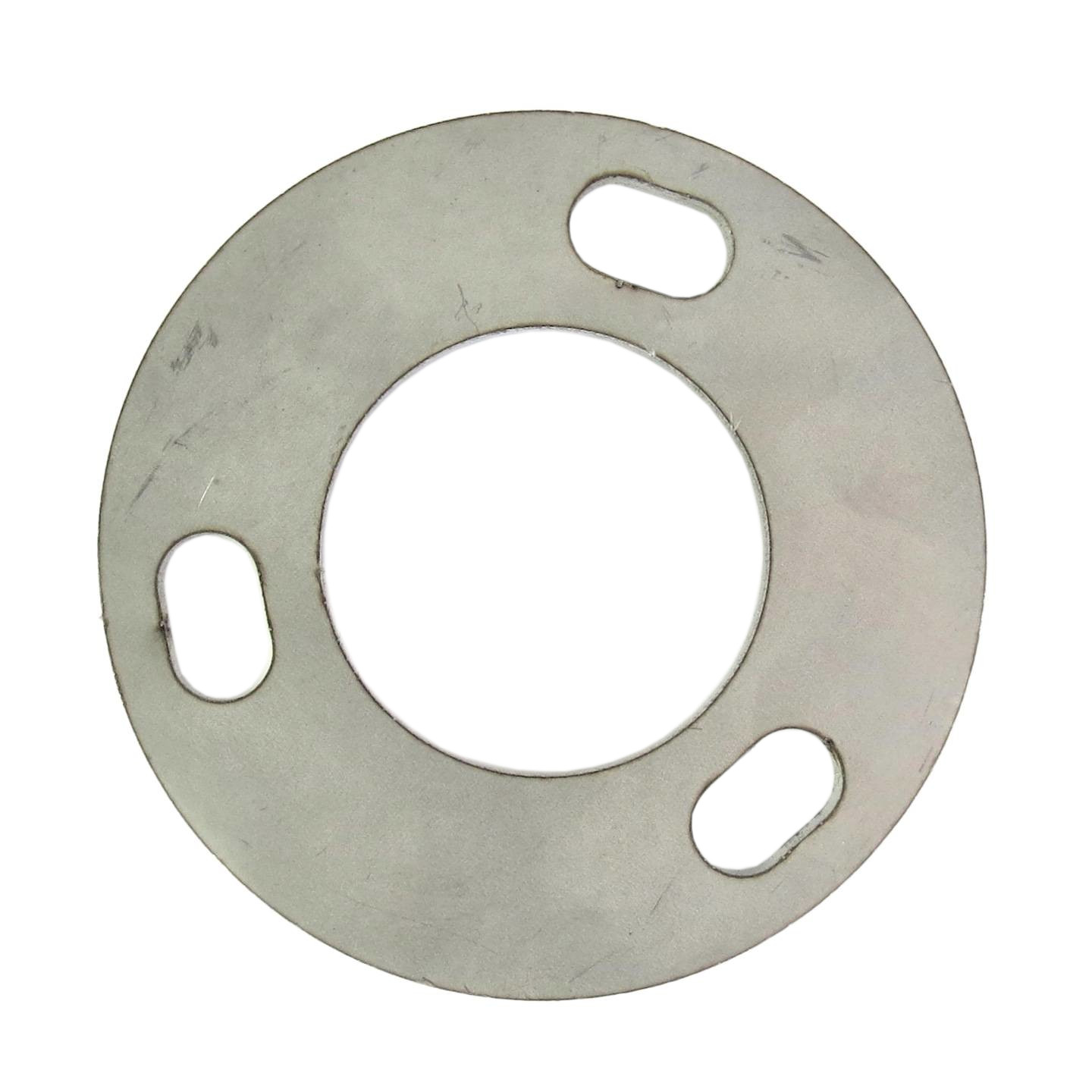
| Base plates (post bases) | round 40 mm, 42.4 mm, 48.3 mm, 50.8 mm; square 40 × 40 mm with cap; rectangular 20 × 50 mm, 60 × 40 mm | unpolished (mill-finish) plate, 3–5 mm thick, grade 304 |
| Slip-on base collars | 42.4 × 2 mm, brushed or polished | – |
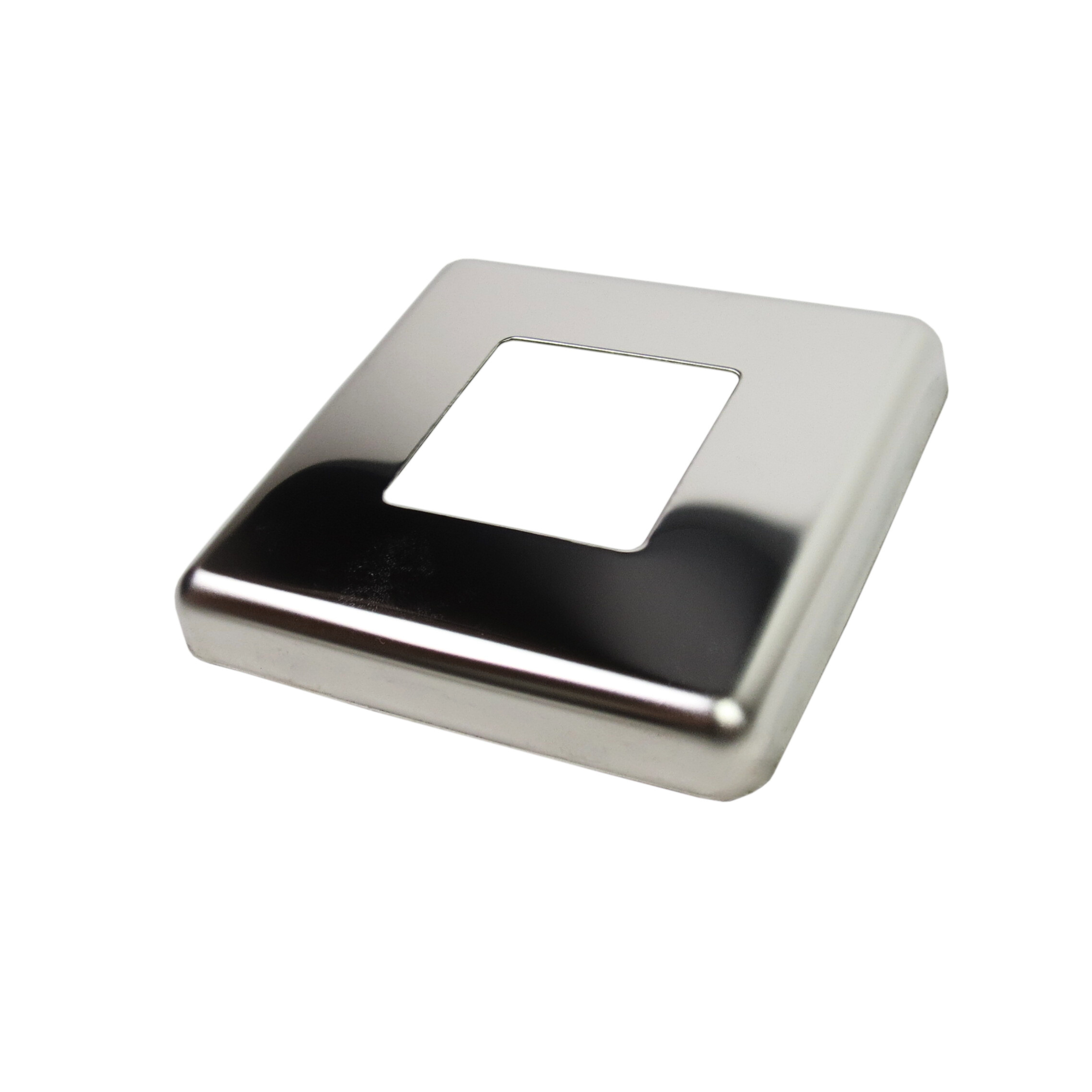
| Base covers (cover roses) | round Ø12–50.8 mm, square 20 × 20–50 × 50 mm and 60 × 30 mm; folded covers for 25 × 25, 30 × 30 and 40 × 40 mm posts | Ø48.3 mm brushed cover also in grade 316 |
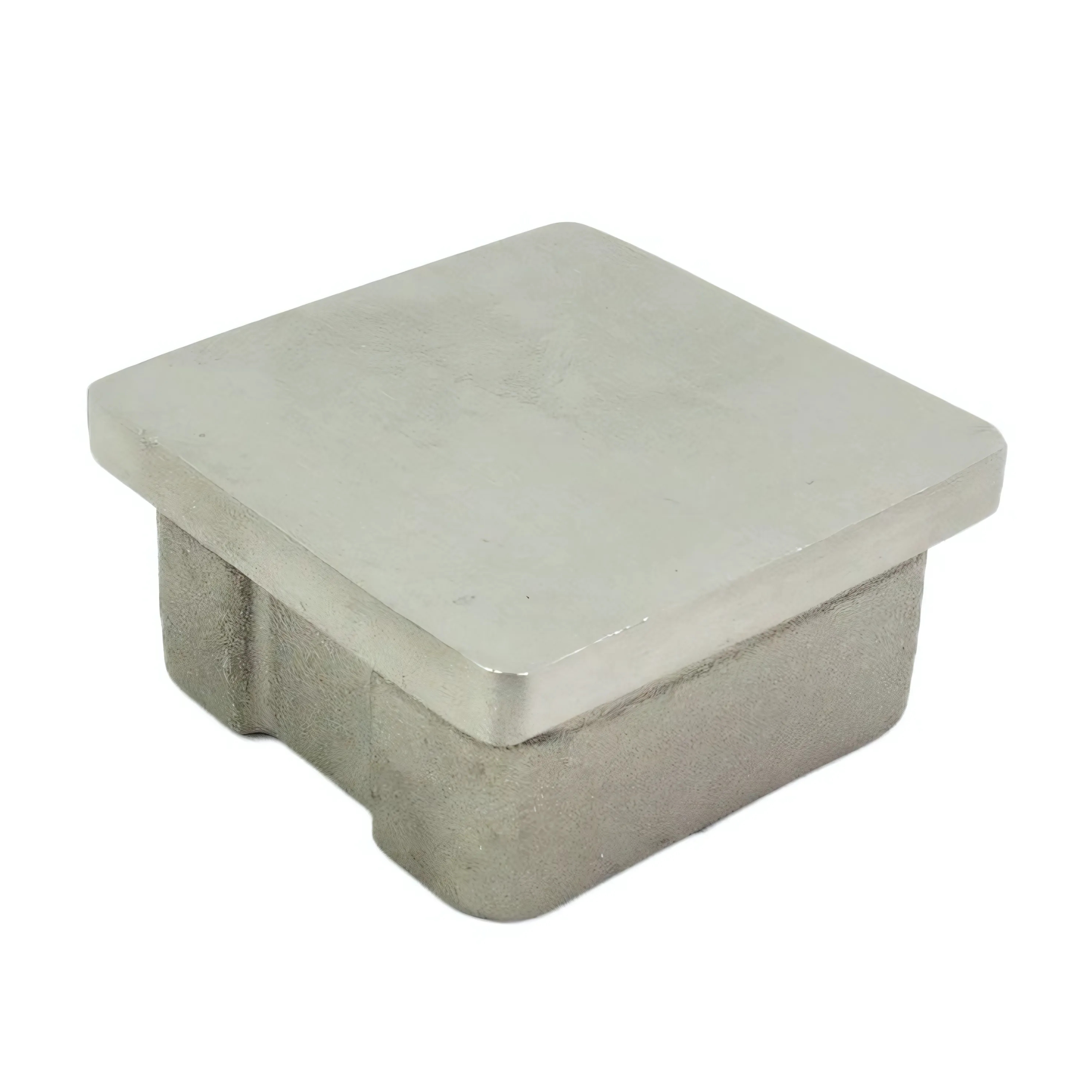
| Push-in and slip-on end caps | push-in for 42.4 × 2 mm tube (flat, domed, with M8 thread); for Ø12 and Ø16 mm bar (push-in and slip-on); for 30 × 30 × 2, 40 × 40 × 2, 50 × 50 × 2 and 60 × 60 × 2 mm box section (flat and with M8 thread) | – |
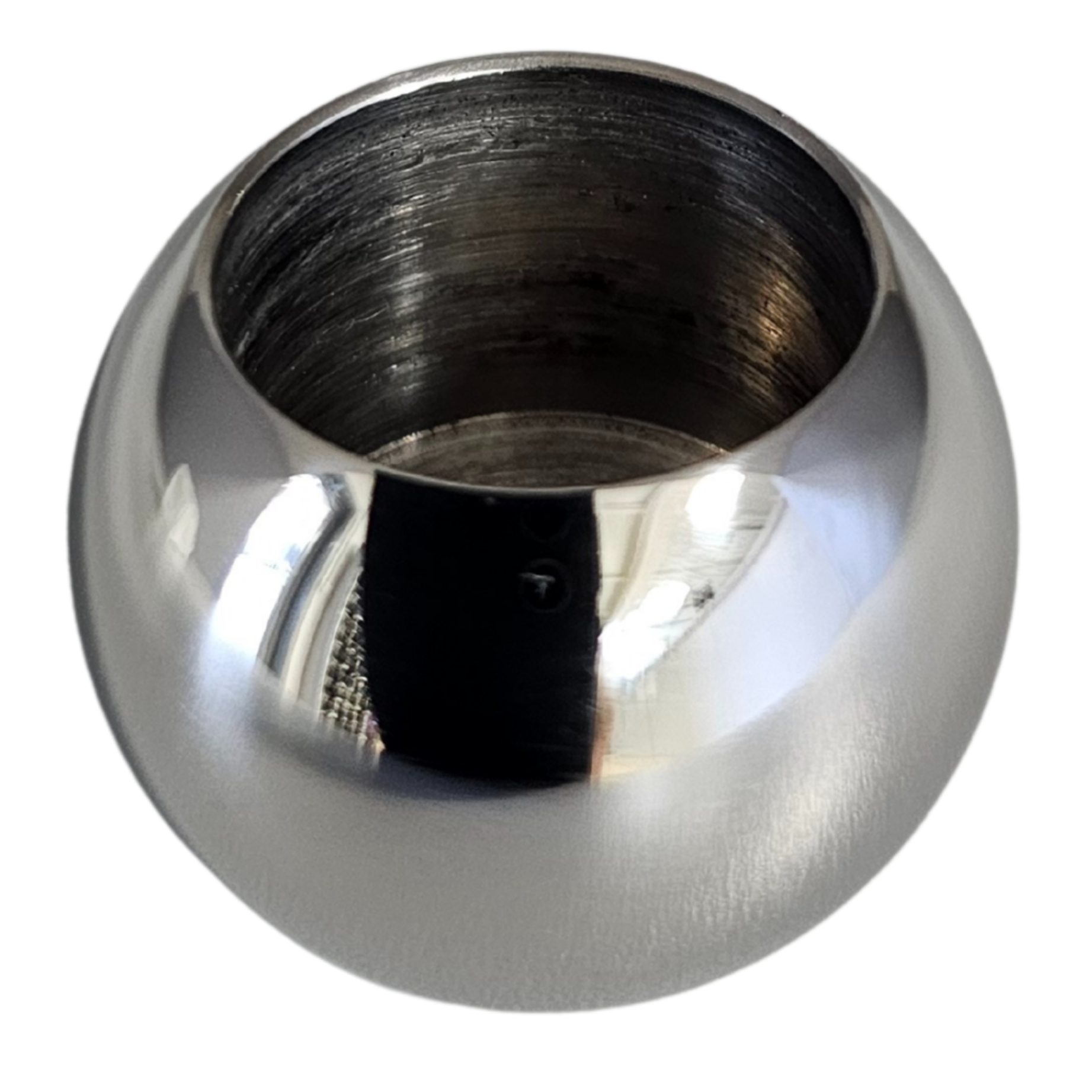
| Decorative balls | threaded: Ø20, 25, 30 mm (M6), Ø40, 50, 60 mm (M8), Ø80 mm (M10); with a bore: Ø20/12, Ø20/10, Ø25/16 mm | balls with a bore slip over the bar |
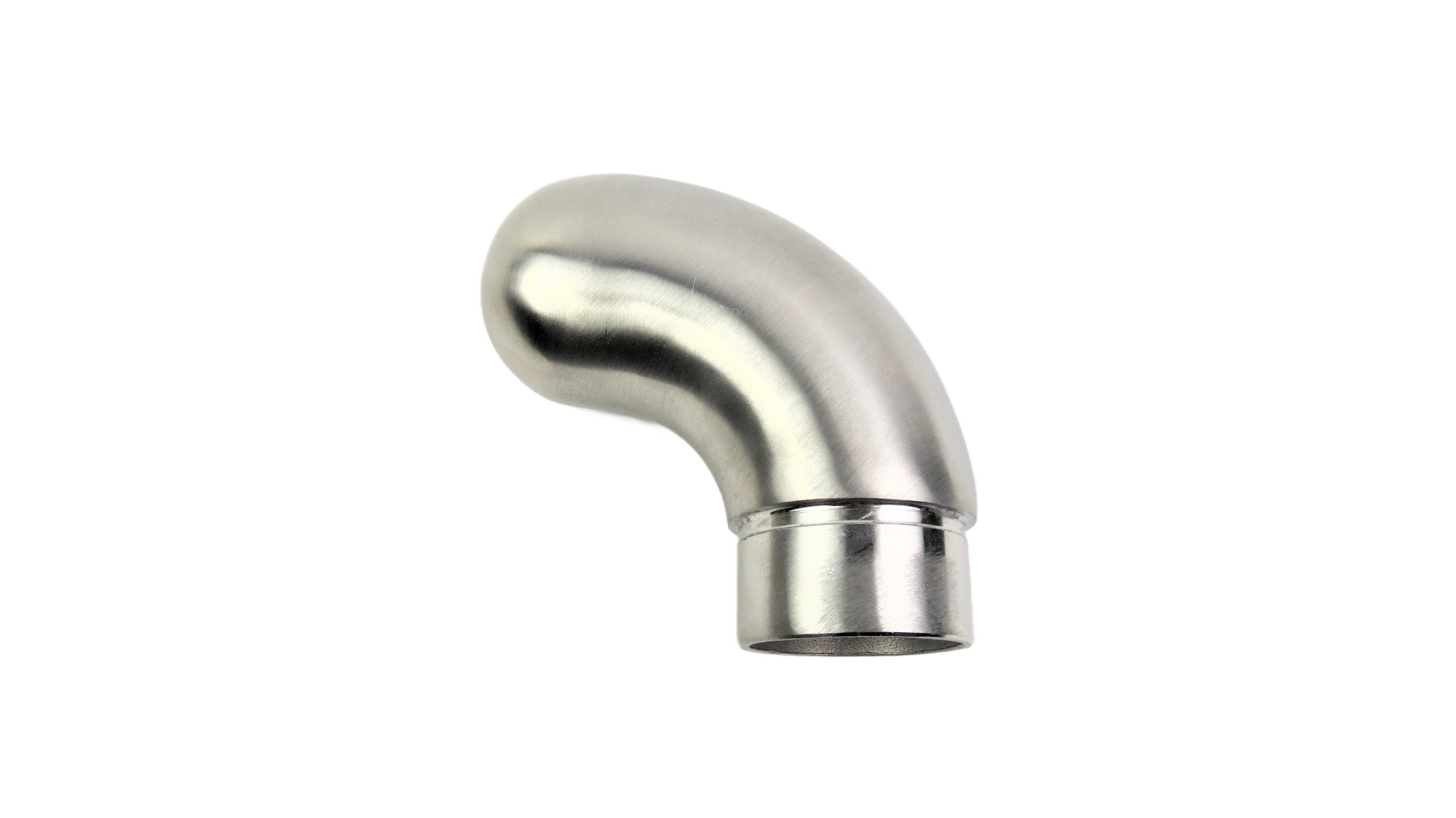
| Handrail ends | for 42.4 × 2 mm tube handrails: straight, flat elbow, round elbow | – |
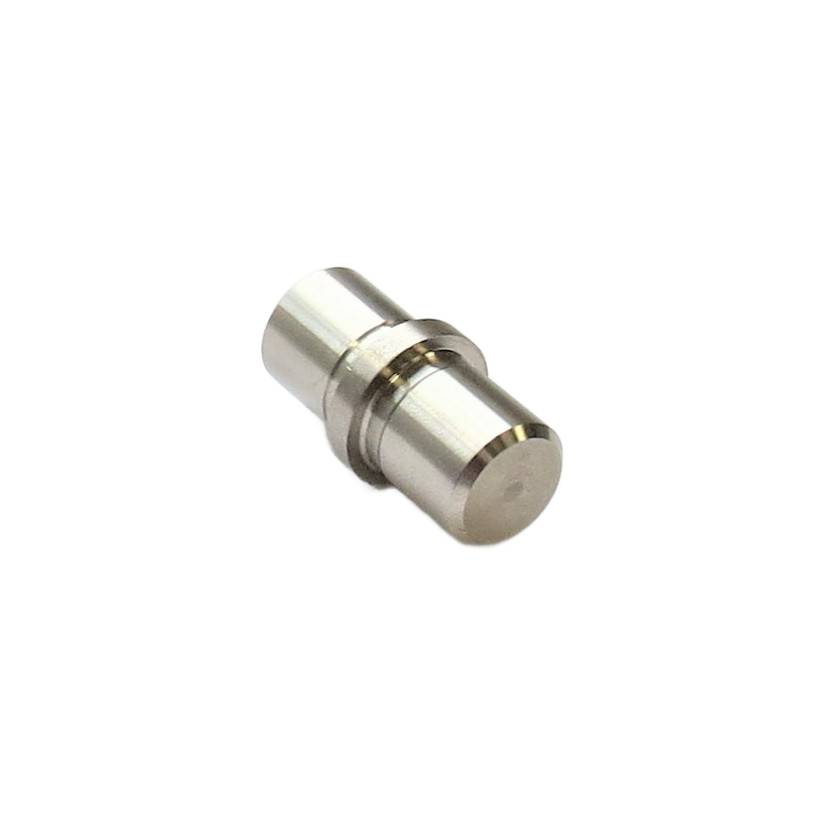
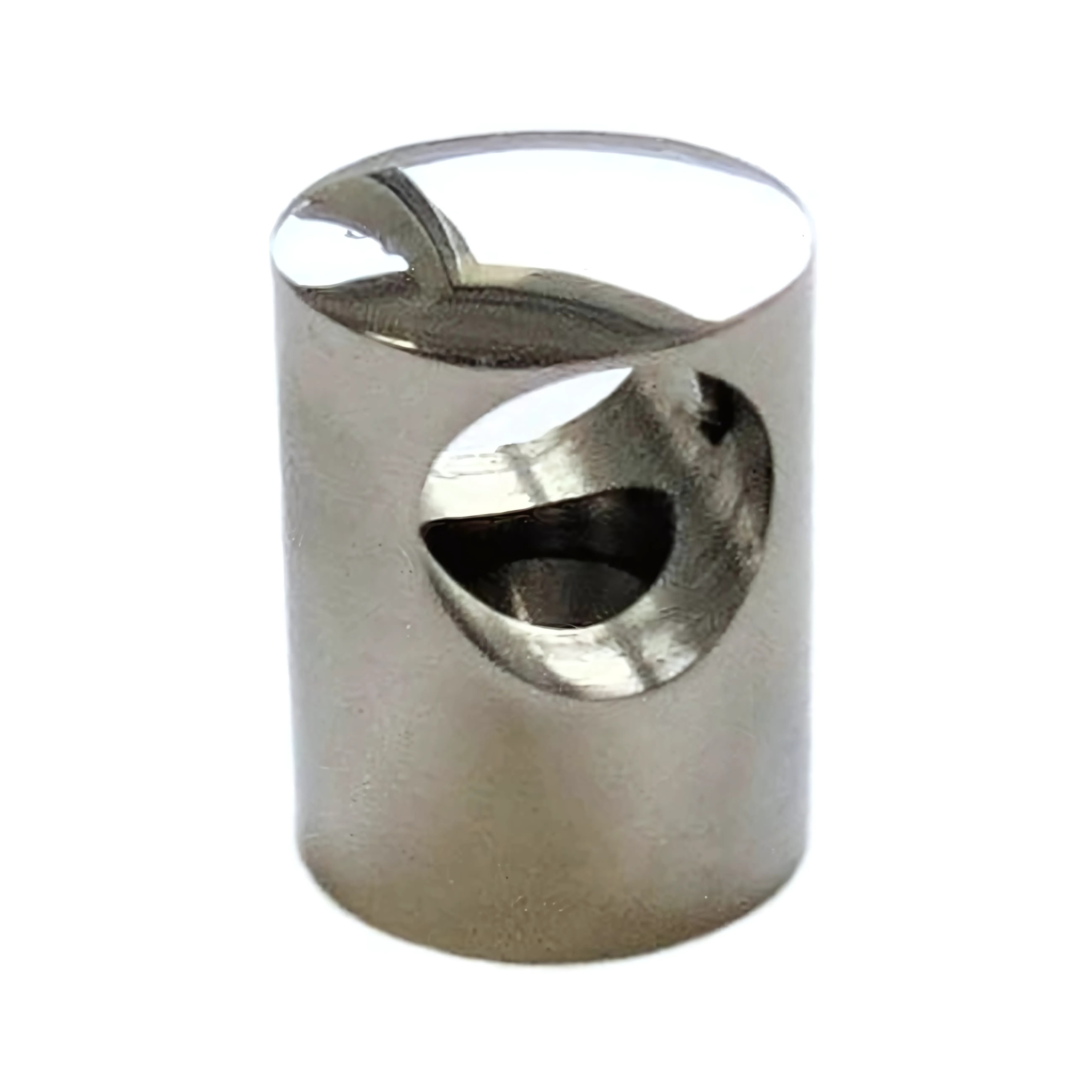
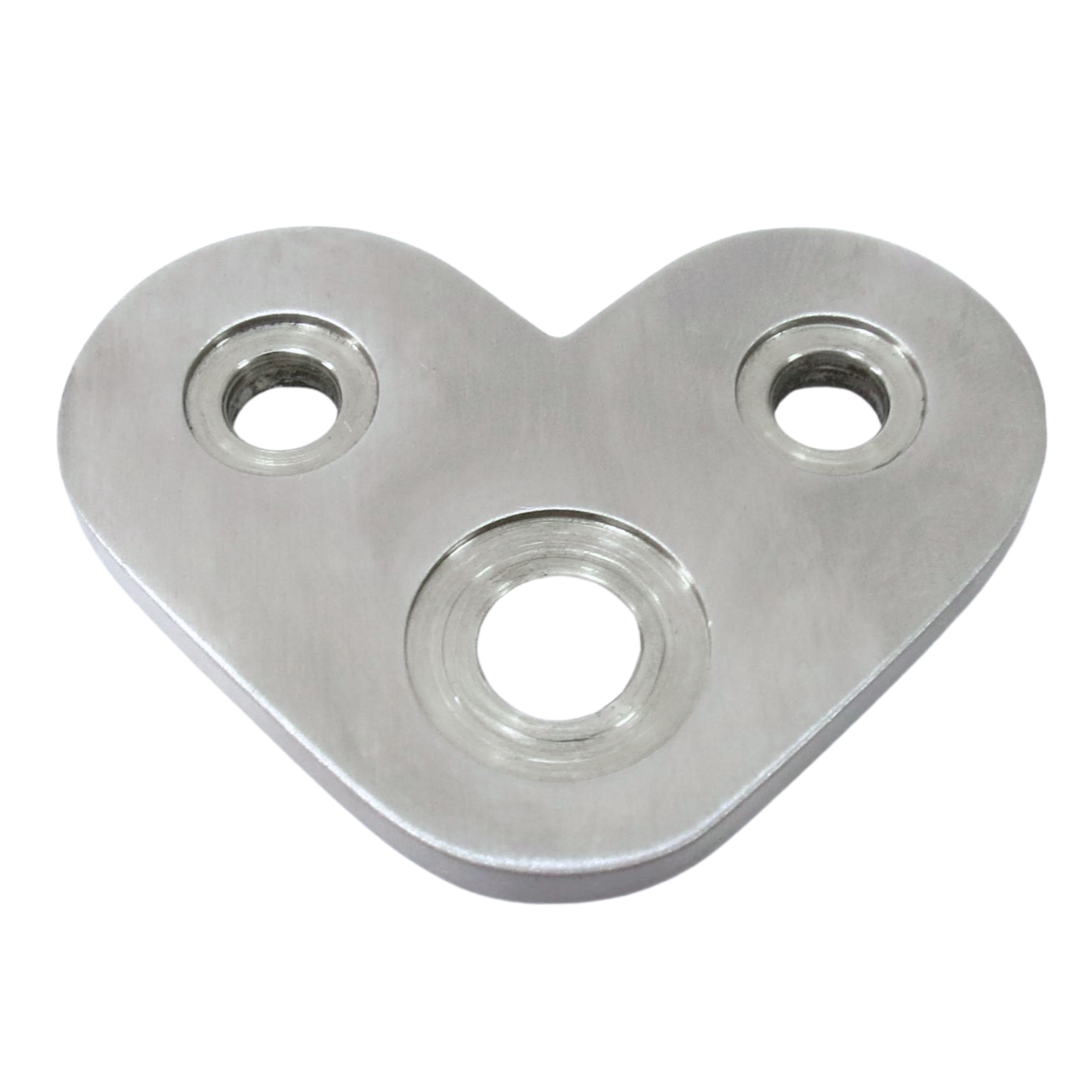
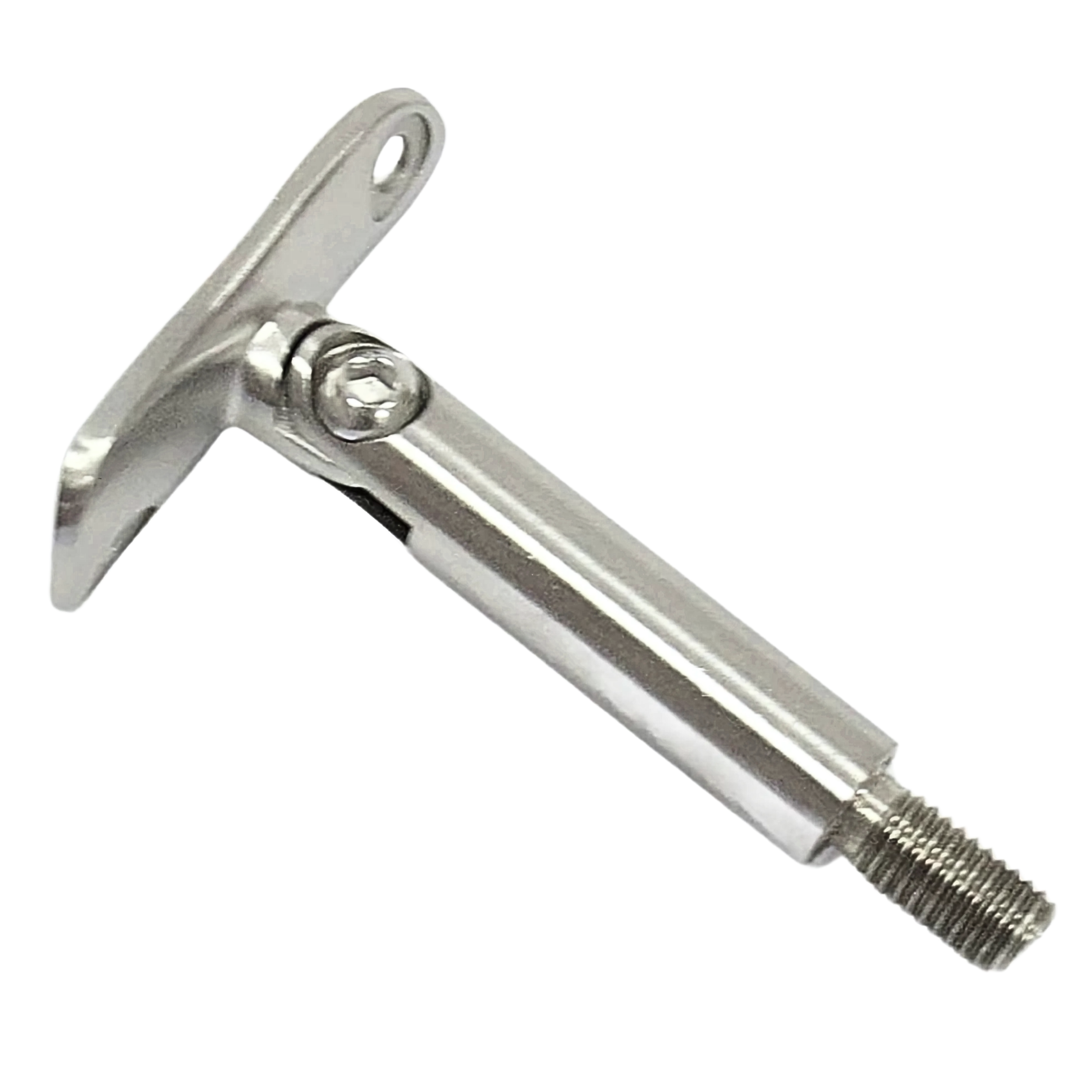
Handrail, posts and infill – what a balustrade is made of
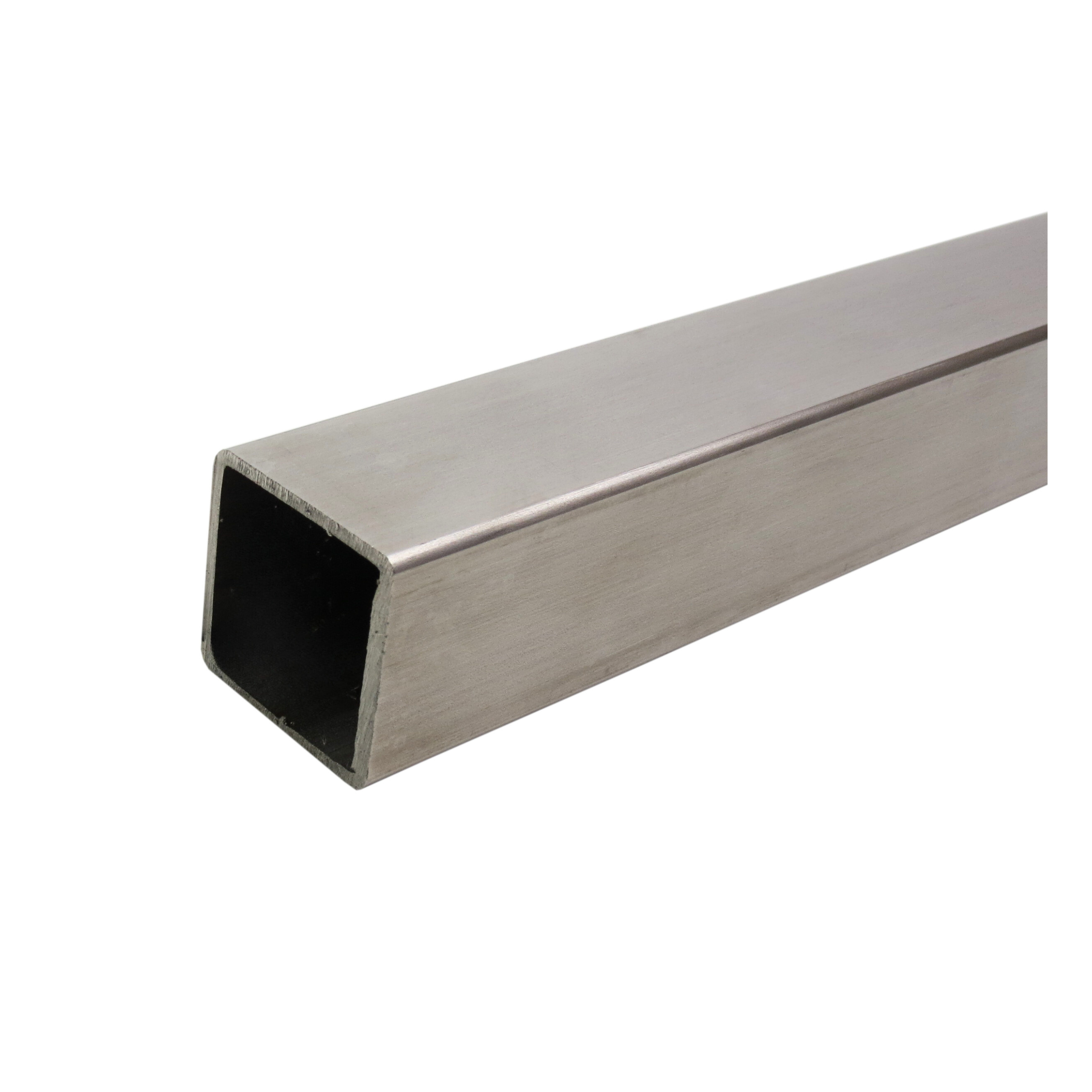
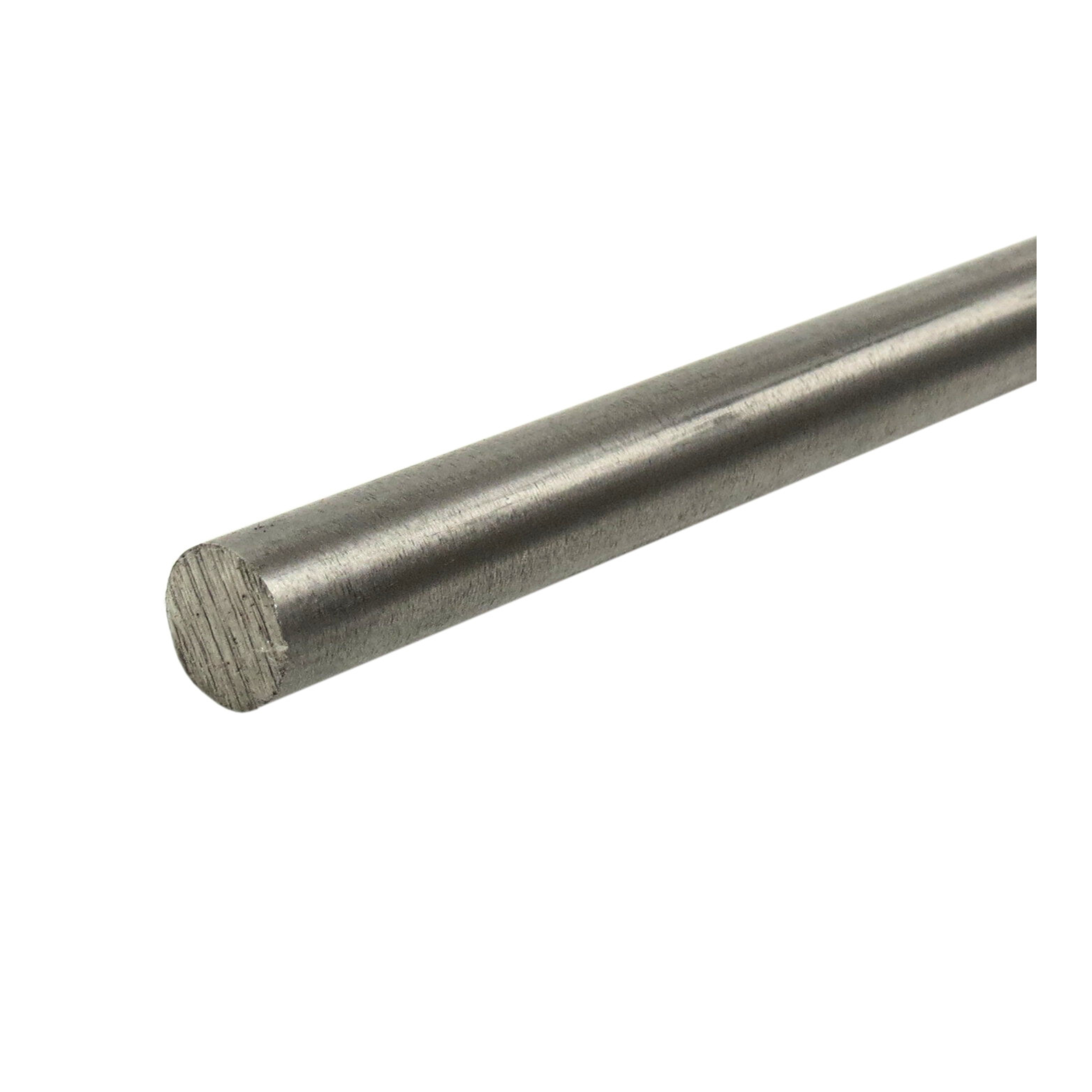
The handrail and posts are made from stainless steel tube or box section, and the fittings in this category hold them together. Tube, box section and bar for balustrades are sold by the metre:
- tube 42.4 × 1.5 mm (polished, brushed), 42.4 × 2 mm (polished, brushed, unpolished), 42.4 × 2.6 mm, 42.4 × 3 mm,
- tube 48.3 × 1.5 mm (polished, brushed), 48.3 × 2 mm (polished, brushed, unpolished), 48.3 × 2.6 mm and 50.8 × 1.5 mm (polished, brushed),
- box section 40 × 40 × 1.5 mm and 40 × 40 × 2 mm (polished, brushed), 20 × 10 × 1.5 mm, 40 × 20 × 1.5 mm, 30 × 30 × 1.5 mm, 50 × 50 mm, 60 × 60 mm,
- Ø12 mm and Ø16 mm round bar in grades 304/304L and 316/316L for infill with crossbar holders – see bar and flat bar.
A typical layout on 42.4 mm tube: a tube post on a base plate, with a base cover at floor level. The handrail, also in 42.4 mm tube, sits on brackets or supports. Elbows take the changes of direction, connectors join the lengths, and a handrail end or end cap finishes each end. The infill is Ø12 or Ø16 mm bar in crossbar holders, glass in clamps or glass adaptors, or alternatively wire rope. On 40 × 40 mm box section the principle is the same, using the fittings marked ‘for 40 × 40 box section’.
We sell tube in full metres only: 1, 2, 3 or 4 m. We cut the post and handrail lengths for you – enter them in the ‘How should we cut it?’ field on the product page or in the order notes. More in our article on cutting stainless steel. Goods cut to your dimensions are paid for in advance and cannot be returned. Full, uncut lengths can be returned.
Match push-in fittings to the tube wall thickness
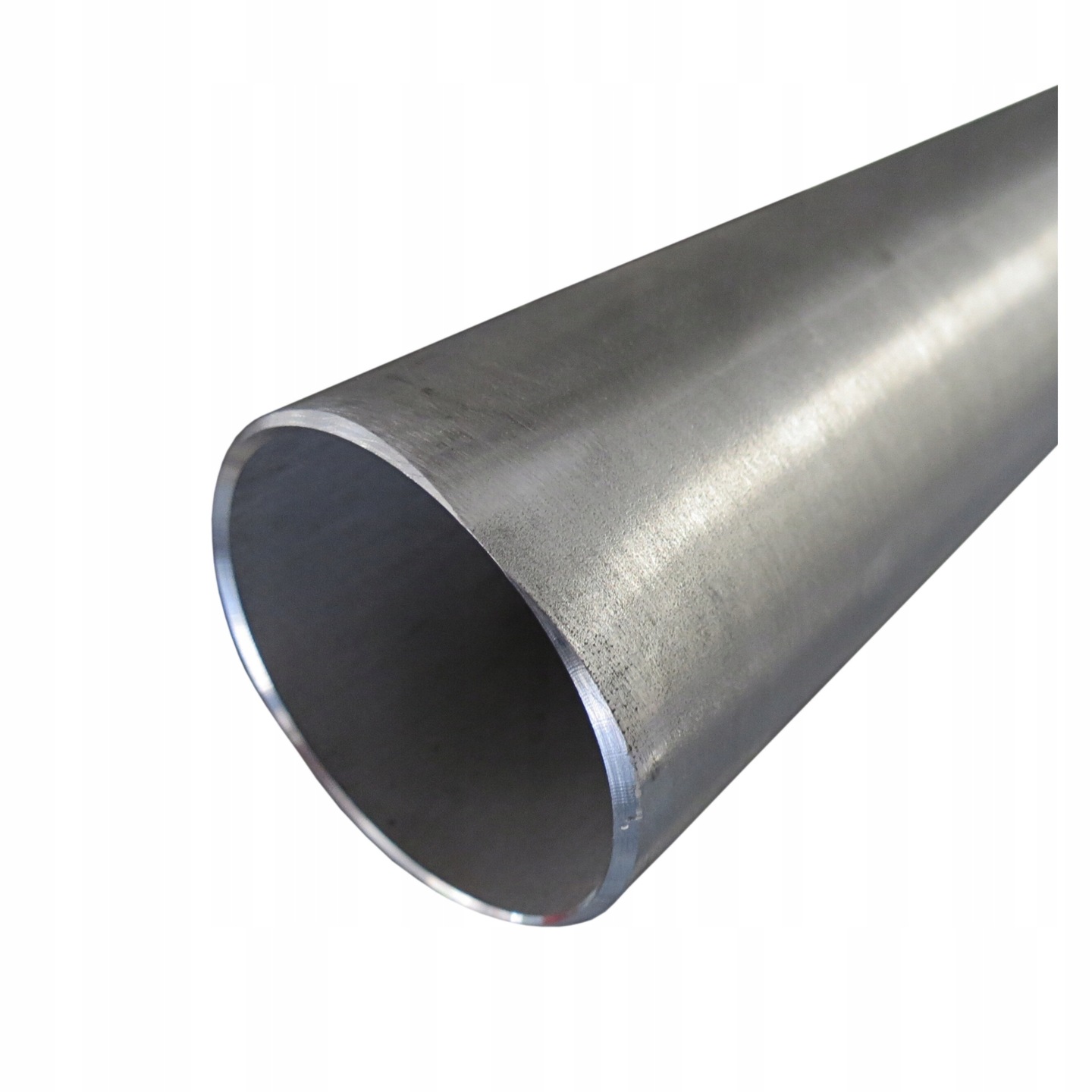
A push-in fitting sits inside the tube, so what matters is the inside diameter. For the same outside diameter, it changes with the wall thickness:
| Tube (OD × wall) | Inside diameter (calculated) |
|---|---|
| 42.4 × 1.5 mm | 39.4 mm |
| 42.4 × 2 mm | 38.4 mm |
| 42.4 × 2.6 mm | 37.2 mm |
| 42.4 × 3 mm | 36.4 mm |
Choose push-in elbows, connectors, brackets and end caps for the tube stated in the product description, for example 42.4 × 2 mm. The universal bracket 42.4 × 2.5 mm (in 304 and 316) is described as ‘for 42.4 × 2.5 tube’. We do not stock that tube, so please confirm the fit with our customer service. Not sure about your kit? Send customer service the list of fittings and the tube you plan to use.
Stainless steel glass balustrades: 45 × 45 and 40 × 50 mm glass clamps and glass adaptors
There are two ways to fix the glass. A 45 × 45 mm or 40 × 50 mm glass clamp grips the edge of the panel and fixes to the post – the ‘for tube’ version to tube, the ‘for box section’ version to box section. A glass adaptor is a point fixing with an M8 or M10 thread, fixed to the post.
- Stainless 40 × 50 mm and 45 × 45 mm clamps take 6, 8 or 10 mm glass. Rubber inserts are sold separately, to suit the glass thickness – they come in 6, 8 and 10 mm versions for both clamp sizes.
- Ø50 mm glass adaptors have separate gaskets; Ø30 mm adaptors use silicone rubber.
- The round Ø60 mm clamp for 42.4 mm tube is supplied with its inserts.
A word of caution about the unpolished 45 × 45 mm zamak glass clamp for box section (for 8 or 10 mm glass, not 6 mm). Zamak (also known as mazak) is a zinc alloy with aluminium, magnesium and copper – it is not stainless steel. Zinc is less noble than stainless steel, so where moisture and salt are present it is the zamak clamp that corrodes in such a joint. We do not recommend it outdoors or near the coast – choose a stainless steel clamp instead.
The type of glass, the balustrade height and the infill are governed by the building regulations that apply to your project – check them with your designer before you order.
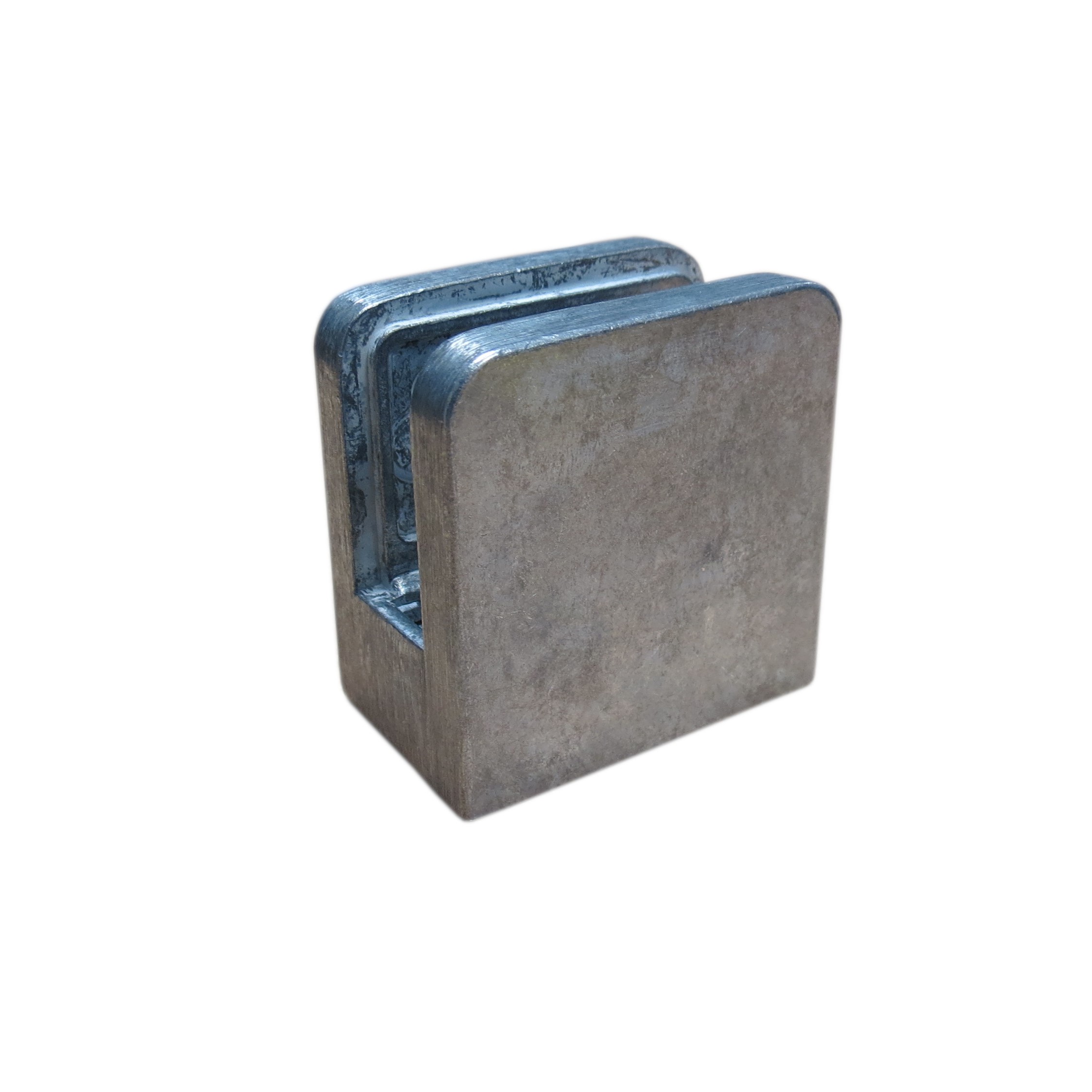
Uchwyt do szkła 45x45 na profil surowy zamak
In stock · 46 pcsUchwyt do szkła nierdzewny 40x50 na profil poler 304
In stock · 338 pcs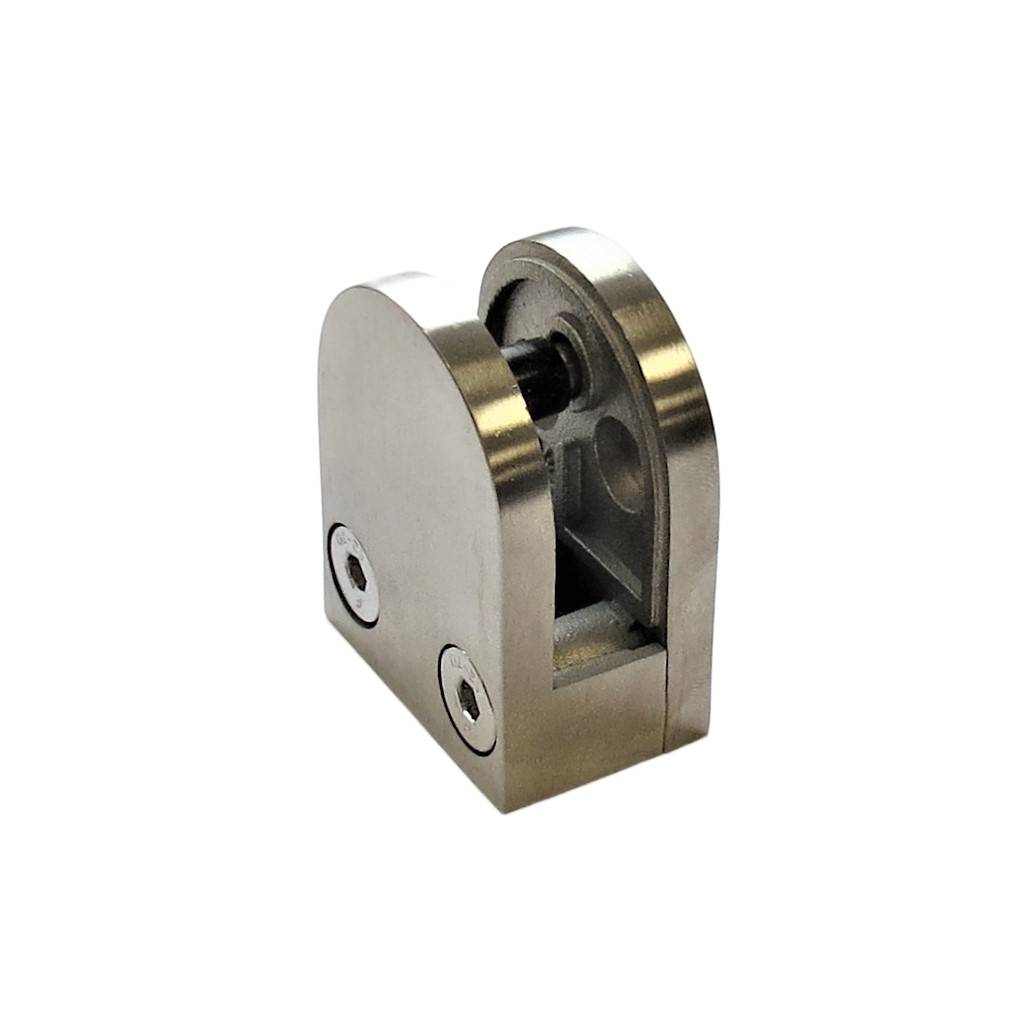
Uchwyt do szkła nierdzewny 40x50 na profil szlif 304
In stock · 105 pcs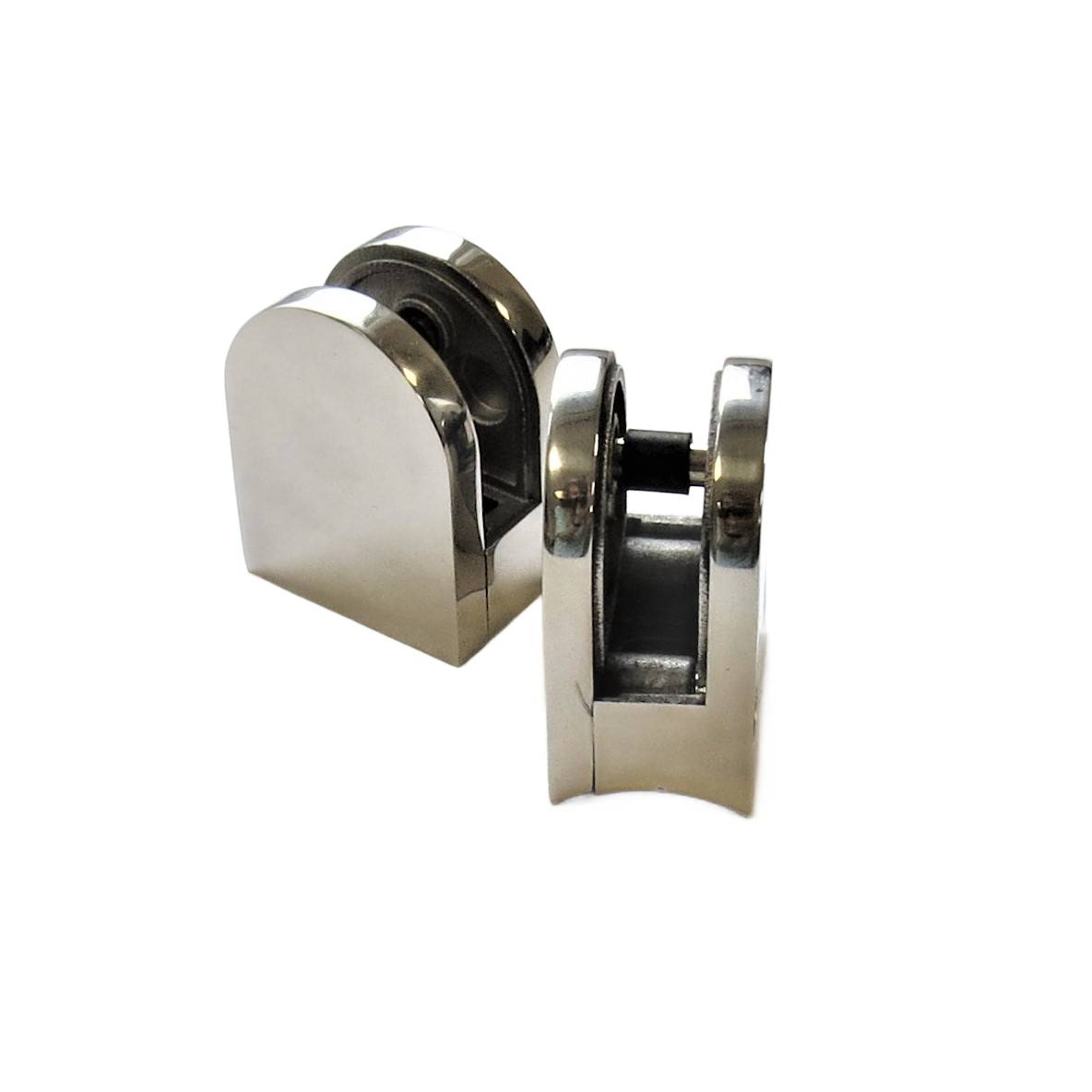
Uchwyt do szkła nierdzewny 40x50 na rurę poler 304
In stock · 106 pcs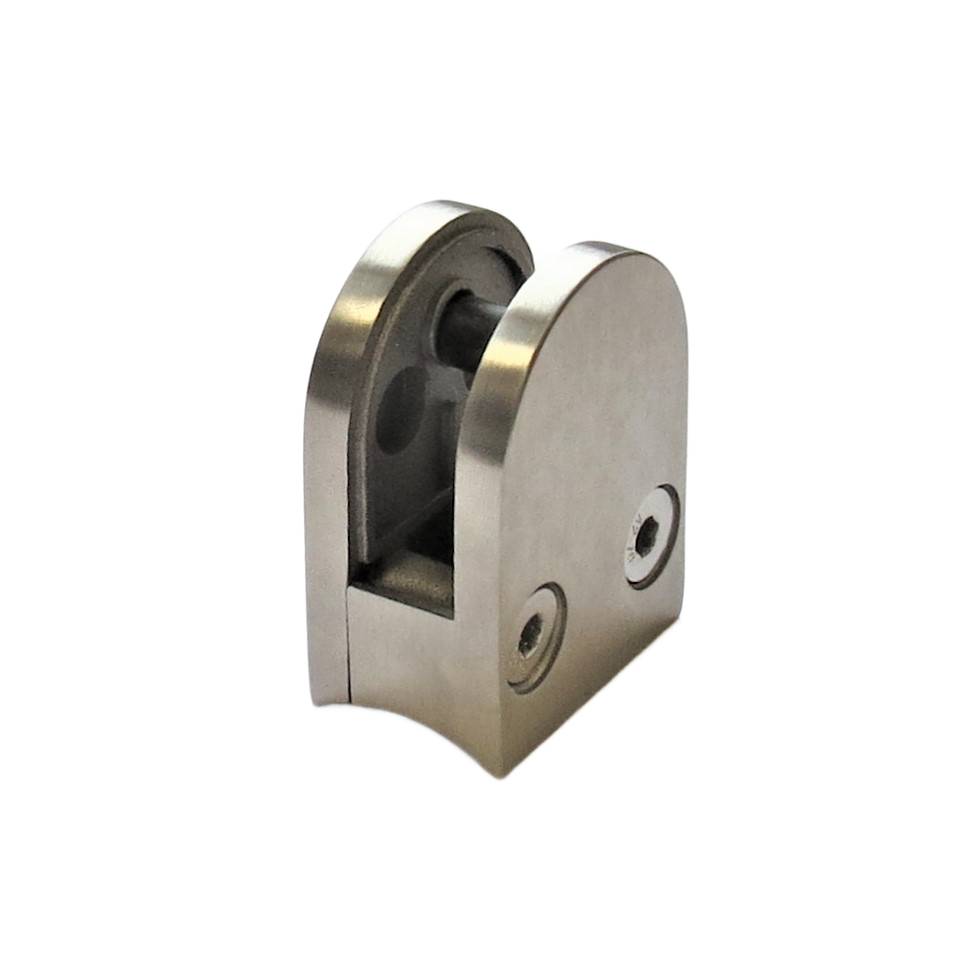
Uchwyt do szkła nierdzewny 40x50 na rurę szlif 304
In stock · 188 pcs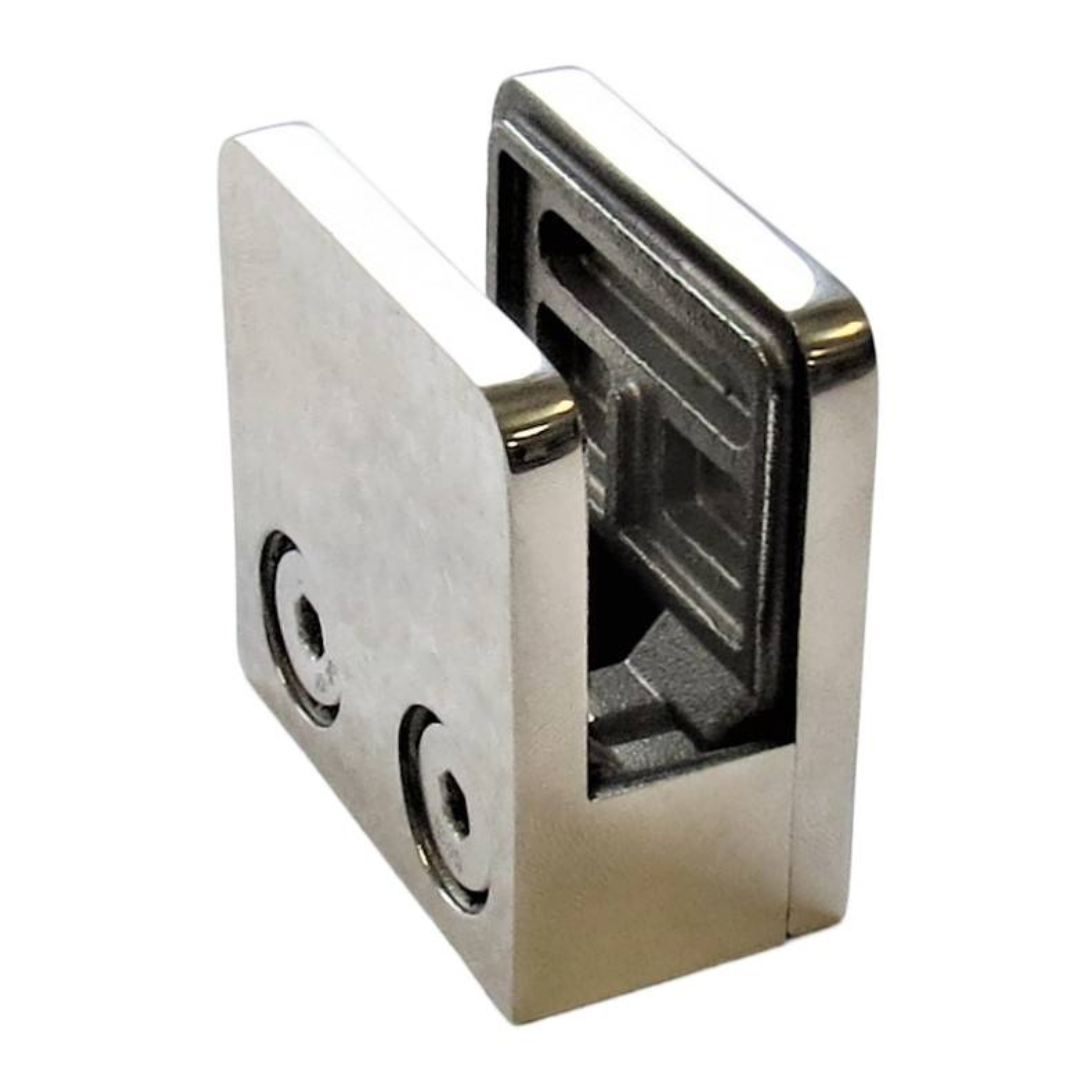
Uchwyt do szkła nierdzewny 45x45 na profil poler 304
In stock · 91 pcs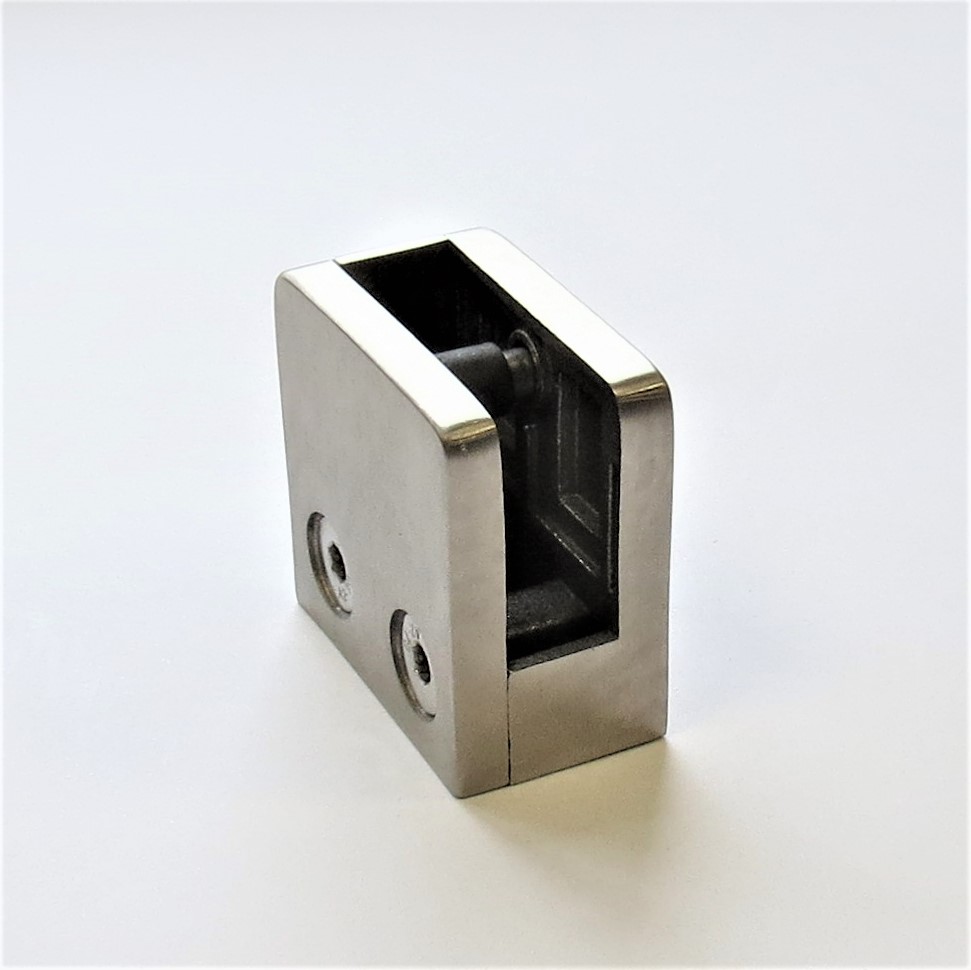
Uchwyt do szkła nierdzewny 45x45 na profil szlif z blaszką podtrzymującą 304
Only 2 pcs left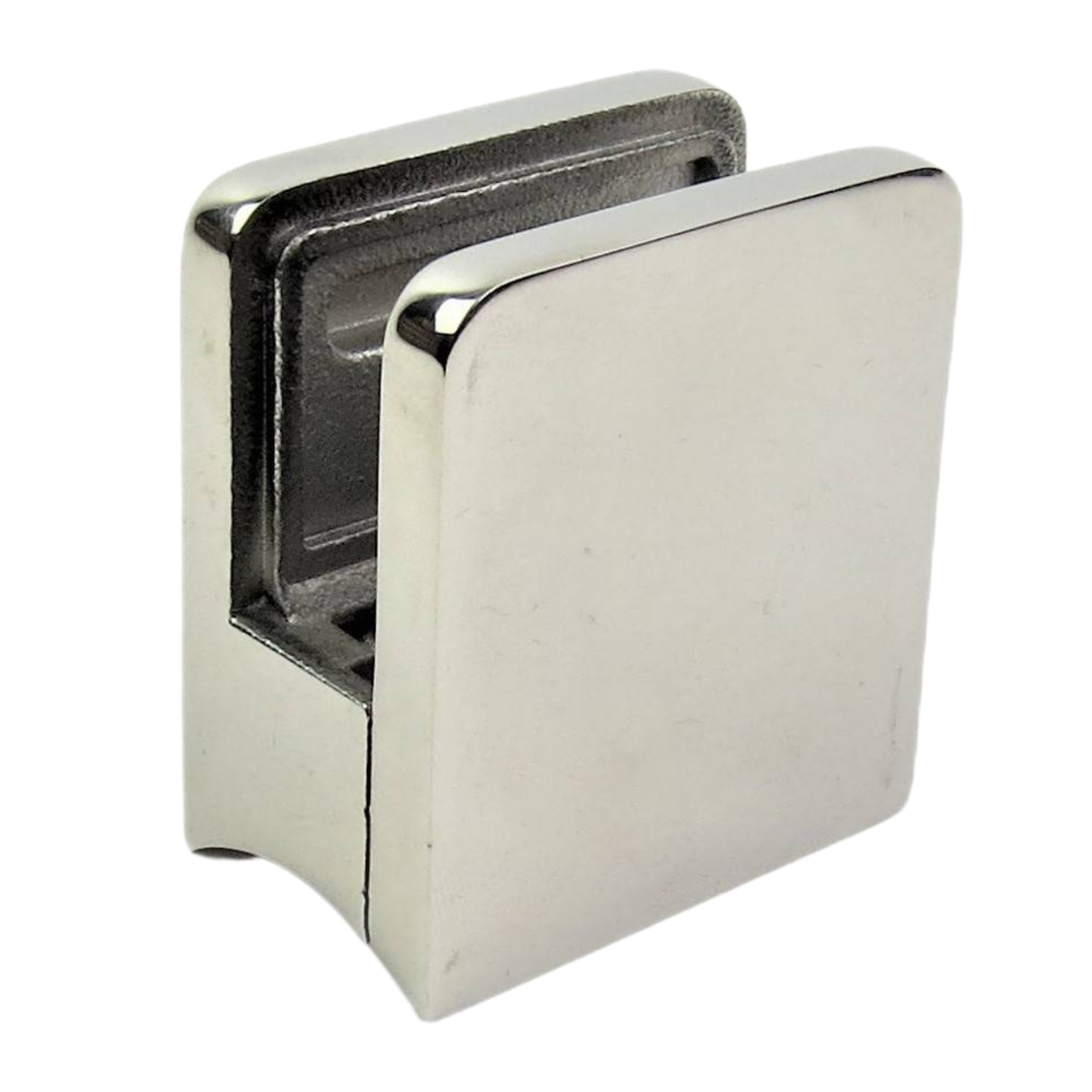
Uchwyt do szkła nierdzewny 45x45 na rurę poler 304
In stock · 120 pcs304 or 316 for a balustrade – indoors, outdoors and by the sea
The British Stainless Steel Association (BSSA) notes that grade 304 (1.4301) is usually specified for interiors, while grade 316 (1.4401) is typically used outdoors or where the risk of corrosion is higher than normal, such as around swimming pools. In its Merkblatt 828, the German stainless steel information centre ISER (Informationsstelle Edelstahl Rostfrei) lists 1.4301 as the standard material for balustrades in rural and urban locations without significant chloride or SO2 exposure. Where chlorides are present – de-icing salt, coastal air – it points to 1.4401. BSSA defines a marine environment as an area where wind-borne sea spray or mist may be present.
| Location | Grade | What to watch for |
|---|---|---|
| Indoors: stairwell, mezzanine, office | 304 (1.4301) | iron contamination during installation |
| Outdoors, rural and urban, no salt | 304 (1.4301) | clean areas not washed by rain at least once a year (ISER) |
| Next to roads salted in winter, industrial atmosphere | 316 or 316L (1.4401 or 1.4404) | regular cleaning, smooth finish |
| Coastal | 316 (1.4401), mirror polished by default; according to BSSA, 304 only in mild and moderate conditions, with a good finish and regular cleaning | avoid a standard brushed finish (BSSA); A4 bolts and anchors |
| Swimming pool hall | pool-side rails: BSSA strongly prefers 316; load-bearing parts – consult your designer | BSSA recommends washing down daily; for load-bearing parts, BSSA and ISER point to grades higher than 304 and 316 |
In the BSSA selection table for marine sites, 316 is “probably the best choice” in mild and moderate conditions, while 304 is “worthy of consideration if precautions are taken” – a good surface finish and regular cleaning. In the most severe marine conditions, BSSA rates 304 as likely to suffer severe corrosion. So is 304 stainless steel suitable for marine use? Only with those precautions, and not on the most exposed sites. 316 is often sold as ‘marine grade’, but it still needs cleaning. More in our article on stainless steel grades.
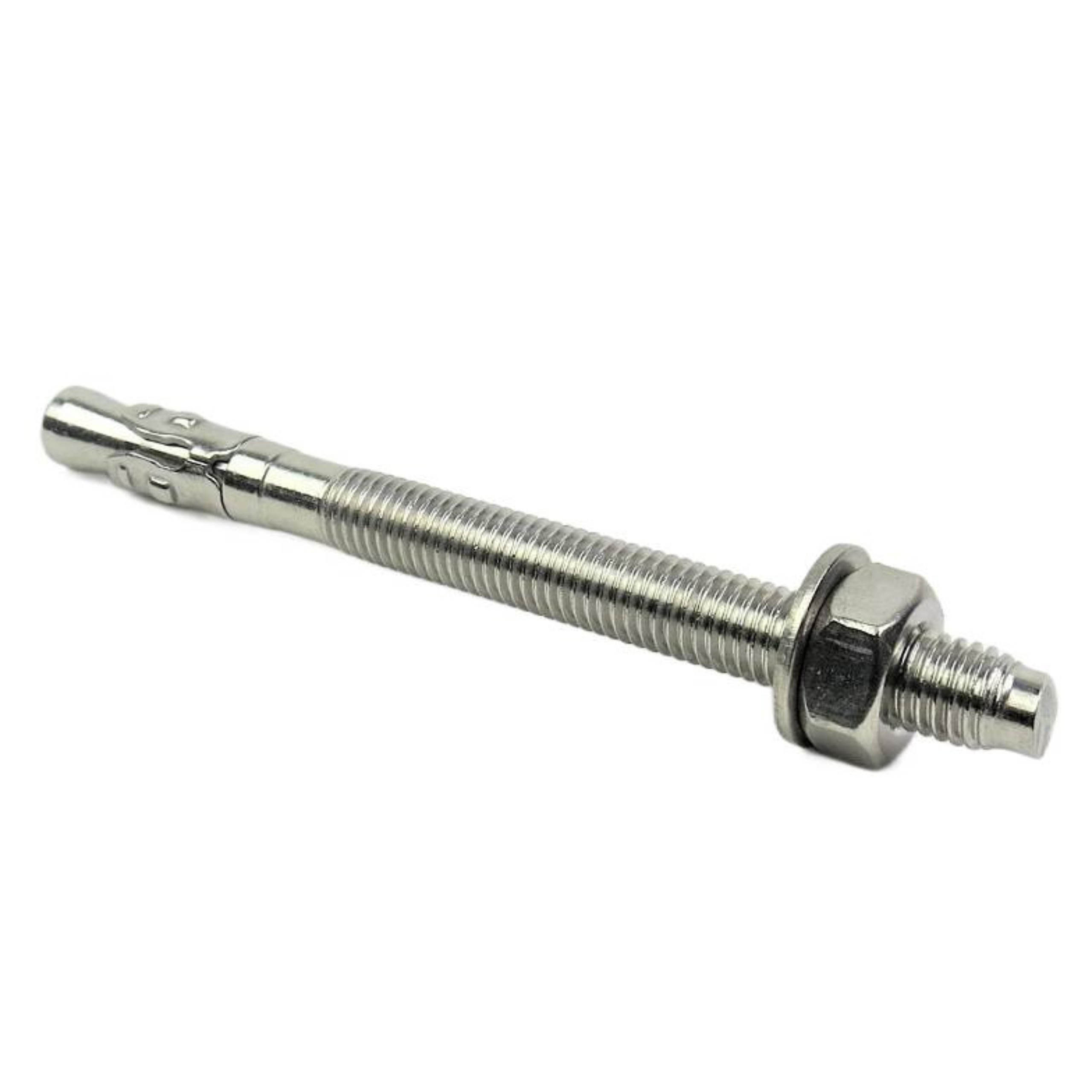
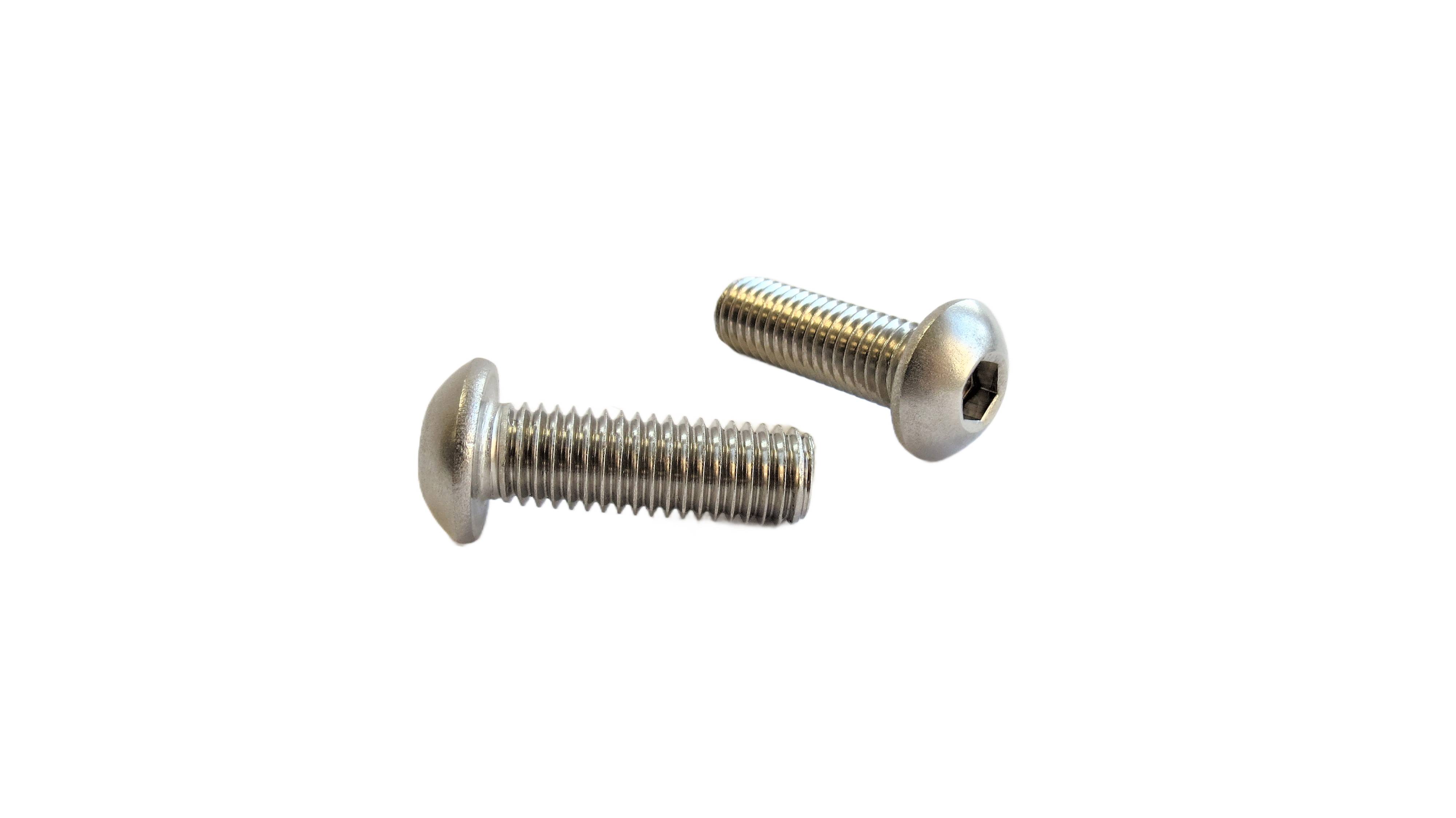
What this means for our shop: our balustrade fittings are in grade 304. Only a few items come in 316 – the universal push-in bracket 42.4 × 2.5 mm and the Ø48.3 mm brushed base cover – plus unpolished 42.4 × 2.6 mm tube. Wire rope and wire rope clips are also available in 316, as are some of the turnbuckles, wedge anchors and bolts (marked A4 in the product names). You cannot build a complete 316 balustrade from our shop. Planning a coastal balustrade? Call customer service before you order.
A2 and A4 are the austenitic steel designations used for stainless steel fasteners in EN ISO 3506-1 (as in A2-70), not material grades or numbers. In our product names and descriptions, A2 corresponds to grade 304 (1.4301) and A4 to grade 316 (1.4401). When choosing, go by the grade number in the product description.
Brushed or polished – finish and corrosion
The BSSA rule of thumb: the smoother the finish, the better the corrosion resistance. In marine environments, the default choice is mirror-polished 316. BSSA explicitly advises against a standard 240-grit brushed finish there, even in 316. The alternative is a 1K/2K finish to EN 10088-2: roughness Ra below 0.5 µm, measured across the grain. BAM research cited by ISER shows that below Ra 0.5 µm corrosion resistance rises significantly. Euro Inox recommends specifying a maximum Ra of 0.5 µm when ordering handrail tube if ease of cleaning matters.
Most of our fittings have a brushed finish. We do not publish an Ra value for it, so for coastal use do not assume it meets the Ra < 0.5 µm requirement. The polished items are mainly base covers, glass clamps and crossbar holders, plus a handful of others: the push-in rounded elbow 42.4 × 2 mm, an adjustable bracket, the slip-on base collar 42.4 × 2 mm and the Ø25/16 mm ball with a bore. There is no complete system in a polished finish, so plan which parts will be on show. Need other machining or finishing work? Ask us – our services are described on the services page (in Polish). Surface types are covered in our article on stainless steel surface finishes.
Rust staining and tea staining on stainless steel – causes and prevention
Rust-coloured staining on a balustrade usually has one of two causes.
- Iron contamination. Swarf from grinding mild steel, and tools or brushes previously used on ordinary steel. According to BSSA, as soon as such contamination gets wet, rust staining follows. It is a common cause of rust marks on handrails. Do not cut or grind mild steel next to stainless steel. Do not clean stainless steel with ordinary steel wool or wire brushes. Free iron on the surface can be detected with the ferroxyl test (ASTM A380).
- Salt deposits from sea spray and road salt. Tiny pits with a brownish halo form underneath – Euro Inox calls this ‘tea staining’. ISER notes that near the coast and salted roads, pitting can also appear on 316 if it is not cleaned regularly.
By the sea, this is above all a question of appearance. BSSA estimates that in a marine environment pitting would take about 145 years to perforate 1 mm of 304 and about 260 years for 316. Staining makes a balustrade unacceptable on aesthetic grounds long before that.
Cleaning a stainless steel balustrade
- Clean the whole balustrade after installation. ISER: warm water with a little washing-up liquid is enough and is the cheapest option.
- Clean brushed surfaces along the grain.
- Light staining can be removed with a mild cream cleaner. For fresh iron particles, BSSA recommends a saturated oxalic acid solution, applied without abrasion. For salt deposits, Euro Inox suggests cleaners containing phosphoric acid.
- Masonry cleaners based on hydrochloric acid (brick acid) must not come into contact with stainless steel. Protect the balustrade while finishing work is carried out.
- In corrosive environments, Euro Inox recommends cleaning the balustrade as often as the building’s windows, and every few months where pollution is heavy. Areas not washed by rain matter most.
What to watch for during installation
- Crevices. ISER: crevice corrosion develops in poorly ventilated crevices with chloride deposits, for example at gaskets and under overlapping clamped and push-fit joints. Outdoors, keep places where water and dirt collect to a minimum. For welded joints, BSSA recommends continuous welds rather than stitch (intermittent) welds – more in our article on welding stainless steel.
- Fixings. By the sea and next to salted roads, choose A4 (316) bolts and anchors, not A2. In the wedge anchor and bolt categories, pick the items marked A4.
- Contact with other metals. Galvanic (bimetallic) corrosion needs two different metals in contact and an electrolyte, that is moisture – it cannot occur when the metals are dry. Moist, salt-laden air is more of a risk than rainwater. Galvanised steel in contact with stainless steel is not usually a serious risk, but in marine environments isolating materials are used, such as polyamide washers or plastic sleeves. Stainless steel fasteners in aluminium are usually safe. The reverse – aluminium bolts or rivets in stainless steel parts – is not.
- Thermal expansion. The coefficient of thermal expansion of 304 and 316 is about 16 × 10-6/°C, compared with about 12.2 × 10⁻⁶/°C for carbon steel (BSSA). A 6 m handrail will lengthen by about 4.8 mm with a 50 °C temperature difference. Allow for expansion on long runs.
Stainless steel wire balustrade – wire rope, thimbles, clips and turnbuckles
A wire rope infill can be put together from our marine rigging range:
| Item | Sizes | Grade |
|---|---|---|
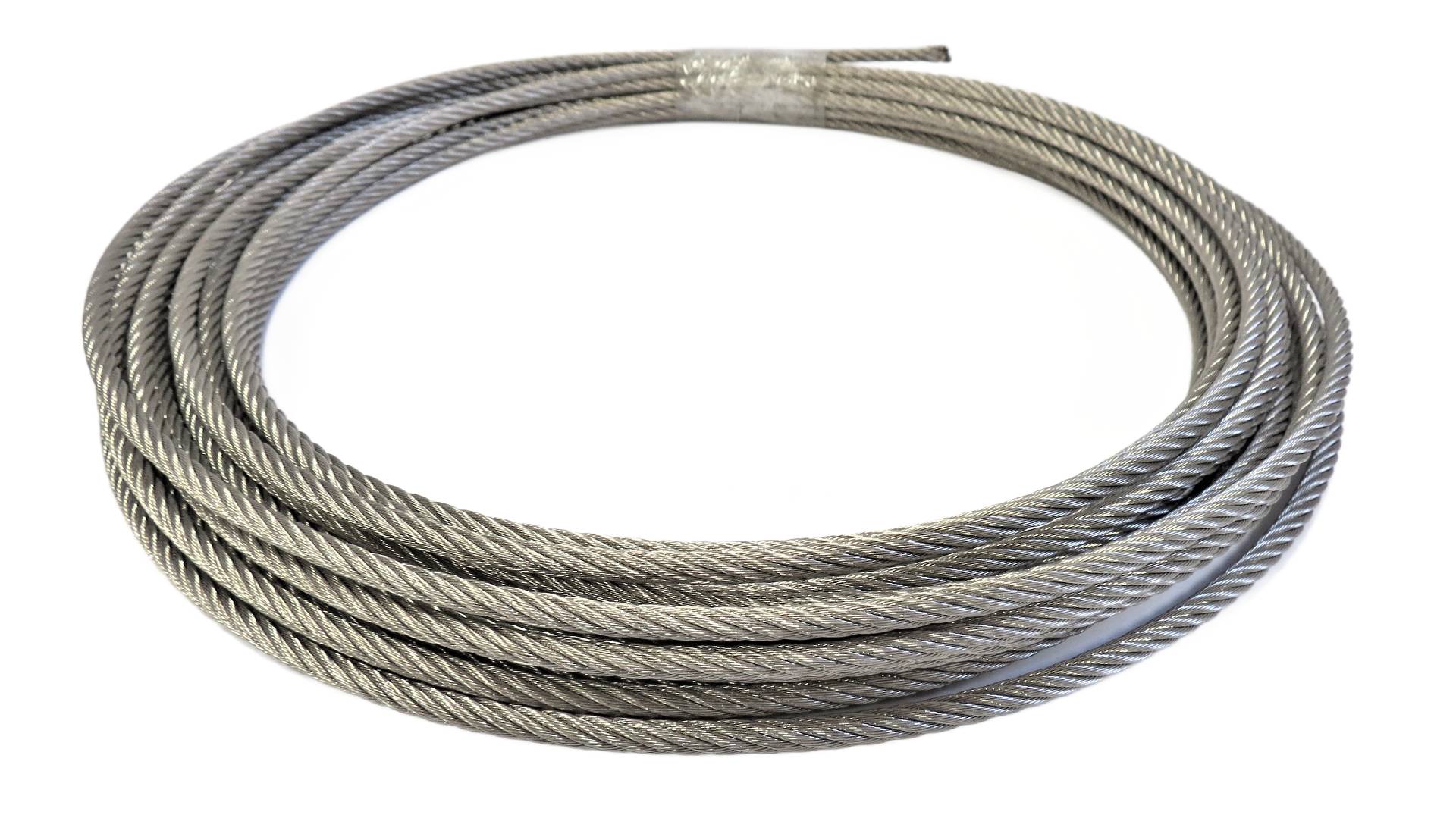
| Stainless steel wire rope 7 × 19 | 2, 3, 4, 5, 6, 8 mm | 316 (1.4401), marked A4 |
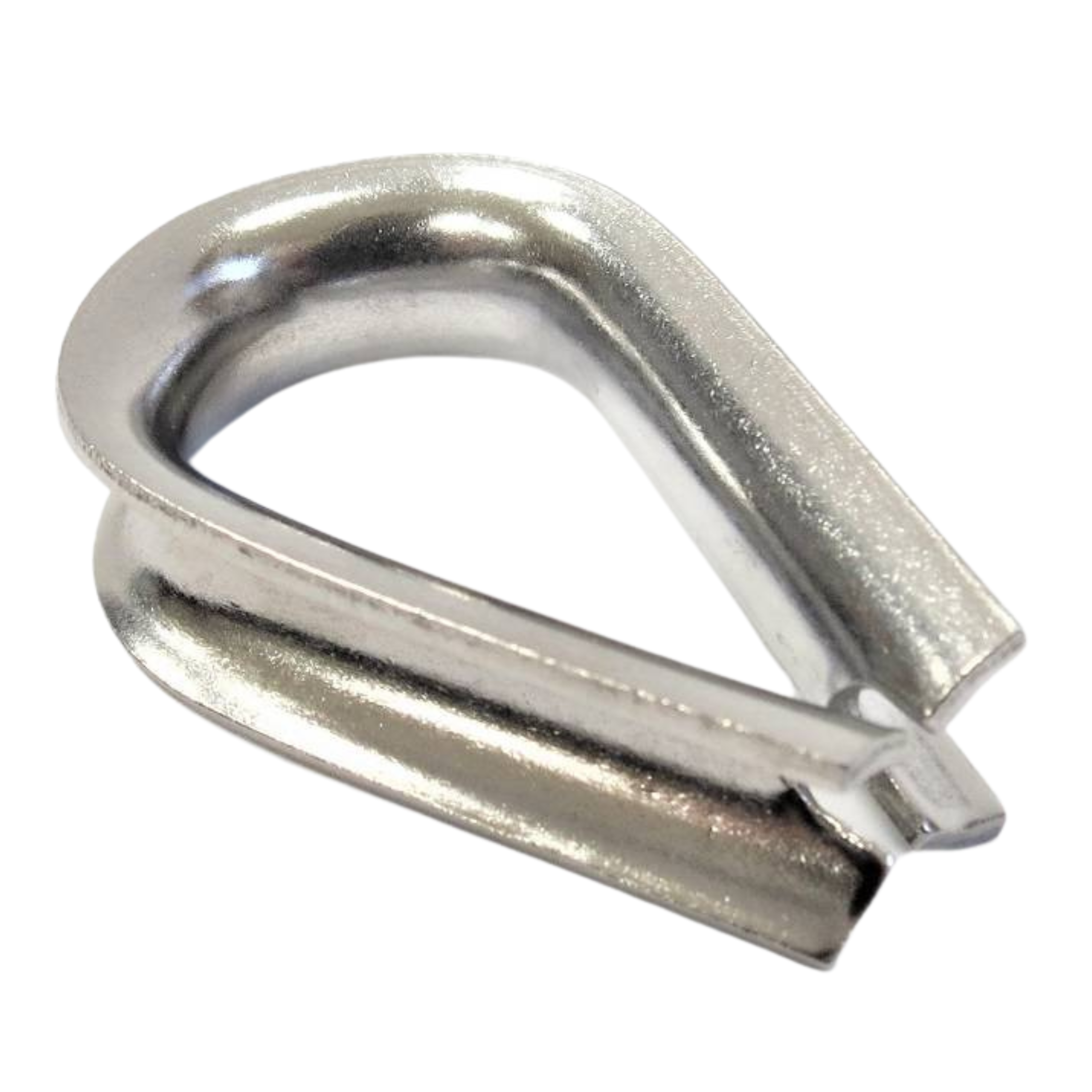
| Thimbles | 3–10 mm | 304 (1.4301), marked A2 |
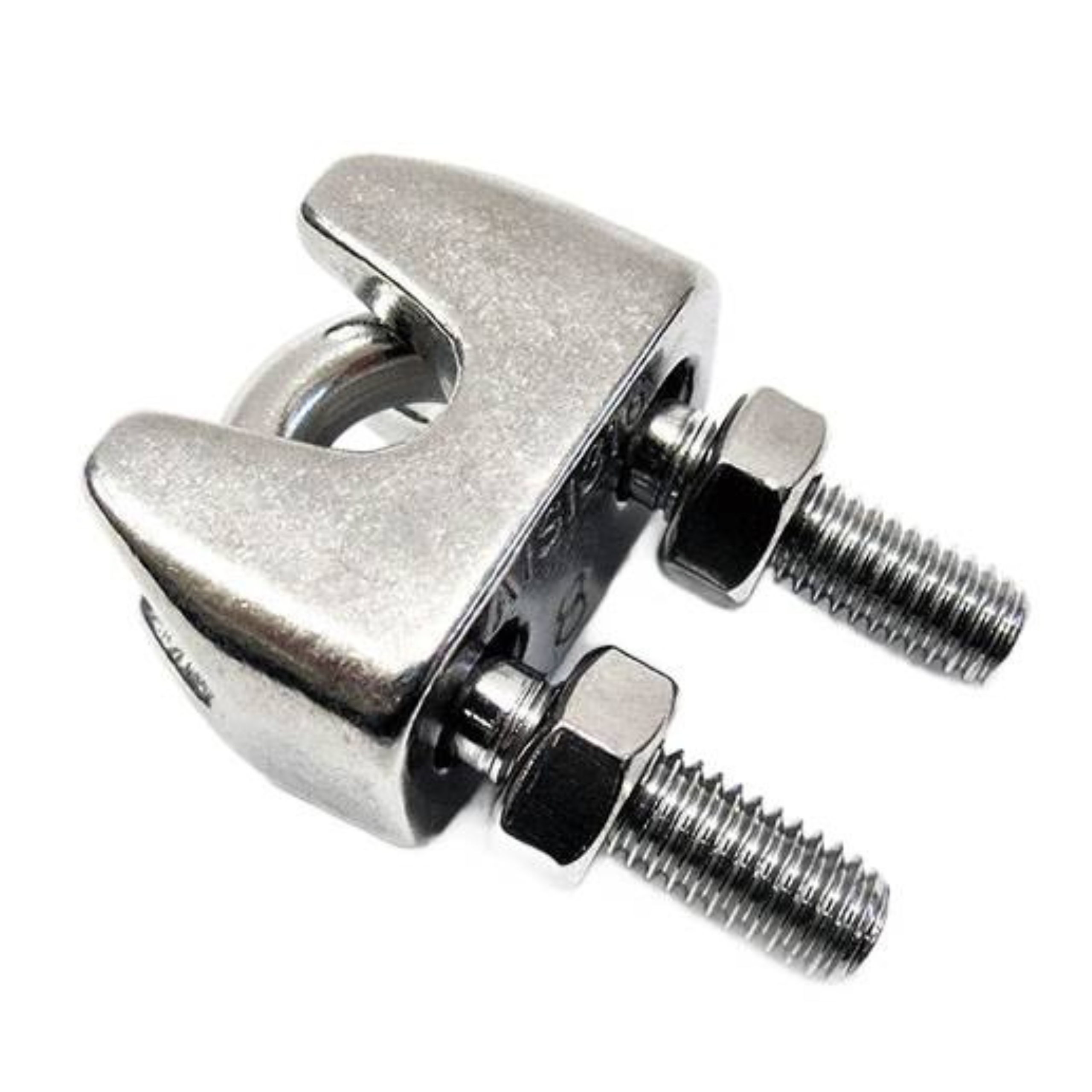
| Wire rope clips, type C | 3–8 mm | 316 (1.4401), marked A4 |
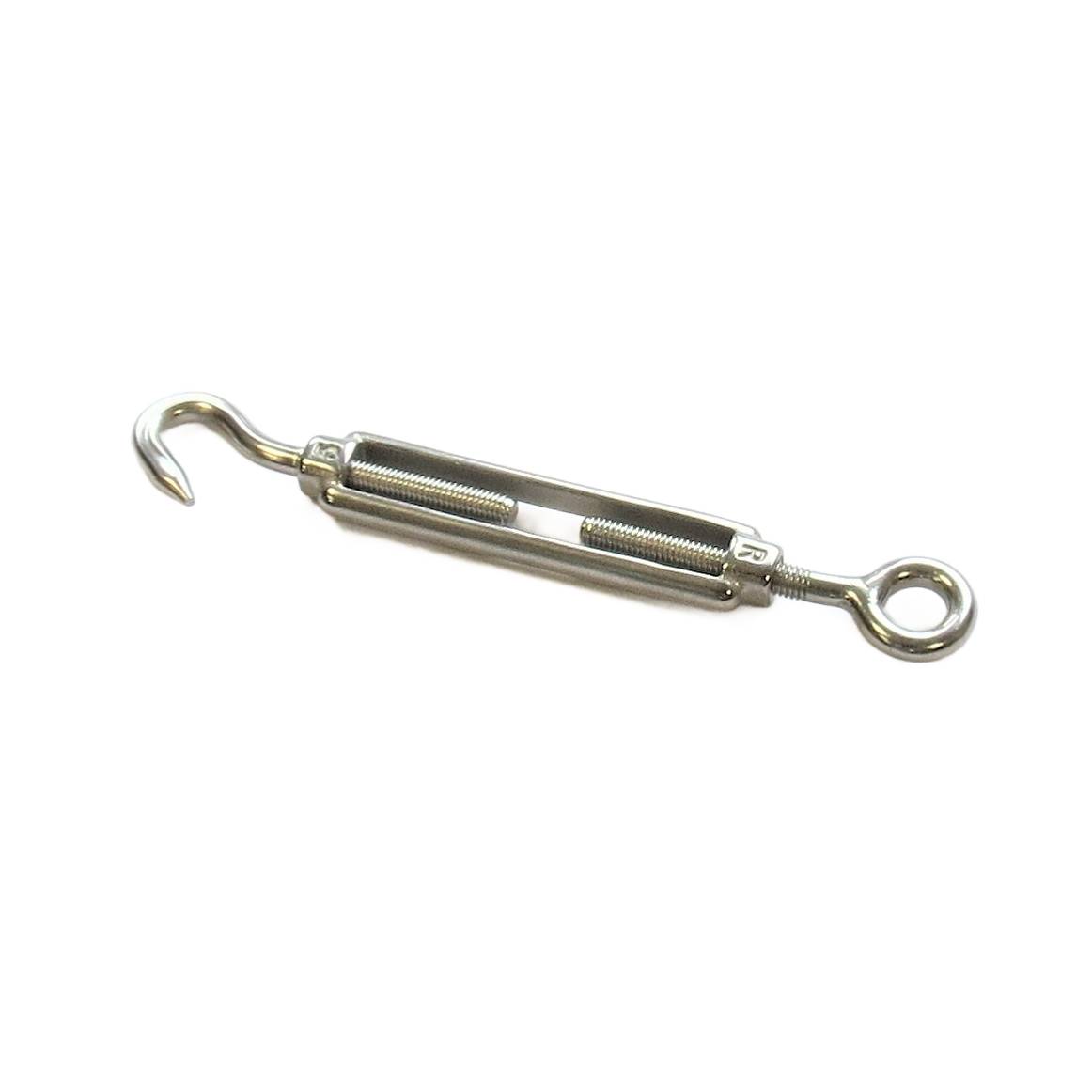
| Turnbuckles | 11 items | 304 (A2); hook and hook M5 and M6 also in 316 (A4) |
Wire rope is sold by the metre: 1 unit = 1 m. We only stock 7 × 19 construction. It is flexible, but not as strong as 1 × 19, which is stiffer, stretches less and is often used in architectural rigging and balustrades. The thimbles are grade 304 (A2), so take that into account when specifying a complete coastal kit. Please confirm the breaking load of the rope with customer service, and take the fixing spacing and tension from your design.
How to order balustrade fittings
- Fittings are sold per piece. Tube, box section and bar are sold in full metres, with cutting via the ‘How should we cut it?’ field.
- We deliver within Poland only, and prices are in PLN. Small items (up to 64 cm and 25 kg) can go to an InPost parcel locker. Tube, box section, bar and cut lengths are not sent to parcel lockers – cutting to suit a parcel locker is only possible by individual arrangement, via an enquiry. A length of tube up to 1 m travels as a standard courier parcel; longer lengths go as long-length deliveries (up to 2, 2.5 or 4 m). A 3 m tube cut into 3 × 1 m travels as a standard parcel, not as a long-length delivery. Details and costs on the delivery page.
- Collection in person is free from Dębica, ul. Rzeszowska 139 or Mielec, ul. Racławicka 6 (both in Poland). Please wait for our email confirming that your order is ready for collection. Payment is made in advance.
- A business account shows prices excl. VAT; Polish VAT at 23% is added on the invoice.
- For tube, box section and bar, you can tick the box for a free copy of the inspection certificate 3.1 (EN 10204) where the manufacturer issues one for the product. For goods cut to length, customer service confirms whether the certificate is available – tick the certificate box and mention it in the order notes. Balustrade fittings do not have the certificate option in the shop.
- Help with choosing the material, grade and sizes: customer service on +48 533 251 824 (Monday to Friday, 7am to 3pm Polish time), bok@jannierdzewny.pl.
Need a complete balustrade rather than parts? Jan Nierdzewny makes bespoke balustrades and fencing. Examples of our work are shown (in Polish) on our balustrades and fencing page. For base plates in non-standard sizes and other machining services, ask us – our services are described on the services page (in Polish). Get in touch via our contact page or the quote form at the bottom of this page. We usually reply within one working day.
Frequently asked questions
304 or 316 stainless steel for a balustrade?
Indoors, and outdoors where there is no salt, 304 is usually sufficient. Next to roads salted in winter and by the sea, 316 with a smooth finish is the usual choice. Neither grade removes the need for cleaning. Our balustrade fittings are in 304, with only a few items in 316.
Why is my stainless steel balustrade showing rust stains?
Most often because of iron contamination during installation (swarf, tools used on ordinary steel) or salt deposits. Light staining can be removed with a mild cream cleaner. By the sea and next to salted roads, clean the balustrade regularly, especially areas not washed by rain.
What glass thickness does a 45 × 45 mm glass clamp take?
Stainless 45 × 45 mm and 40 × 50 mm clamps take 6, 8 or 10 mm glass. Rubber inserts are sold separately, in the version for your glass thickness. The zamak 45 × 45 mm clamp takes 8 or 10 mm glass.
Which tube do 42.4 mm elbows and end caps fit?
The tube stated in the product description – in our range usually 42.4 × 2 mm (inside diameter 38.4 mm). We also stock 42.4 mm tube with 1.5, 2.6 and 3 mm walls, which have a different inside diameter. Order the tube and the push-in fittings with the same ‘diameter × wall’ size.
Do you sell stainless steel balustrade posts?
You build the post from 42.4 mm or 48.3 mm tube or 40 × 40 mm box section, cut to length via the ‘How should we cut it?’ field. Add a base plate to suit the tube diameter and a base cover. We have base plates for 40, 42.4, 48.3 and 50.8 mm tube and for 40 × 40 mm box section. The base plate is the post base that is bolted to the floor; the base cover hides the fixing.
What do A2 and A4 mean on balustrade parts?
They are the austenitic steel designations for bolts, nuts and anchors in EN ISO 3506-1 (as in A2-70). In our product descriptions, A2 corresponds to grade 304 (1.4301) and A4 to 316 (1.4401). By the sea and next to salted roads, choose A4 bolts, anchors and wire rope clips.
What height must a balustrade be?
The balustrade height and the infill requirements are set by the applicable building regulations. We do not give figures here, because they depend on the type of building and the regulations currently in force. Check them with your designer or site manager before you order.
Need a different size, a larger quantity or cutting services? Send us an enquiry and we will reply with a quote, usually within one working day.