

Stainless steel butt-weld fittings: elbows, tees, reducers, end caps and flanges
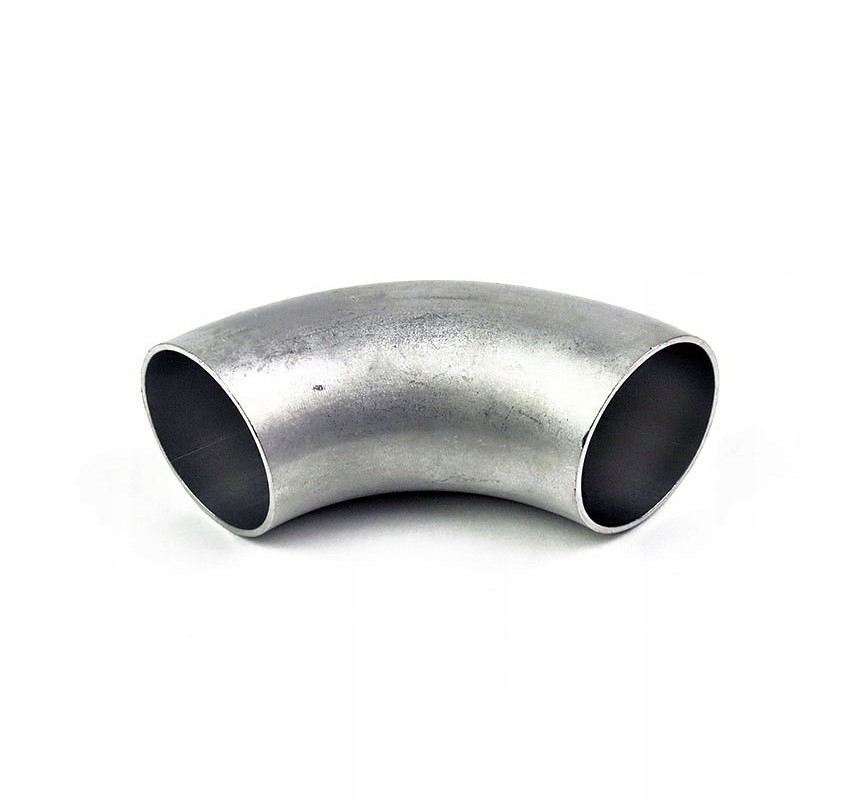
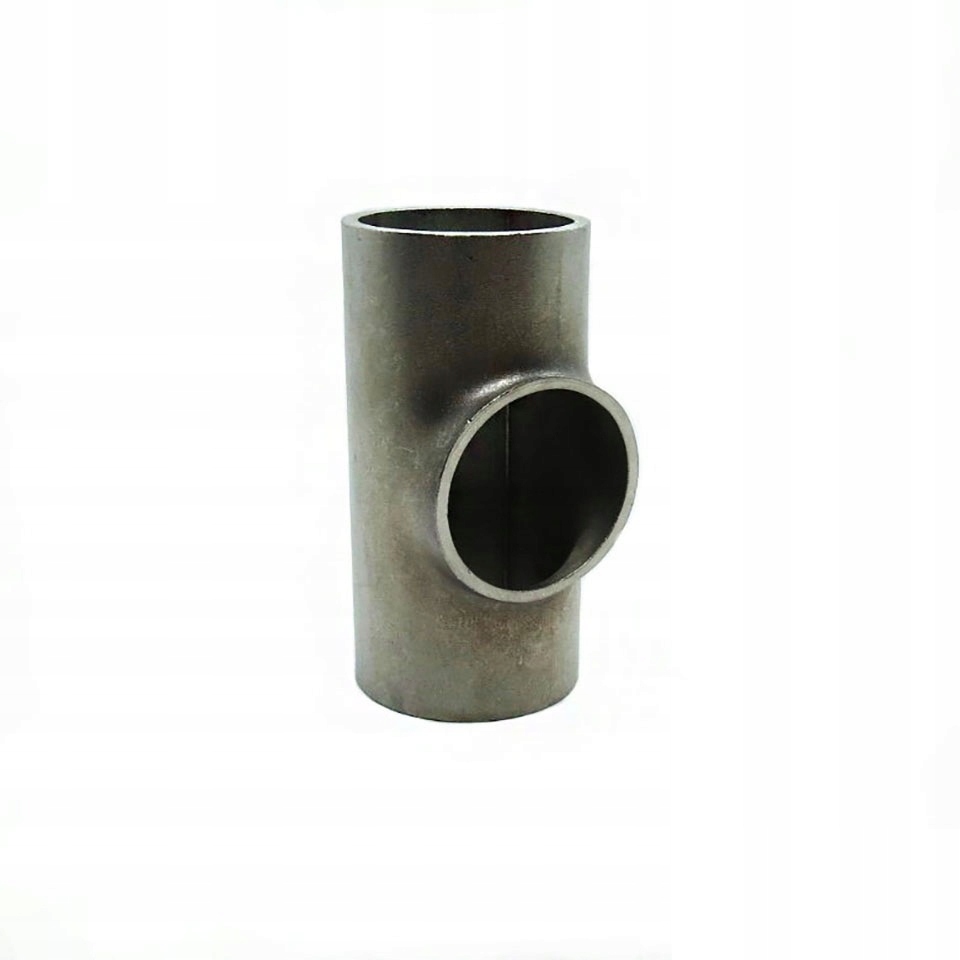
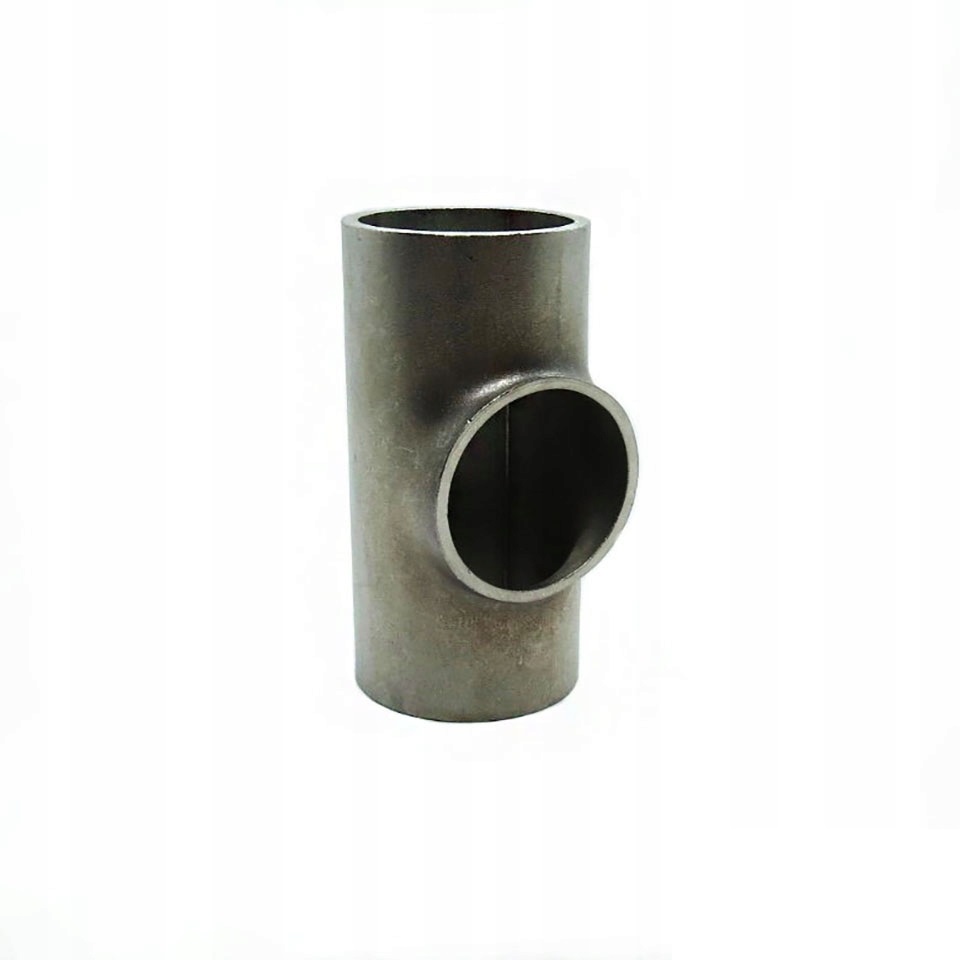
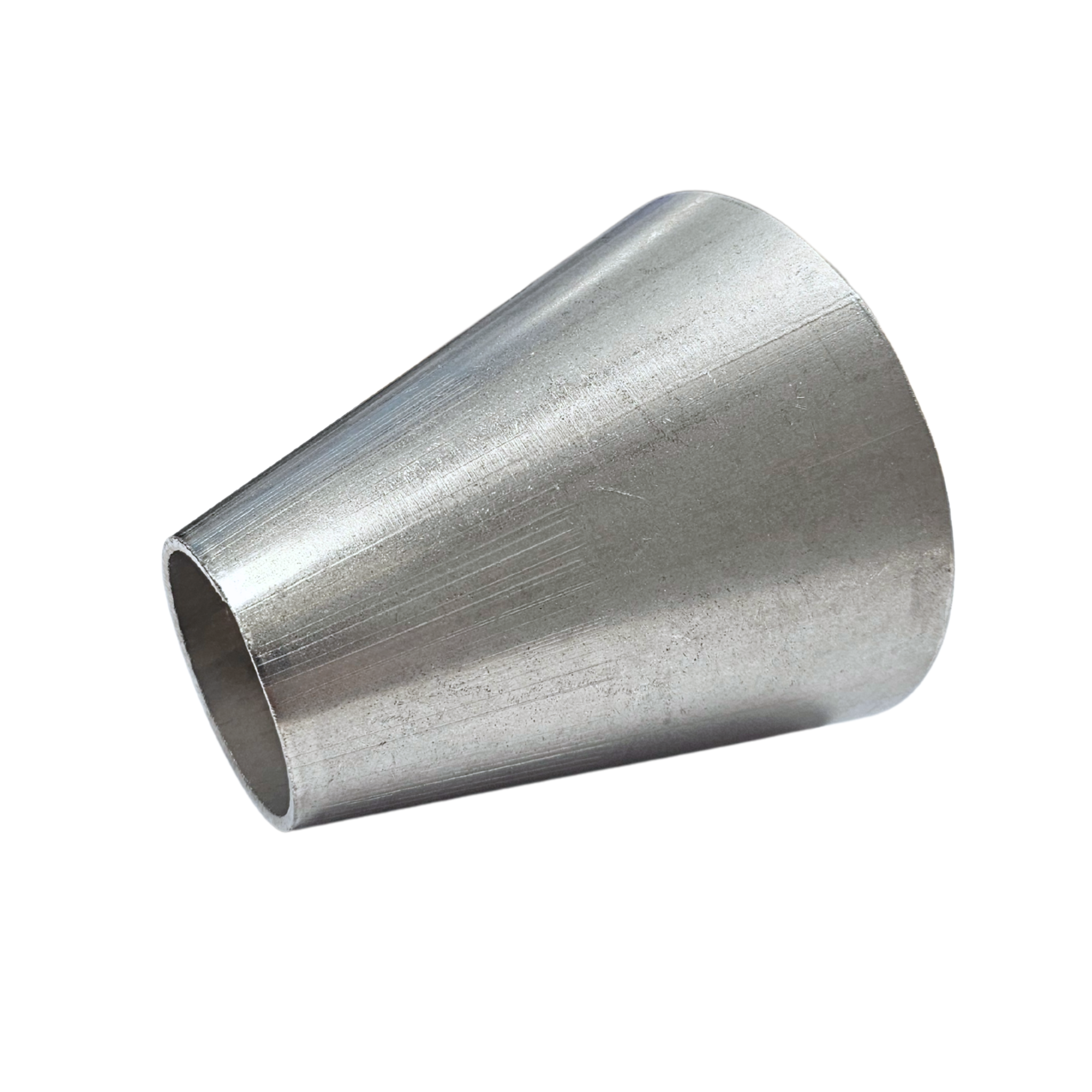
Butt-weld fittings are the parts you weld directly to the tube: elbows, tees, reducers, end caps and crosses. Flanges are used where the joint has to come apart. Below you will find the size ranges we stock, how to match a fitting to the tube, how to read designations to EN 10253 and EN 1092-1, what the DIN 11850 size series is and which grade to choose. Fittings and flanges are sold individually.
Our range of stainless steel fittings and flanges
Fittings are sized by outside diameter × wall thickness in millimetres, for example 42.4 × 2. Flanges are described by nominal size and tube OD, for example DN 25/33.7. Around 90% of our butt-weld fittings are in the 304 family (marked 304 or 304/304L). More than 20 fittings are available in grades 316, 316L and 316/316L. Flanges also come in 316L, 316/316L, 321 and 316Ti. Product names in our shop are in Polish – the Polish terms are given in brackets below so that you can find the right item.
| Item | Size range | Notes |
|---|---|---|
| Elbows (‘kolano’) | 12 × 1.5 to 355.6 × 4 mm | wall thicknesses 1.5 / 1.6 / 2 / 2.6 / 3 / 3.2 / 3.6 / 4 mm; one inch-size SCH10S elbow with a 3.05 mm wall |
| Equal tees (‘trójnik równoprzelotowy’) | 17.2 × 1.5/1.6 to 219.1 × 3 mm | also seamless, for example 88.9 × 3.05 3" SCH10S, 114.3 × 6.02 4" SCH40S, 76.1 × 3.6 grade 321 |
| Reducing tees (‘trójnik redukcyjny’) | 28.1 × 18 × 1.5 to 168.3 × 88.9 × 2 mm | run × branch × wall, for example 76.1 × 33.7 × 3; some names use a slash, for example 76.1/38 × 2 |
| Concentric reducers | 21.3/13.7 × 2 to 273/168.3 × 3 mm | ‘redukcja symetryczna’ in our product names |
| Eccentric reducers | a few sizes, for example 51/25 (grade 316), 88.9/76.1, 101.6/76.1 | ‘redukcja excentryczna’ in our product names |
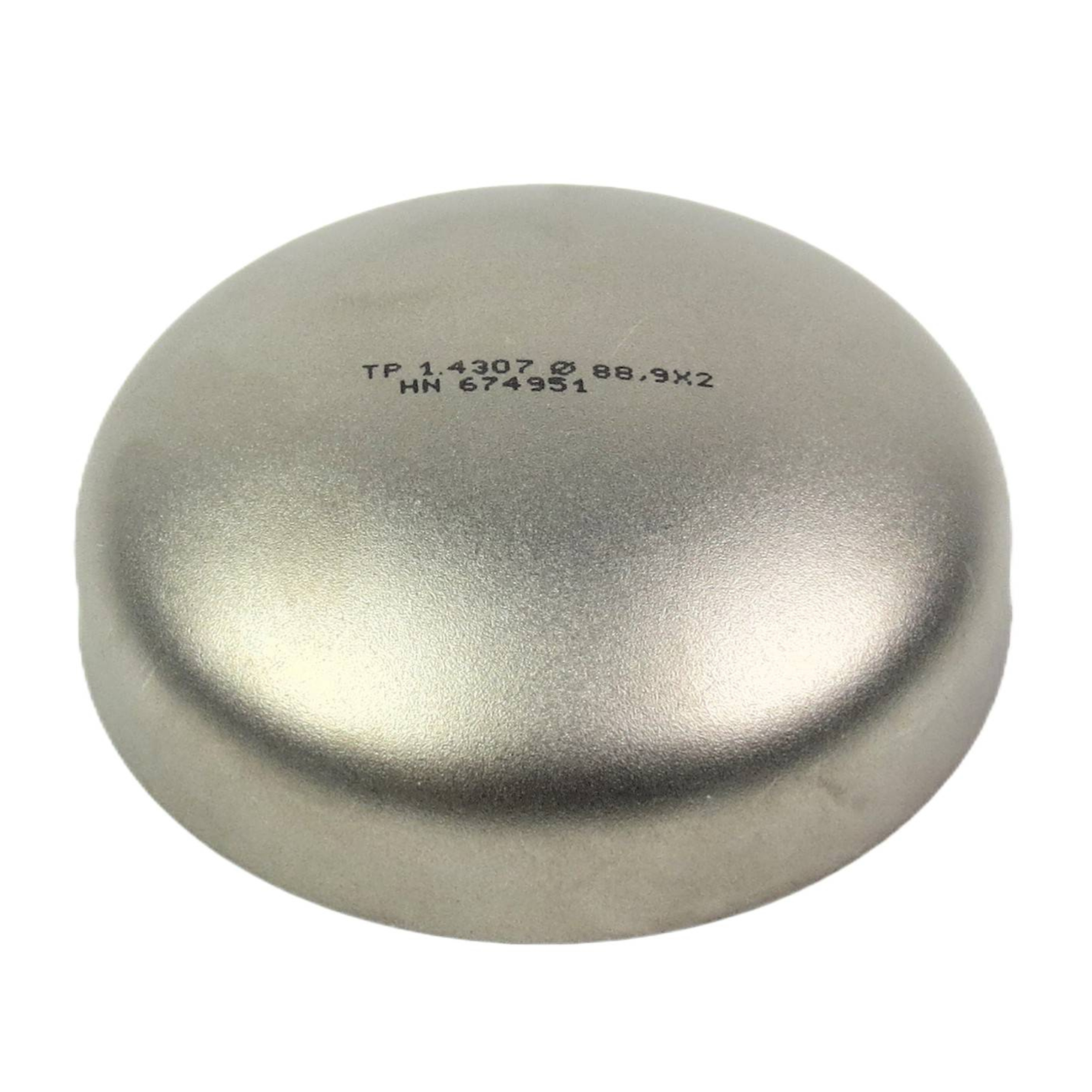
| End caps (‘dennica’) | 21.3 × 2 to 355.6 × 2.9 mm | grade 304; exception: the 219.1 × 2 end cap is in grade 316 |
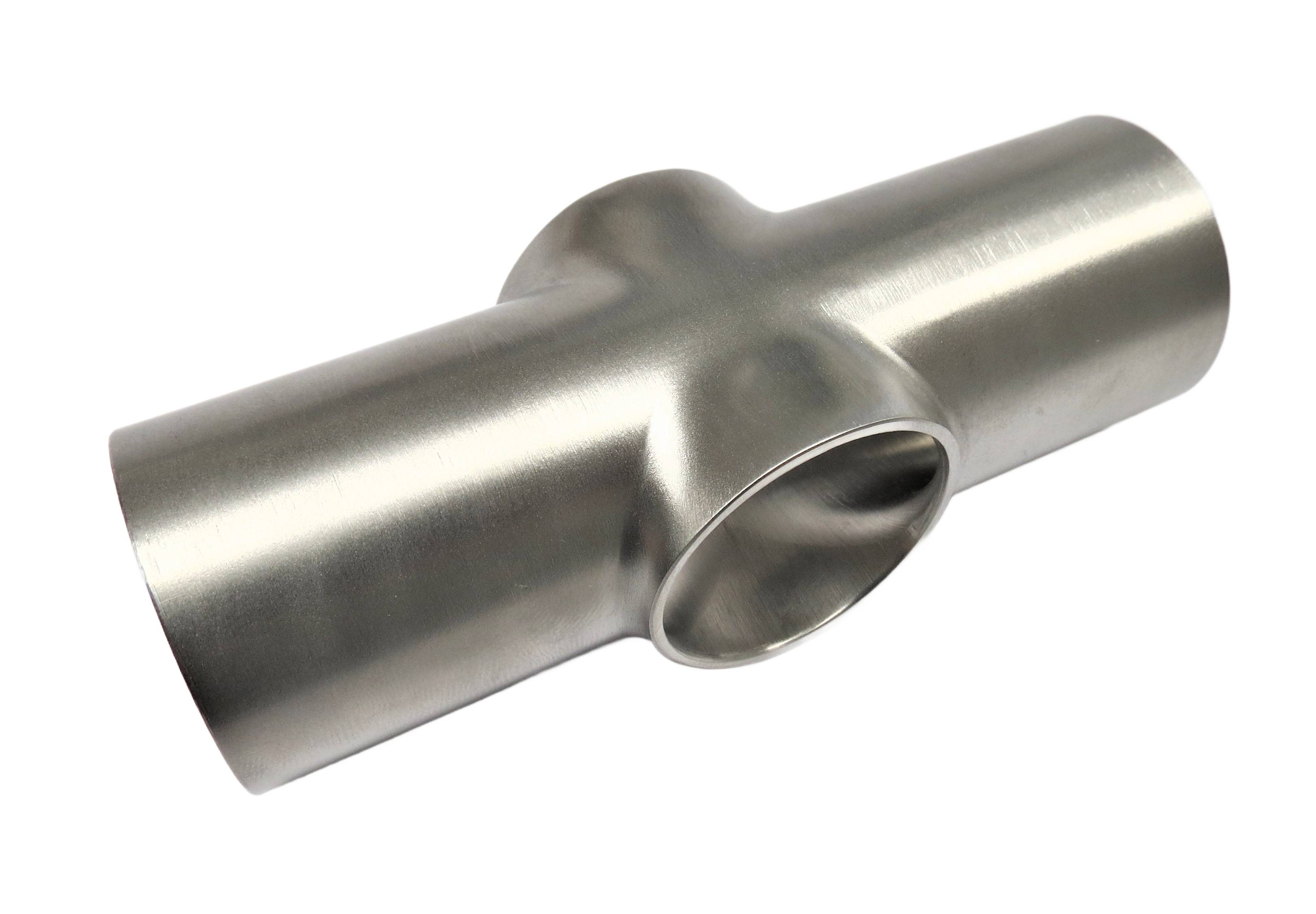
| Crosses (‘czwórnik’) | 21.3 × 2 to 60.3 × 2 mm | grade 304/304L (‘gat. 304L’ in the product names) |
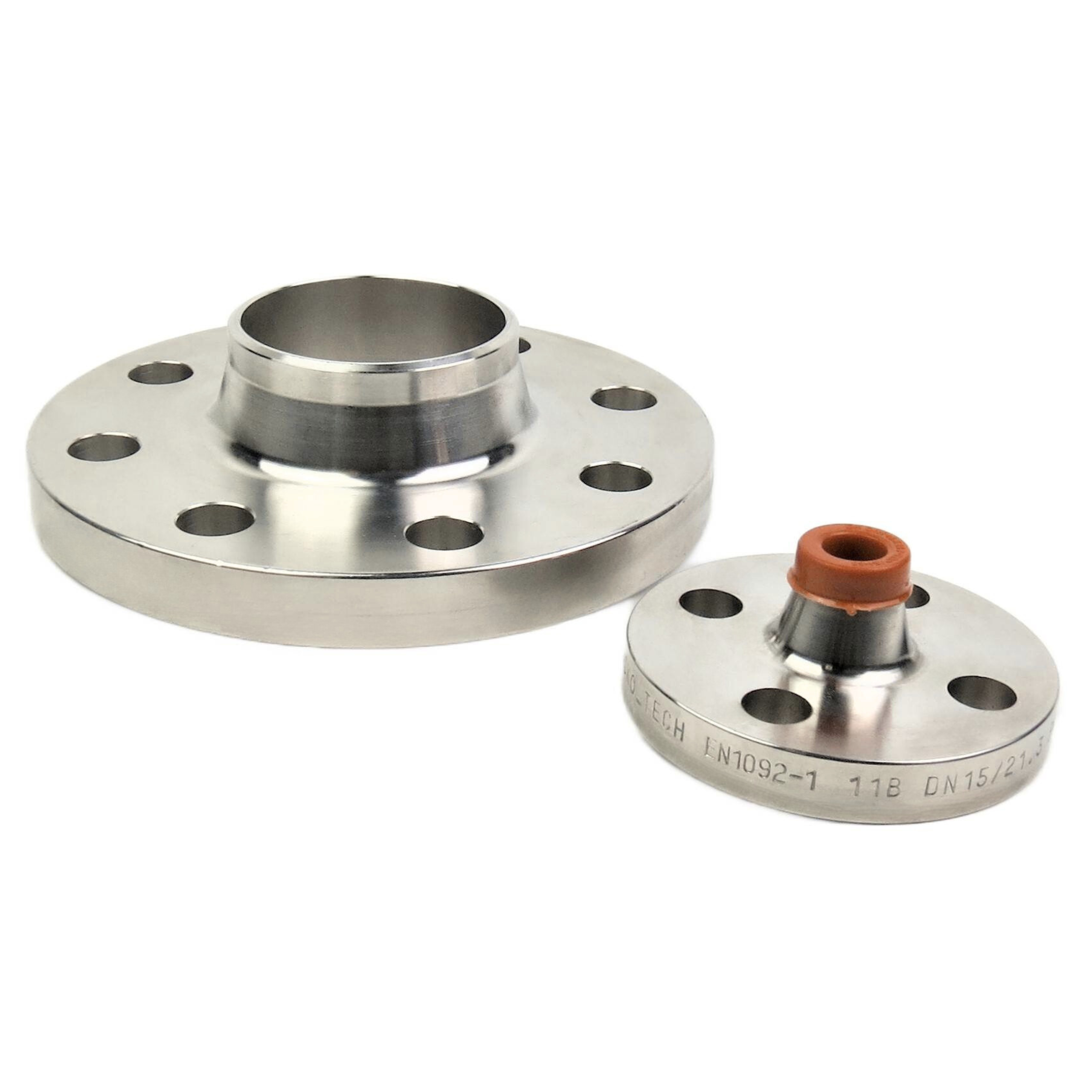
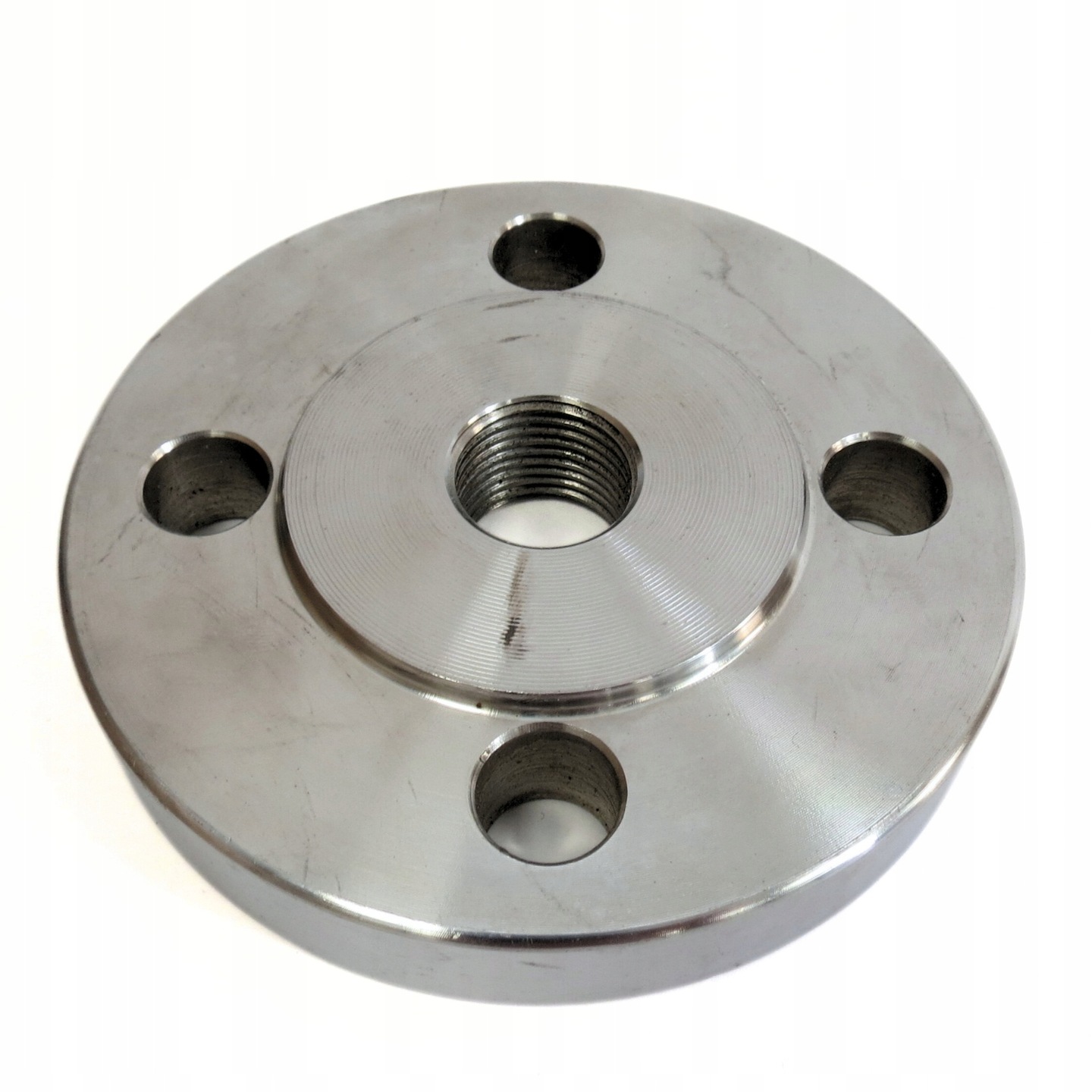
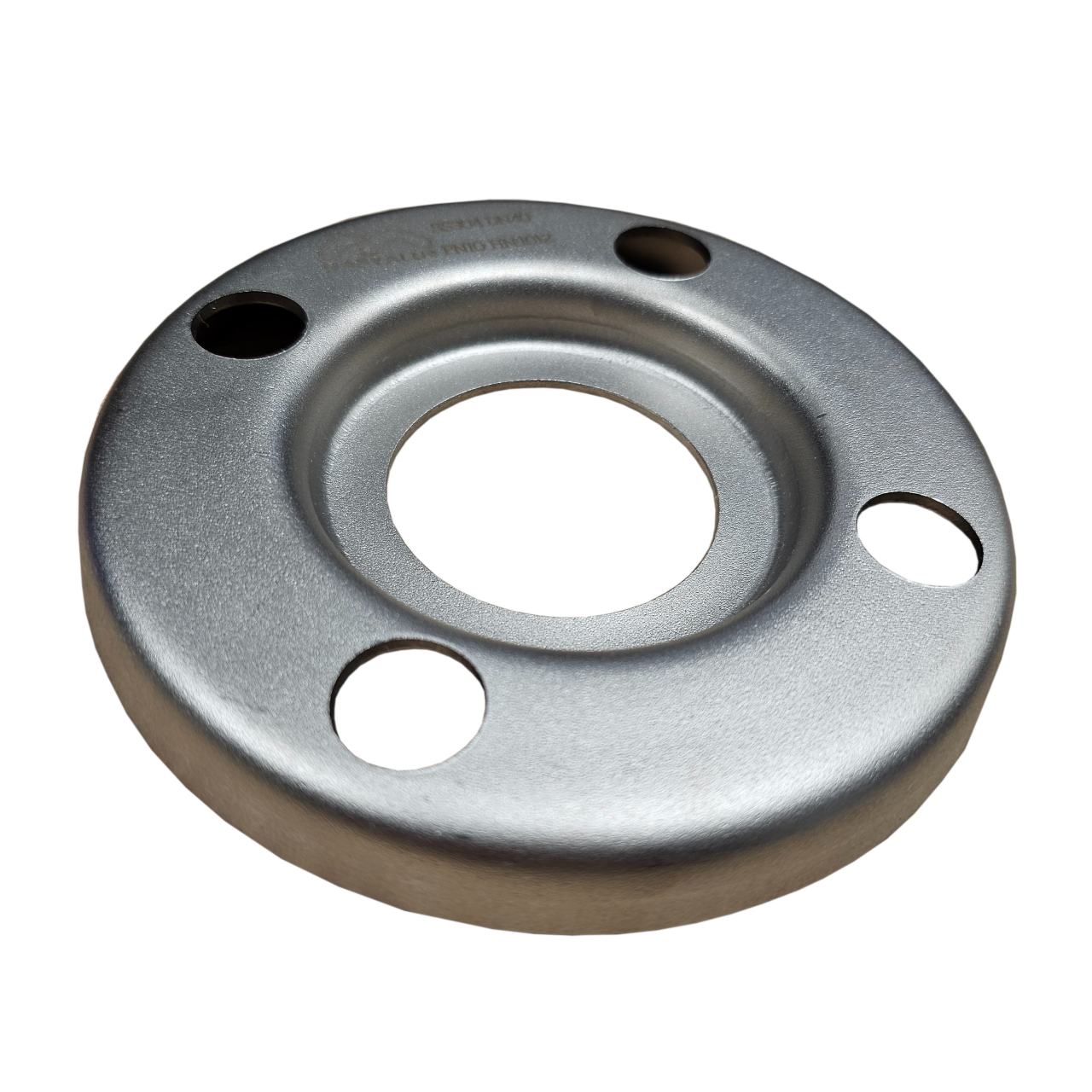
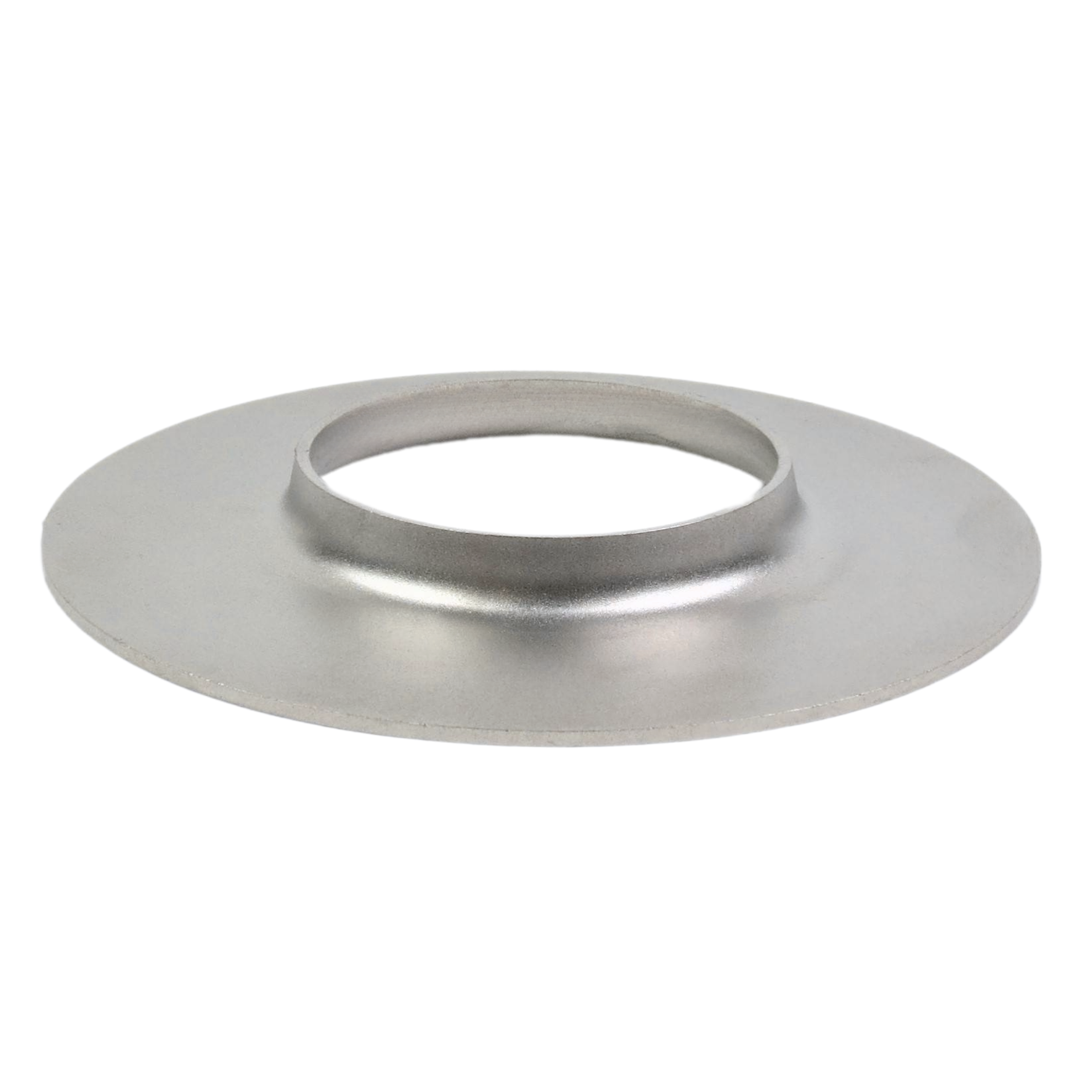
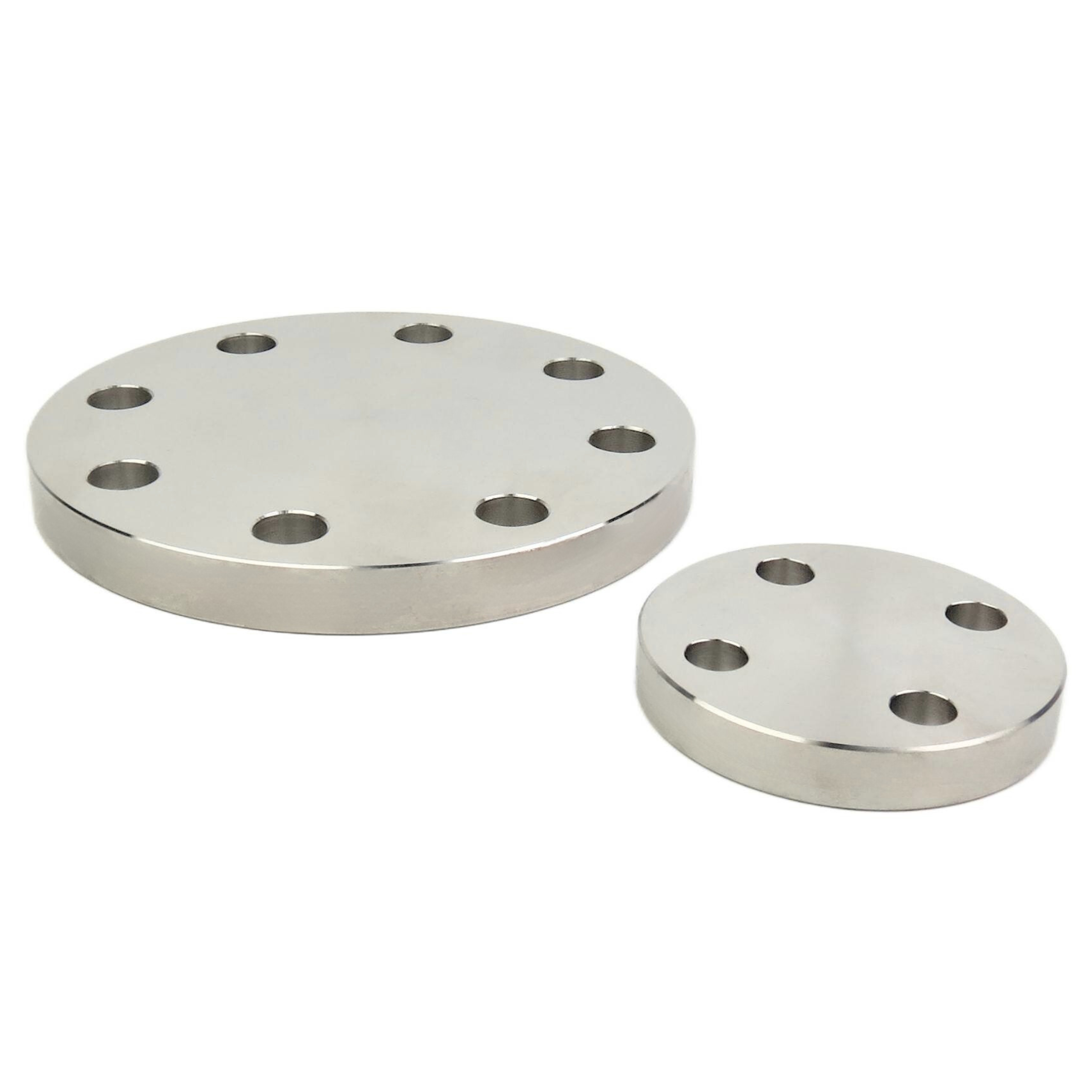
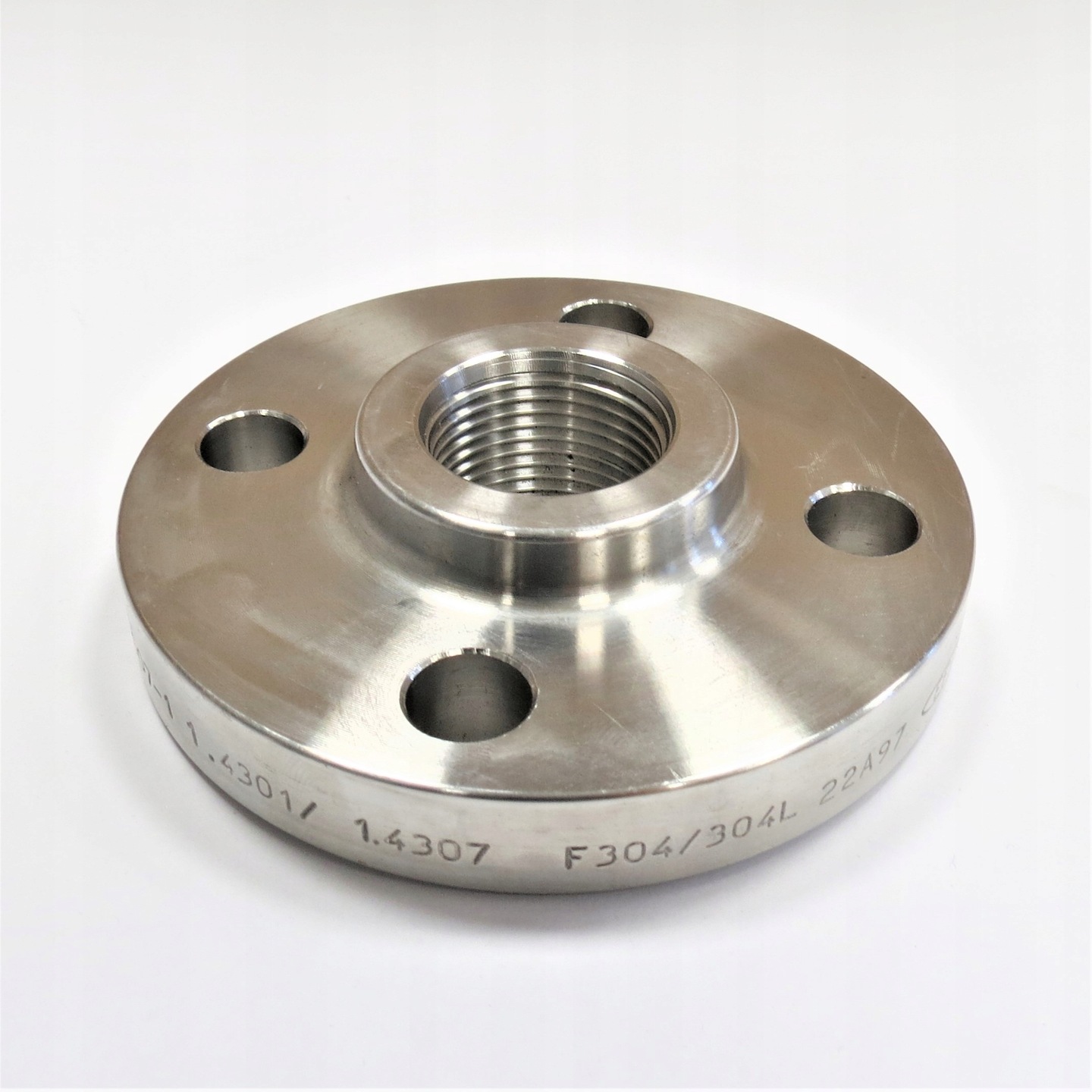
| Flanges (‘kołnierz’) | DN 15 to DN 350 | weld neck, plate, pressed loose flanges, stub ends, blind and threaded flanges; product names state PN 10, PN 16, PN 40 or ranges PN 10-16, PN 10-40, PN 20-40, PN 25-40 |
How to match a fitting to the tube
A butt-weld fitting must have the same outside diameter and the same wall thickness as the tube. The nominal size (DN) alone is not enough, because one DN corresponds to different outside diameters depending on the size series:
| DN | ISO | Inch | DIN | Metric | SMS |
|---|---|---|---|---|---|
| DN 50 | 60.3 mm | 2" | 57 mm | 54 mm | 51 mm |
| DN 100 | 114.3 mm | 4" | 108 mm | 104 mm | 101.6 mm |
Our shop lists 101.6 × 2, 104 × 2, 108 × 2 and 114.3 × 2 elbows side by side. Each of them is ‘DN 100’, yet each fits a different tube. We stock fittings in several size series: ISO, DIN 11850 / EN 10357, inch OD and others. The wall must match too. Our elbows range from 1.5 to 4 mm wall, and at the same outside diameter a different wall means a different bore, which leaves a step at the joint. Measure the tube with a calliper or check its product name, then order the fitting with exactly the same ‘OD × wall’ designation.
The simplest way is to start from the tube. Each stainless steel tube product page shows up to 8 fittings and flanges of the same diameter. Tube is sold in full metres only (1, 2, 3 or 4 m). For cut lengths, use the ‘How should we cut it?’ field – see stainless steel cutting. This rule does not apply to fittings, which are sold per piece.
Stainless steel elbows: radius, 3D and pressure rating
‘Kolano hamburskie’ is a Polish trade name for a butt-weld elbow, and it was the name of the elbow category in our previous shop. Distributors sometimes describe a stainless ‘kolano hamburskie’ as compliant with EN 10253-4 and equivalent to DIN 2605-1 type 3. The name itself, however, does not define the standard, the angle or the radius.
- Radius: LR and SR – in ASME nomenclature, a long radius (LR) elbow has a radius of 1.5 times the pipe diameter and a short radius (SR) elbow a radius equal to the diameter (Wikipedia). This is a naming convention, not a sizing formula.
- Take the radius from the table, not from a formula – suppliers also describe elbows with a code such as ‘3D 90°’. Take the radius and the centre-to-end dimension from the dimension table in the standard or the manufacturer’s data. Examples from distributors’ listings: “90° 3D elbows, R = 40, welded, 1.4307, 28 × 1.5 mm, EN 10253-4 type A” (3 × 28 mm would be 84 mm, yet the radius is 40 mm), “90° 3D elbows, R = 45, welded, 1.4307, 30 × 2 mm, EN 10253-4 type A” and “Rohrbogen DIN 2605-1 90° 51.0 × 2.0 mm R = 75 mm” (ehorst).
- Pressure: type A – a type A elbow to EN 10253-4 has the same wall thickness at the ends and in the body. It is rated for a lower pressure than straight tube of the same diameter and wall. One distributor’s catalogue gives a guide figure of roughly 0.7–0.8 times the permissible pressure for the tube. For design calculations, use the factor given in EN 10253 or DIN 2605-1.
- Pressure: type B – under EN 10253-4, type B fittings are intended for use at full service pressure, while type A fittings have a reduced pressure factor (BSI).
Our elbow names state the diameter, wall thickness and grade. The angle appears in the name of two items only: the 35 × 1.5 45° elbow and the seamless 73.03 × 3.05 2 1/2" SCH10S 90° LR elbow. For all other elbows, check the angle, radius and standard with our customer service before you order. This matters when you are calculating centre-to-end dimensions or when the design specifies a particular standard.
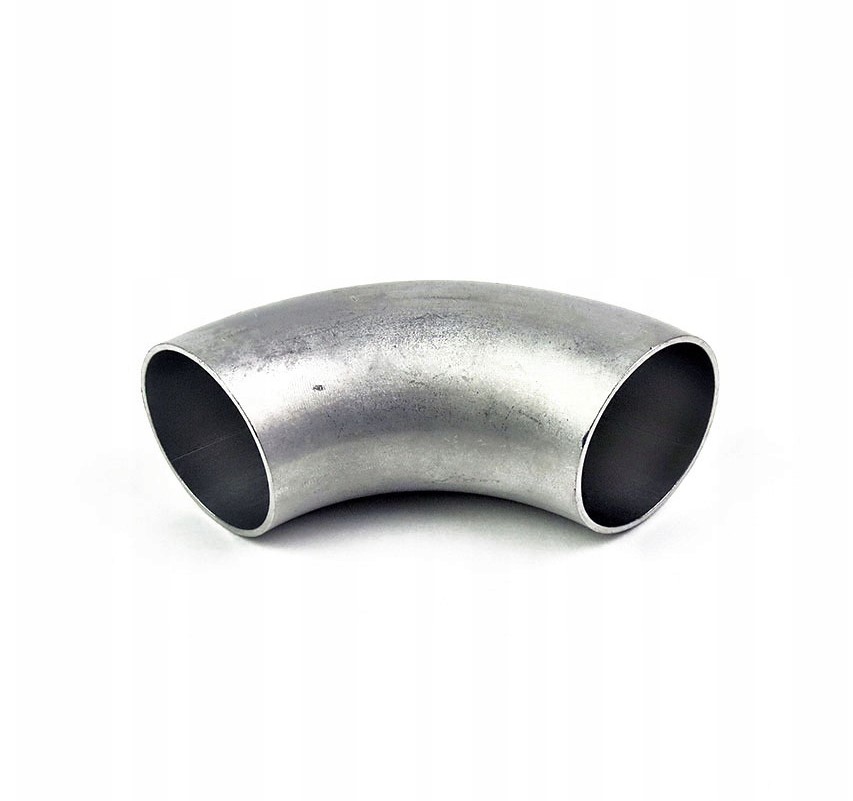
Kolano nierdzewne 101,6x2 gat. 304/304L
In stock · 18 pcs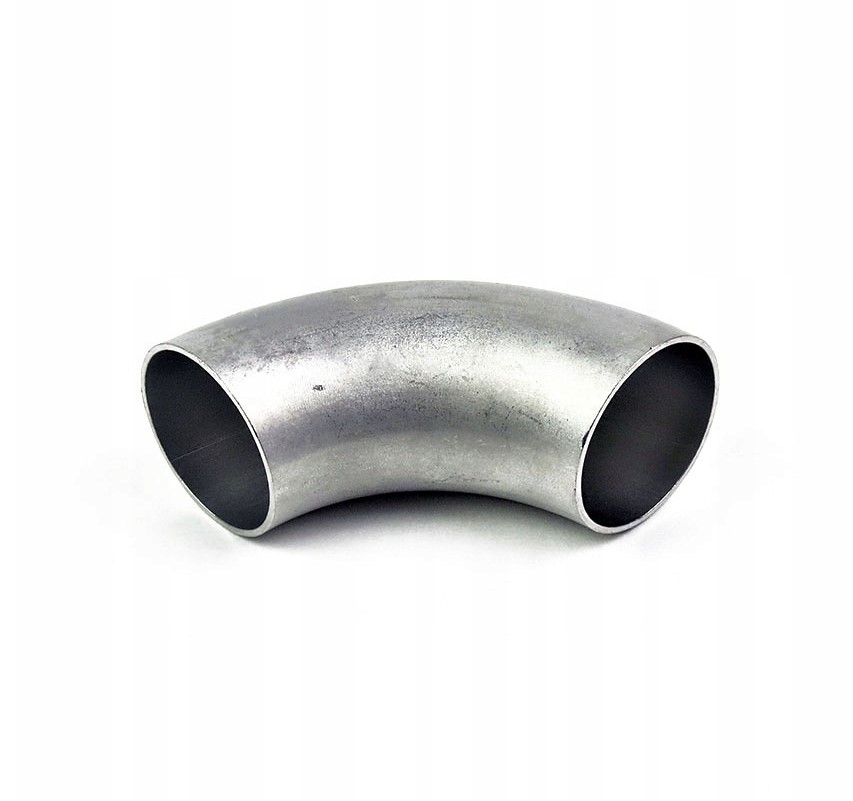
Kolano nierdzewne 101,6x3 gat. 304
Only 4 pcs left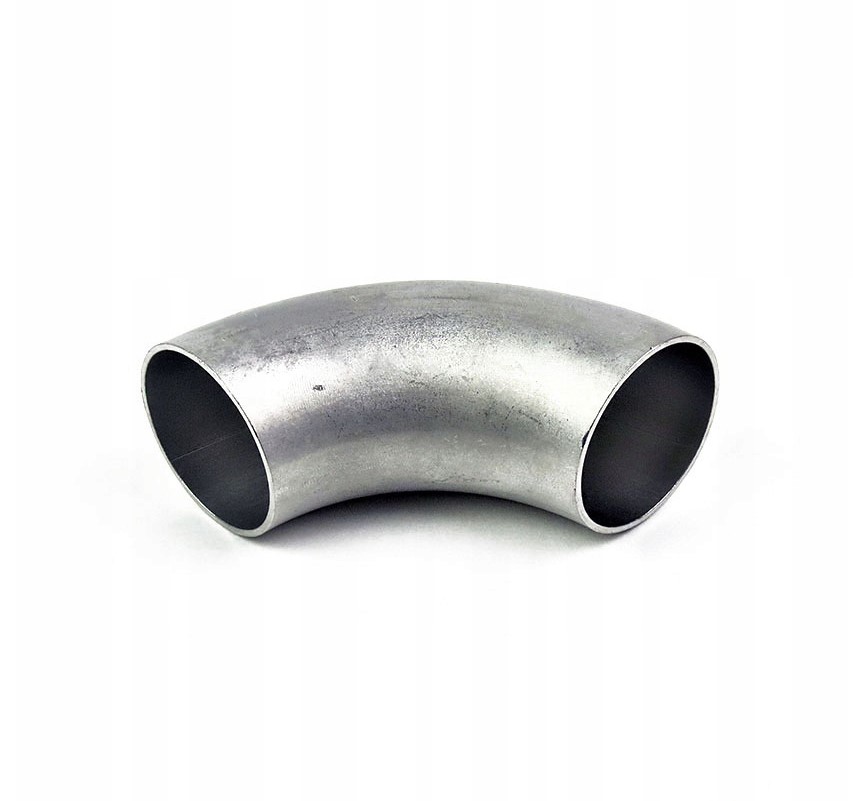
Kolano nierdzewne 104x2 gat. 304/304L
In stock · 7 pcs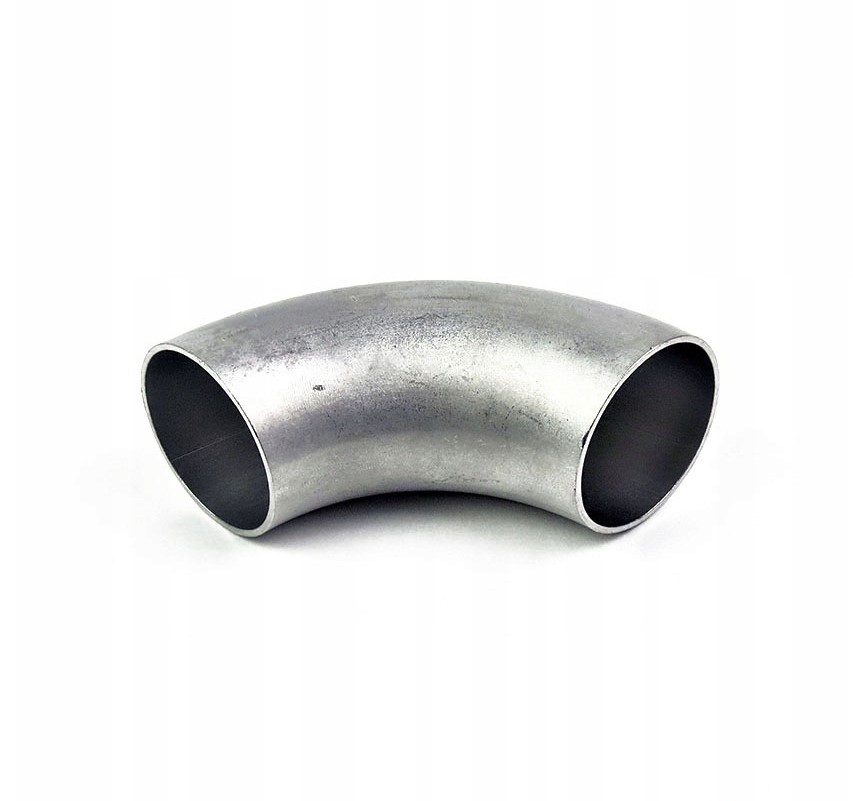
Kolano nierdzewne 108x2 gat. 304/304L
In stock · 14 pcs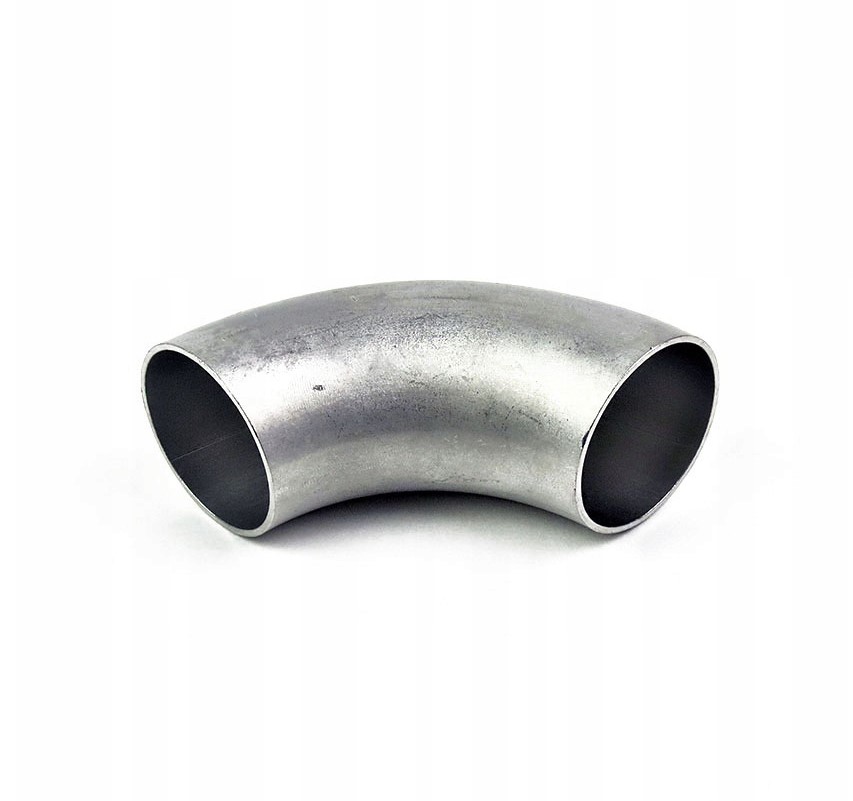
Kolano nierdzewne 108x3 gat. 304/304L
Only 3 pcs left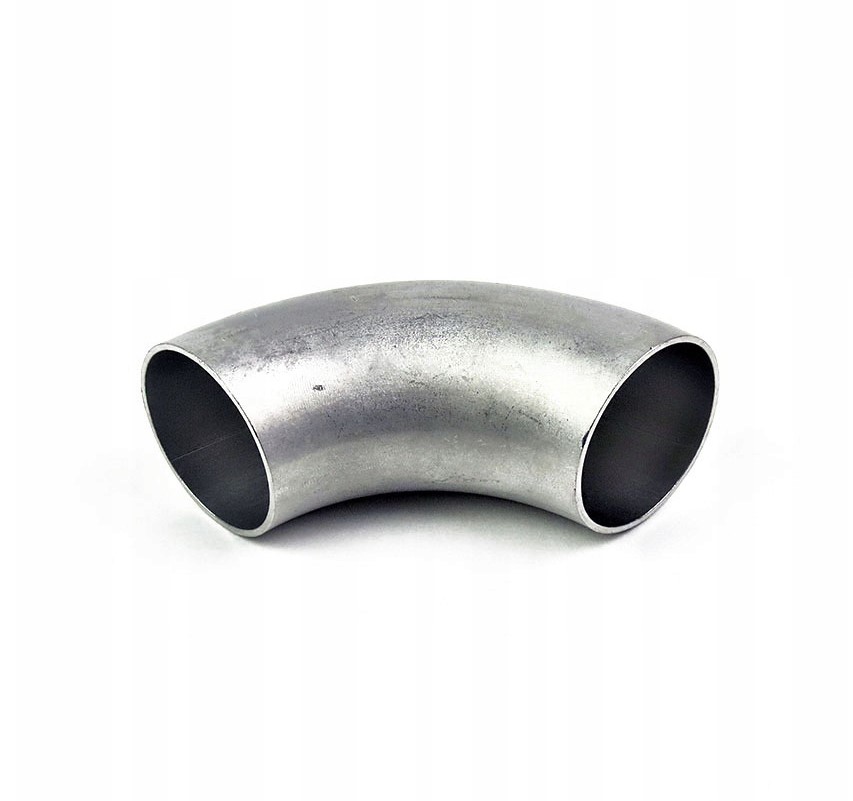
Kolano nierdzewne 114,3x2 gat. 304/304L
In stock · 7 pcs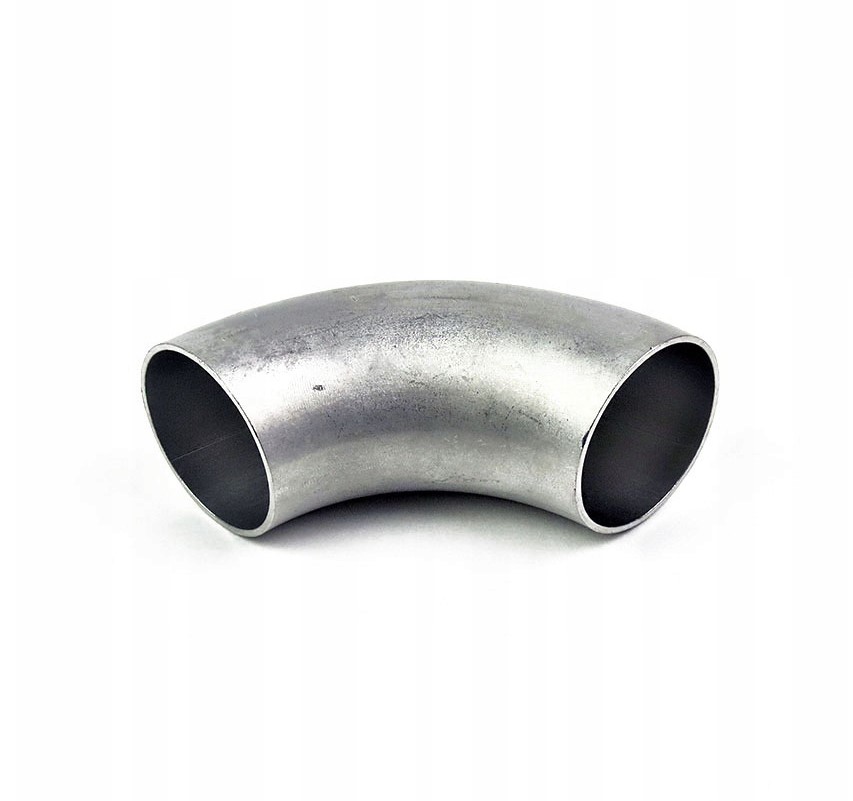
Kolano nierdzewne 114,3x3 gat. 304
Only 2 pcs left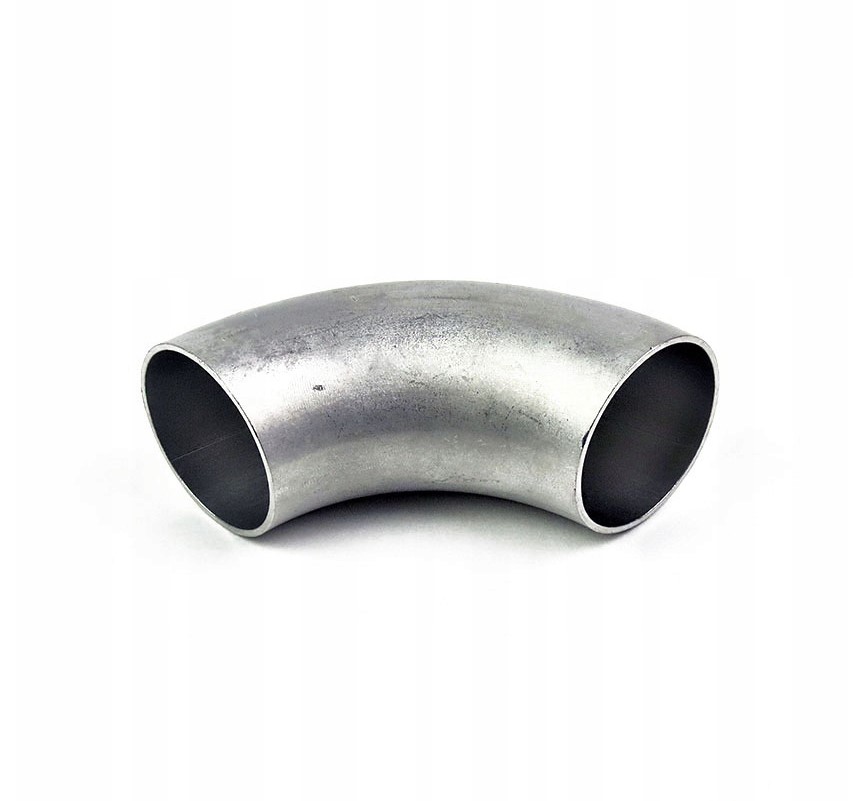
Kolano nierdzewne 129x2 gat. 304/304L
In stock · 7 pcsTees, reducers, end caps and crosses – reading the size
- Equal tee – three ends of the same diameter, for example a 60.3 × 2 tee.
- Stainless reducing tee – the branch is smaller than the run. 76.1/38 × 2 means a 76.1 mm run, a 38 mm branch and a 2 mm wall.
- Concentric reducer – ‘symetryczna’ in our product names. 26.9/21.3 × 2 means larger diameter / smaller diameter × wall.
- Eccentric reducer – ‘excentryczna’ in our product names. EN 10253-3 and EN 10253-4 cover both types of reducer.
- Stainless end cap (‘dennica’) – closes the end of a tube. Choose it the same way as an elbow, by the tube OD and wall, for example a 53 × 1.5 end cap for 53 × 1.5 tube. EN 10253 also covers butt-welding caps. Check with our customer service whether a particular end cap is made to that standard.
- Stainless cross – four ends of the same diameter, for example a 21.3 × 2 cross.
Standards for fittings: EN 10253, ASME, DIN 11850
In the European system, stainless steel butt-welding fittings are covered by EN 10253. Parts 3 and 4 cover the same range: elbows, concentric and eccentric reducers, equal and reducing tees, and caps, seamless and welded, in austenitic and austenitic-ferritic (duplex) stainless steels. They differ in the scope of inspection.
| Standard | Inspection | Source |
|---|---|---|
| EN 10253-3 | without specific inspection requirements | EVS |
| EN 10253-4 | with specific inspection requirements, two test categories, for pressure purposes; type A and type B; current edition 2025 | BSI |
In the American system, you will find pipe fittings to ASTM A403 / ASME SA-403, marked WPS304/L and WPS316/L (seamless) or WPW304/L and WPW316/L (welded). Dimensions are given in ASME B16.9, and wall thickness is specified by schedule, for example SCH10S or SCH40S (Midsteel). Four of our fittings carry a schedule in the name, for example the seamless 114.3 × 6.02 4" SCH40S tee and the 114.3 × 48.3 SCH40 reducing tee in grade 316L. Please check the manufacturing standard of these items with our customer service.
DIN 11850 specified stainless steel tube sizes used in food processing lines, among other applications. It was superseded by EN 10357 at the beginning of 2014. The former DIN 11850 sizes are EN 10357 series A. Fittings for this tube were covered by DIN 11852, which has been replaced by EN 10374. Table based on Alfa Laval:
| Wall thickness | Outside diameters |
|---|---|
| 1.5 mm | 13, 19, 23, 29, 35, 41, 53 mm |
| 2.0 mm | 70, 85, 104, 129, 154, 204 mm; 254 mm in EN 10357 only |
Alfa Laval lists materials 1.4301, 1.4307 and 1.4404 for this series. Items in our range that match these sizes include the 53 × 1.5 end cap and the 104 × 2 elbow. Demountable joints for food process pipework are covered on our page about DIN 11851 hygienic unions. For screwed joints, see stainless steel threaded fittings.
Stainless steel flanges to EN 1092-1: types and facings
EN 1092-1 covers steel flanges from DN 10 to DN 4000 and from PN 2.5 to PN 400. The flange type is identified by a number and the facing by a letter. Some of our flanges carry this designation in the name, for example ‘EN1092-1/11B1’, ‘typ 11B’, ‘TYP01B’ and ‘typ 13B’. 11B1 means a weld neck flange with a type B1 facing.
| EN 1092-1 type | Flange | Polish term |
|---|---|---|
| 01 | plate flange | płaski, bez szyjki |
| 02 | loose plate flange | luźny płaski |
| 05 | blind flange | zaślepiający |
| 11 | weld neck flange | szyjkowy |
| 12 | hubbed slip-on flange | płaski z szyjką |
| 13 | threaded flange | gwintowany |
Source for the types: Project Materials, EN 1092-1. Facings according to Wikipedia, Flange:
| Facing | Description |
|---|---|
| A | flat face |
| B1, B2 | raised face, different surface roughness (Rz) |
| C / D | tongue / groove |
| E / F | male / female |
For PN 10–40, the B1 raised face is 2 mm high. For ASME B16.5 Class 150 and 300 flanges, it is 1.6 mm. The differences go beyond the facing: EN and ASME flanges have different bolt circles, outside diameters and thicknesses, so they cannot be bolted together without an adaptor flange – and that includes PN 16 to Class 150 (Project Materials).
- DN 25/33.7 – nominal size DN 25, flange for 33.7 mm tube.
- PN – nominal pressure. Product names give the PN or a PN range, for example PN 16 or PN 10-40. Match the PN to the system and to the mating flange.
- Stainless weld neck flange (type 11; ‘kołnierz szyjkowy’) – has a neck that is butt-welded to the tube. Stainless plate flange (type 01; ‘kołnierz płaski’) – has no neck.
- Loose flange with stub end (lap joint) – the flange rotates freely, which makes bolt-hole alignment easy. Only the stub end is in contact with the process medium, so the flange itself can be carbon steel with a stainless stub end. The joint is also easier to dismantle. In our range, stub ends (‘wywijka’) and pressed loose flanges (‘kołnierz luźny wytłaczany’) are separate items – please check with our customer service that they match.
- Stainless blind flange (type 05; ‘kołnierz zaślepiający’) – blanks off an outlet and can be removed again, for example on an inspection branch.
When ordering a flange, state the DN, the tube OD, the system PN and the type and facing of the mating flange. Not sure? Send us an enquiry with the details of your system.
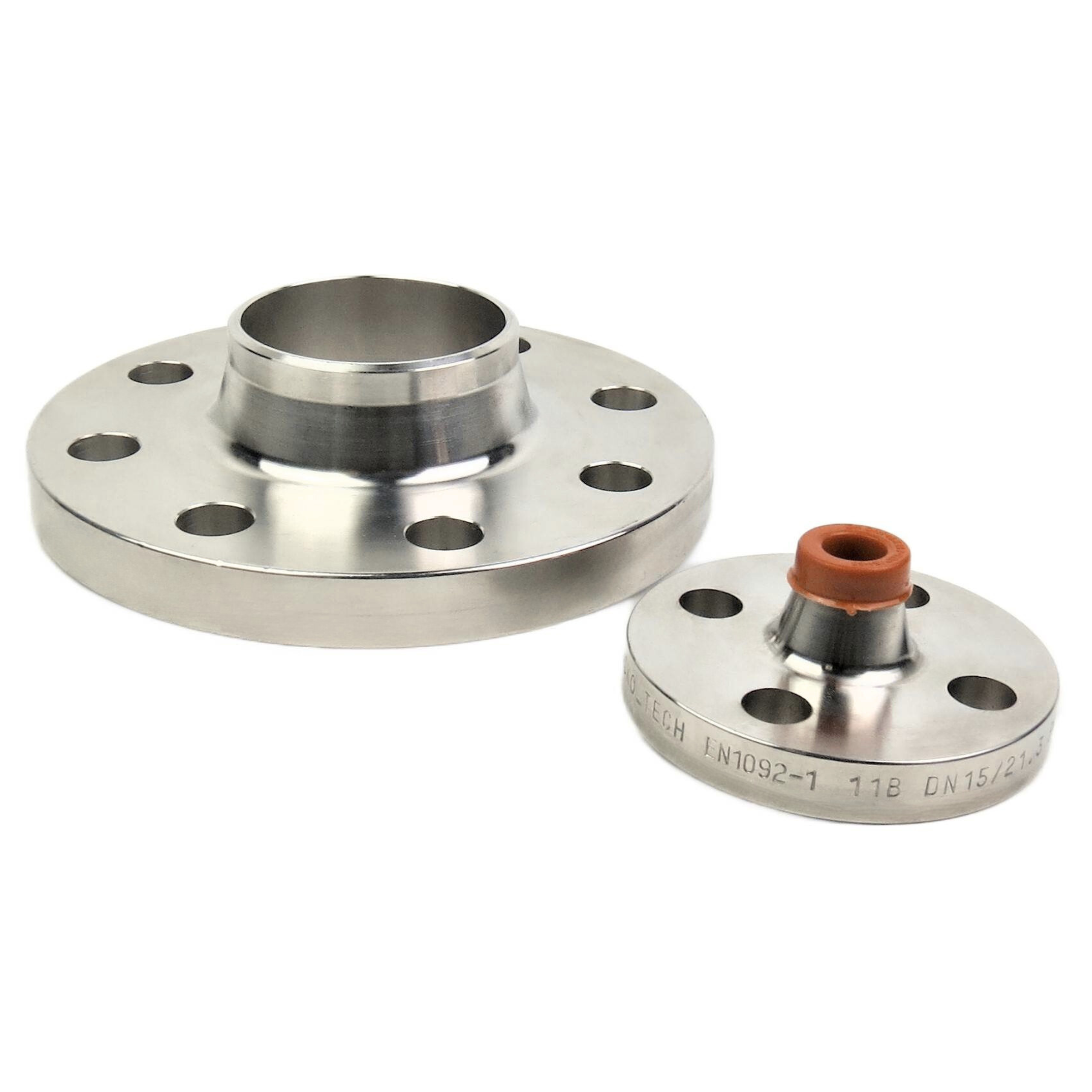
Kołnierz szyjkowy DN125/139,7 PN10-16 nierdzewny gat. 304/304L
Only 1 pcs left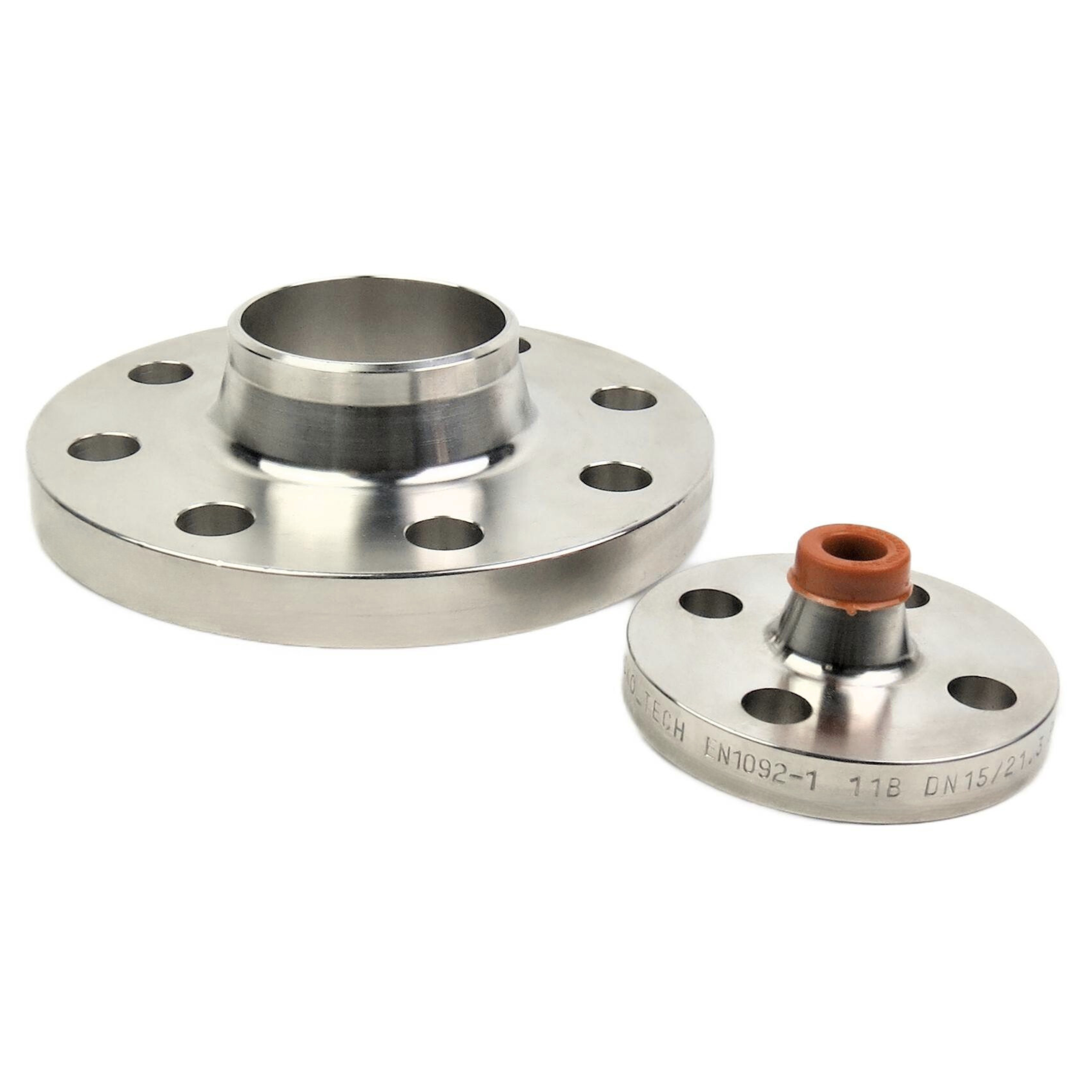
Kołnierz szyjkowy DN15/21,3 PN40 nierdzewny gat. 304/304L
In stock · 7 pcs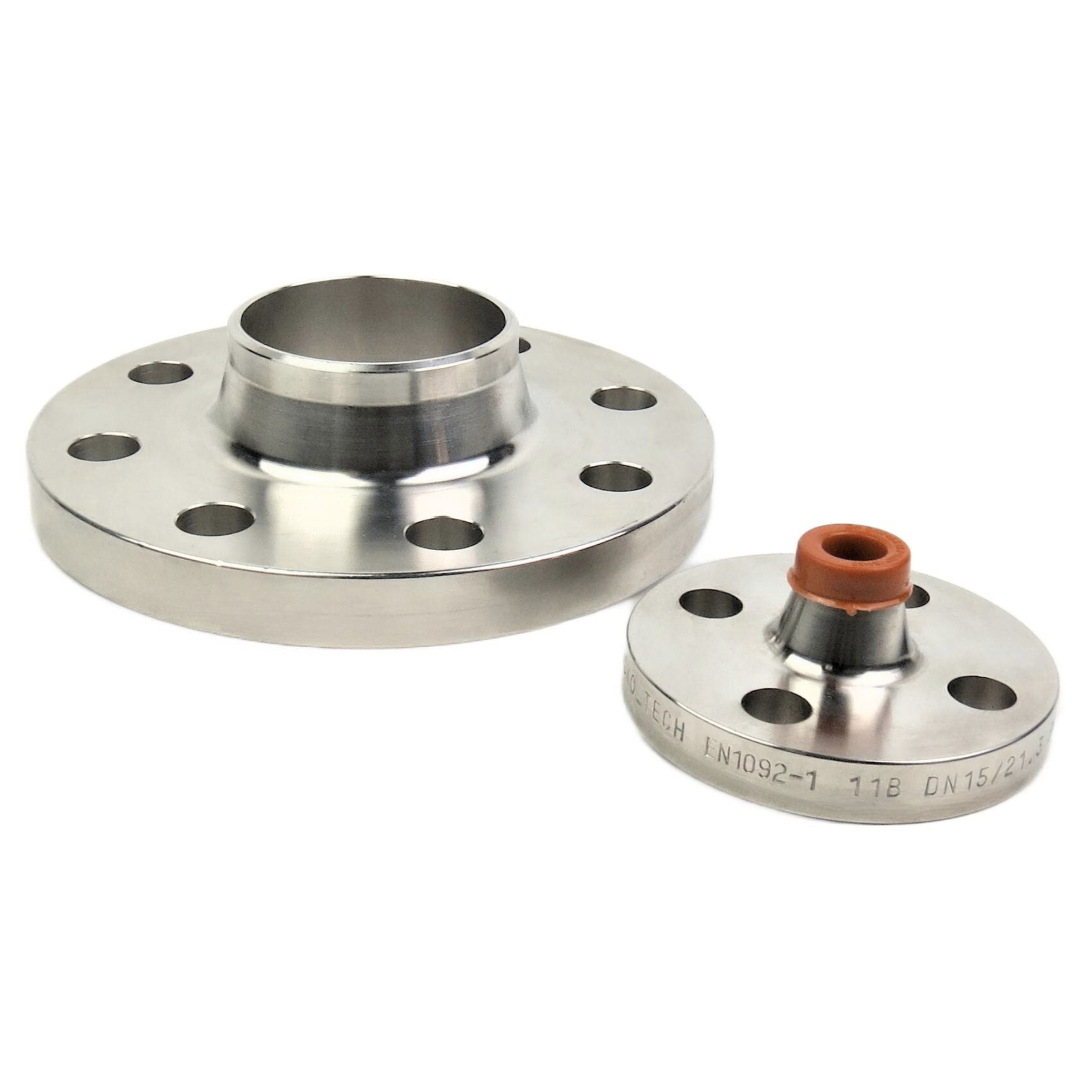
Kołnierz szyjkowy DN20/26,9 PN10-40 nierdzewny gat. 304/304L
In stock · 6 pcs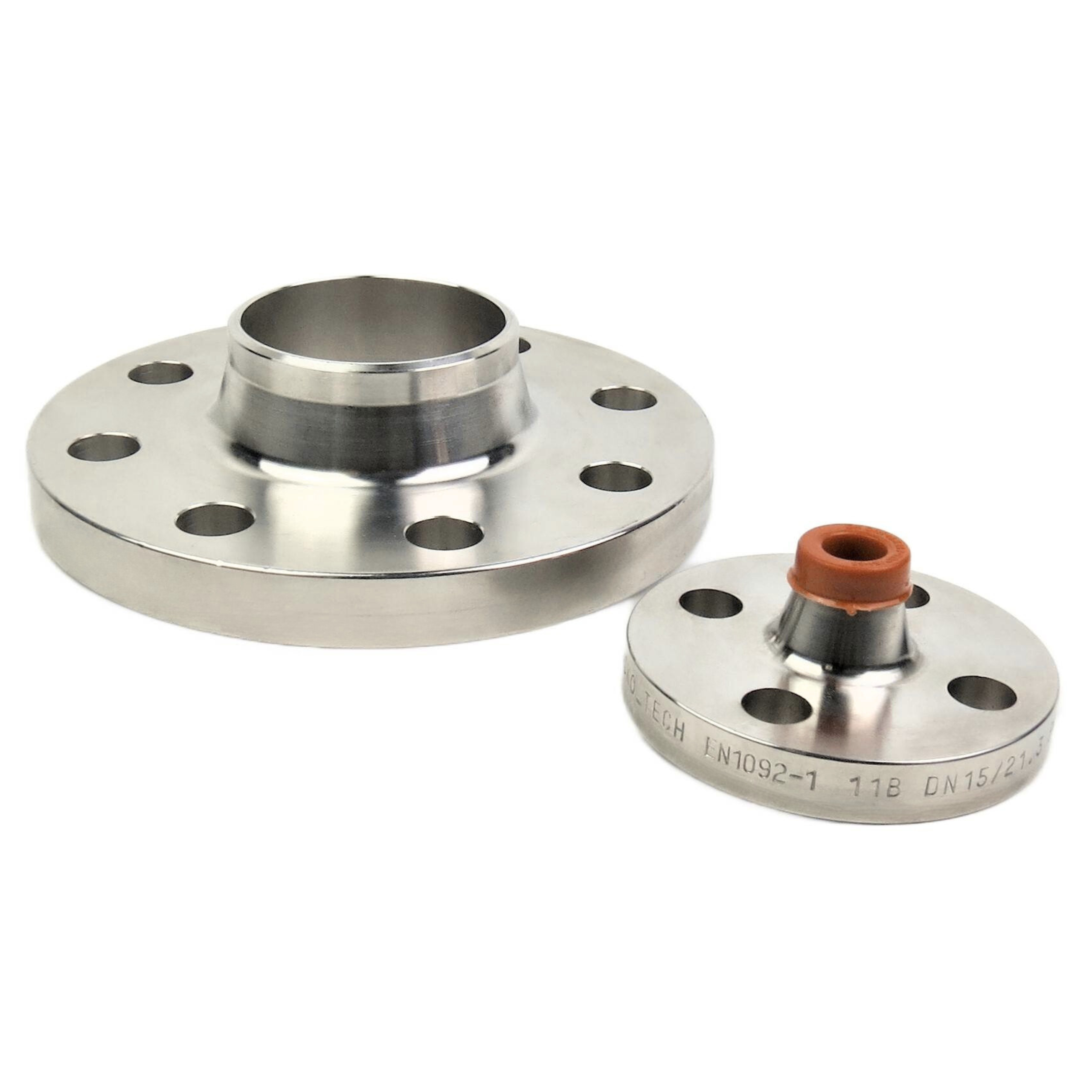
Kołnierz szyjkowy DN25/33,7 PN10 nierdzewny gat. 304/304L
In stock · 8 pcs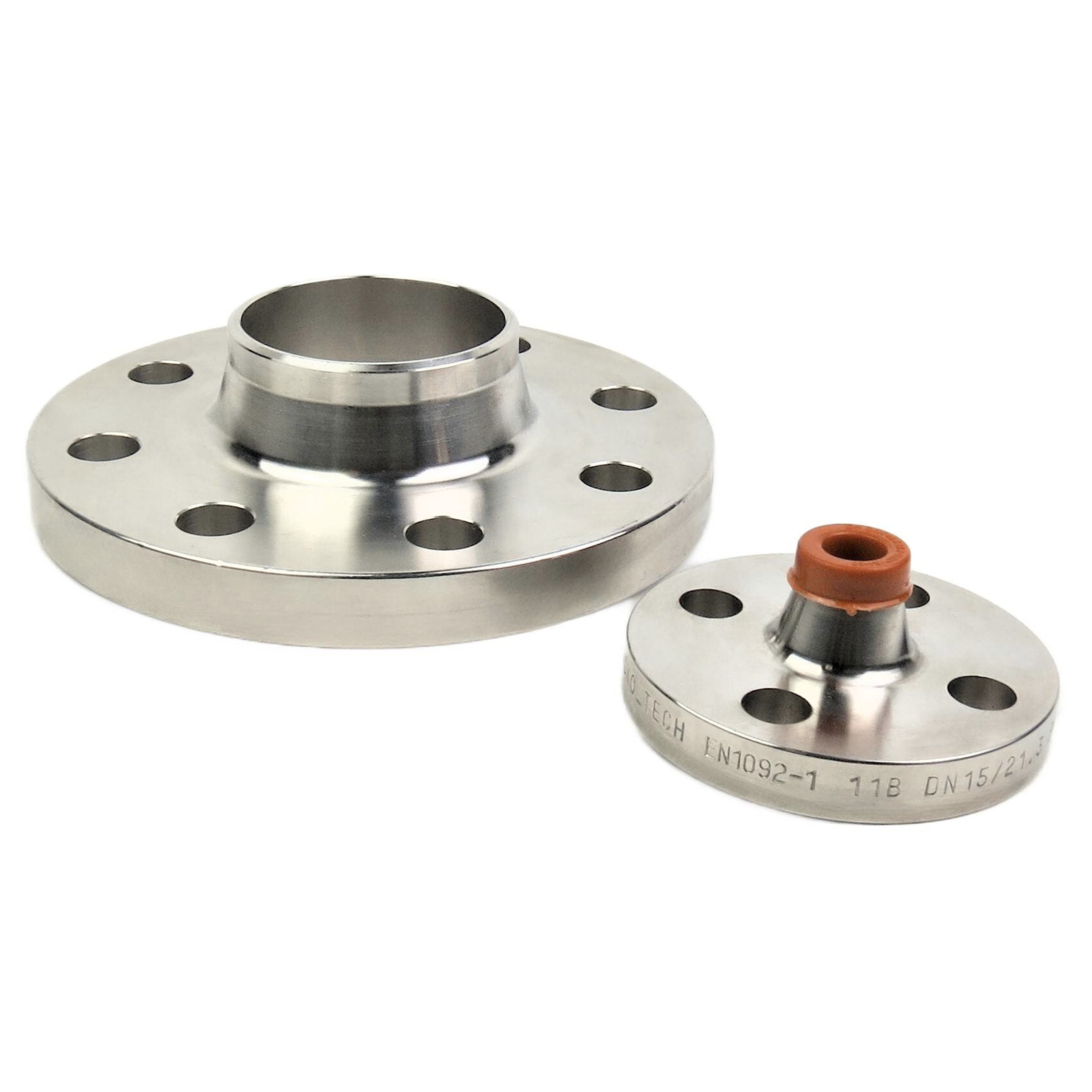
Kołnierz szyjkowy DN25/33,7 PN10-40 nierdzewny gat. 304/304L
In stock · 103 pcs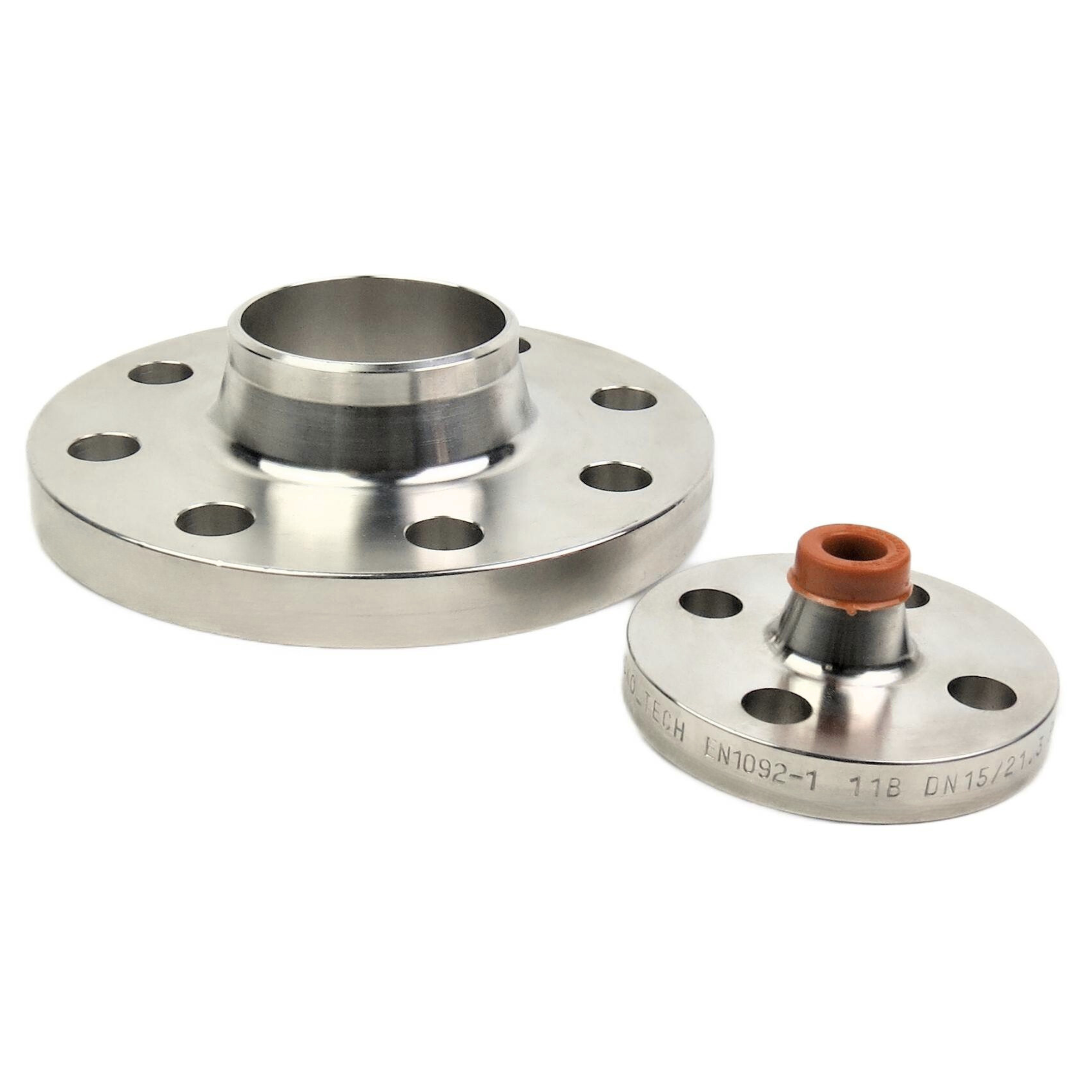
Kołnierz szyjkowy DN25/33,7 PN10-40 nierdzewny gat. 316/316L
In stock · 9 pcs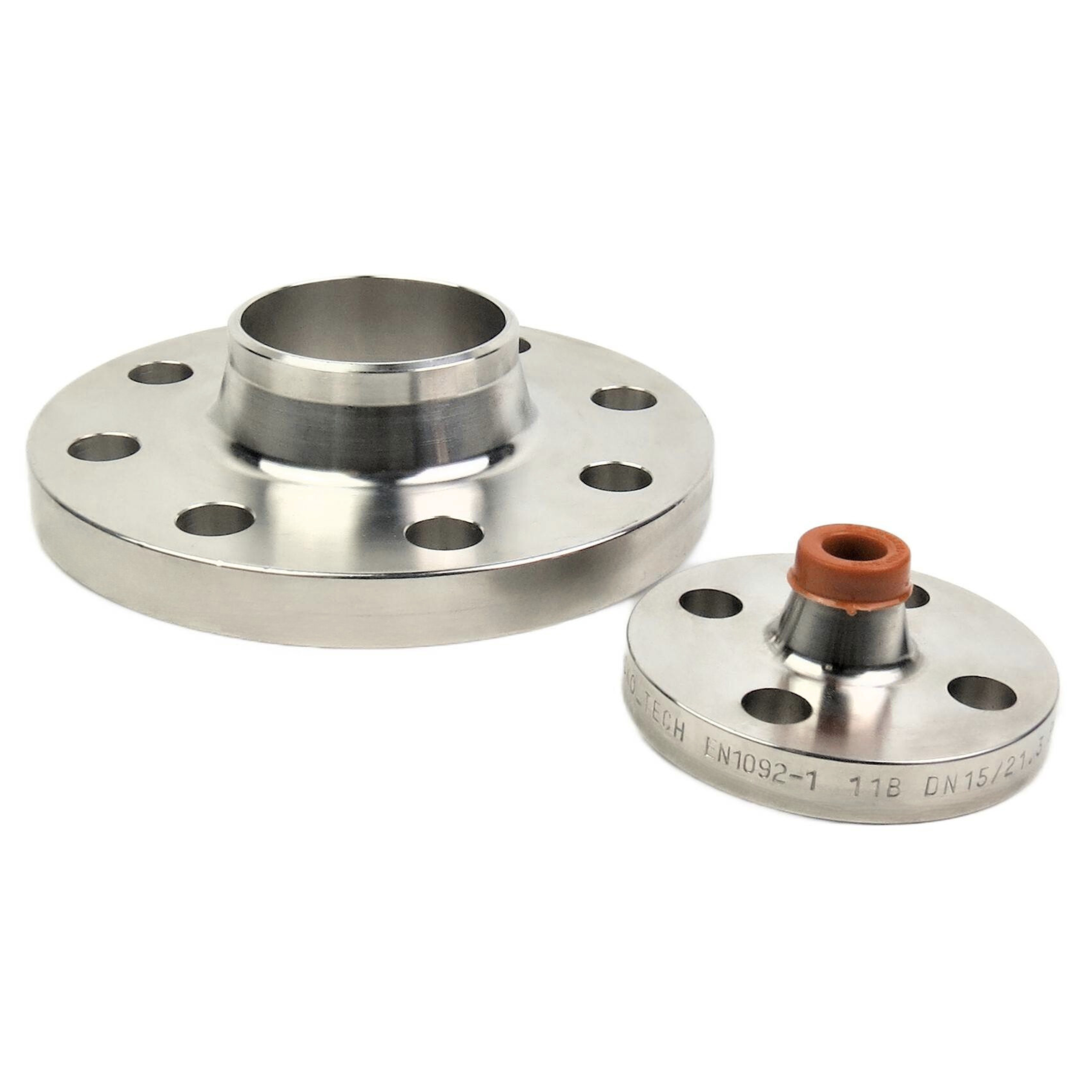
Kołnierz szyjkowy DN32/42,4 PN10-40 gat. 304/304L
In stock · 18 pcs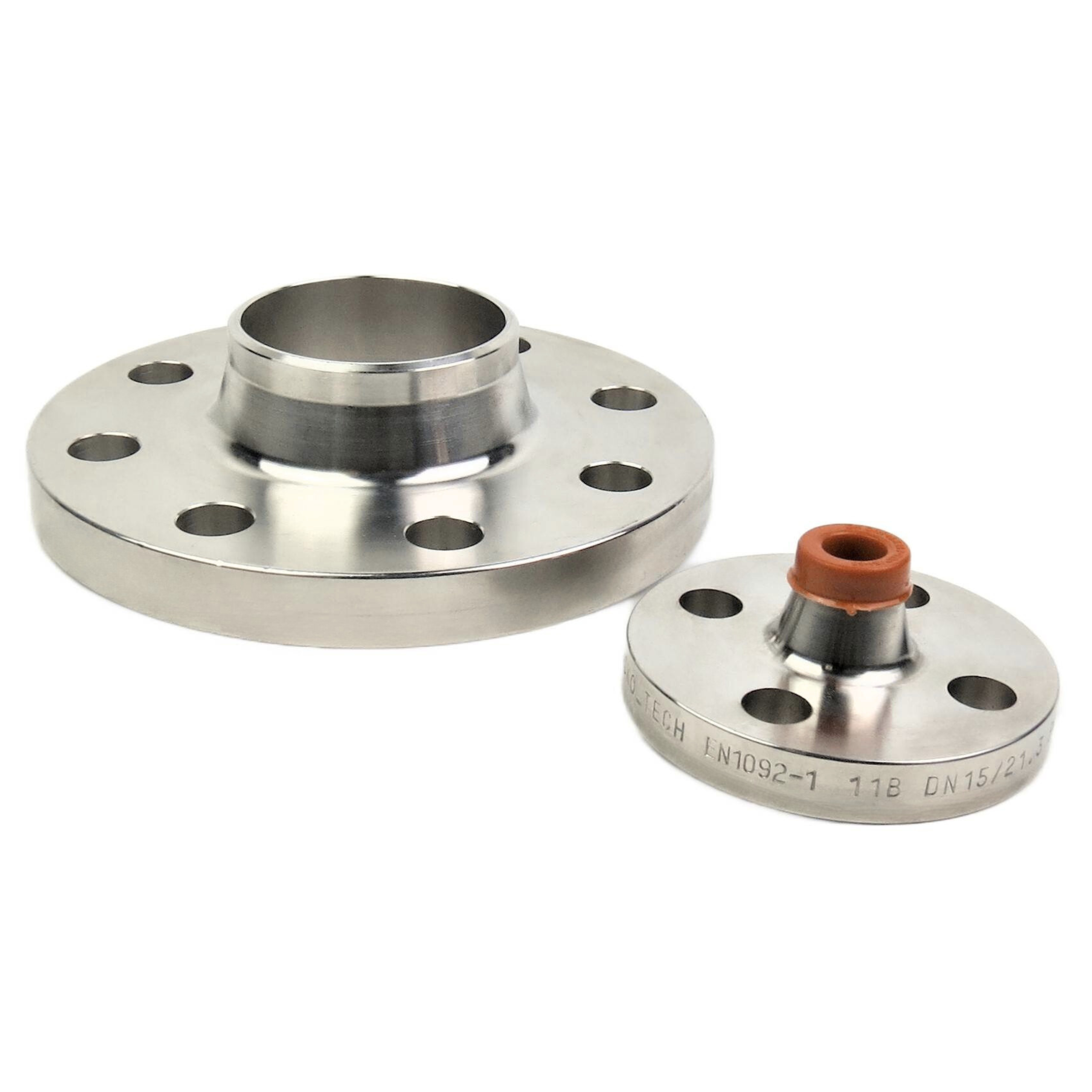
Kołnierz szyjkowy DN40/48,3 PN10-40 gat. 304/304L
In stock · 10 pcsChoosing the grade and welding: 304, 304L or 316L
| Grade | Properties | When to choose it |
|---|---|---|
| 304 (1.4301) | standard austenitic grade, no molybdenum | water and media with a low chloride content; where chlorides exceed the threshold in the 316 / 316L row, choose 316 or 316L |
| 304L (1.4307) | low carbon (typically C = 0.021%), excellent weldability, very good resistance to intergranular corrosion | welded structures, food and dairy equipment, chemical plant |
| 316 / 316L | 2–3% molybdenum – better resistance to pitting and crevice corrosion in chlorides | as a rule of thumb: chlorides above 200 ppm at temperatures above 50°C |
Sources: Aperam, 1.4307, Project Materials, 304 vs 316. Note: fittings marked 304/304L have ‘AISI 304 EN 1.4301’ in their description. If your design calls for 1.4307 (304L), ask our customer service about the certificate before you order. The chemical composition of a specific batch is confirmed by the 3.1 inspection certificate. For a comparison of grades, see stainless steel grades.
In damp conditions, do not join stainless fittings to aluminium or galvanised steel without electrical isolation. Galvanic corrosion needs three conditions: a difference in potential, an electrically conductive connection and an electrolyte (a film of moisture). In the galvanic series (seawater), zinc and aluminium sit well below austenitic stainless steel, so they are the metals that corrode. The worst combination is a small anode next to a large cathode, that is a small area of aluminium or zinc coating against a large area of stainless steel. Permanently damp crevices accelerate corrosion (Euro Inox).
After welding: heat tint and iron contamination
Guidance from Euro Inox (Pickling and Passivating Stainless Steel):
- Visible welding heat tint reduces corrosion resistance. It is good practice to remove all visible heat tint.
- Pickling removes the chromium-depleted surface layer.
- Heat tint should also be removed from hidden weld surfaces if they will be exposed to the process medium, for example inside the tube.
- Methods: pickling pastes and gels, spray pickling, immersion (bath) pickling and electrochemical cleaning. On site, pastes, gels and electrochemical cleaning are used.
- Iron contamination comes from carbon steel tools and from shared workshops where stainless and carbon steel are not kept apart.
Our welding service
We weld stainless steel in-house, including elbows, tees, reducers, flanges, pipework connections and tanks. Processes: laser, TIG (141) and MIG/MAG. Information on certificates and welding documents: our certificates page (in Polish) – when you send an enquiry, tell us which documents you need. Service details: stainless steel welding.
How to order: 3.1 certificate, prices excl. VAT, delivery
- Inspection certificate 3.1 – to EN 10204. We include a copy of the 3.1 certificate free of charge where the manufacturer issues one. Tick ‘Add inspection certificate 3.1’ on the product page, or in the basket for all items at once. More: 3.1 certificate.
- Business account – you see prices excl. VAT and your fixed discount. Polish VAT at 23% is added on the invoice.
- InPost parcel locker – for small items up to 64 cm and 25 kg, such as elbows. Long items, items cut to length and heavy parcels are sent by courier. Details: delivery.
- Dispatch – in-stock items ordered by 11am (Polish time) on a working day are dispatched the same day; later orders on the next working day. If you pay by direct bank transfer, the dispatch time runs from when your payment reaches our account. Cutting tube to length may extend the lead time – the lead time is shown on the product page and in the order confirmation.
- Collection in person, free of charge – in Dębica, ul. Rzeszowska 139 (Monday to Friday, 6am to 4pm; Saturday, 8am to 1pm) or Mielec, ul. Racławicka 6 (Monday to Friday, 8am to 4pm), Poland. Come once we have emailed you that your order is ready. Collection orders are paid in advance, online or by bank transfer.
We currently deliver within Poland only, and all prices are in Polish złoty (PLN). You can also collect your order in person in Dębica or Mielec – free of charge, paid in advance. Questions before you order: customer service on +48 533 251 824 (Monday to Friday, 7am to 3pm Polish time) or bok@jannierdzewny.pl.
Frequently asked questions
Which elbow fits 104 mm tube?
An elbow with a 104 mm outside diameter and the same wall as the tube, for example 104 × 2. Elbows of 101.6, 108 and 114.3 mm are also DN 100, but they do not fit 104 mm tube.
What is a ‘kolano hamburskie’?
It is a Polish trade name for a butt-weld elbow. Distributors sometimes describe a stainless ‘kolano hamburskie’ as compliant with EN 10253-4 and equivalent to DIN 2605-1 type 3. Please check the angle, radius and standard of our elbows with our customer service.
What is the difference between EN 10253-3 and EN 10253-4?
Both parts cover the same stainless steel butt-welding fittings. EN 10253-3 has no specific inspection requirements. EN 10253-4 does, with two test categories, and applies to pressure purposes. It distinguishes type A, with a reduced pressure factor, from type B, for full service pressure.
Is an elbow rated for the same pressure as the tube?
A type A elbow to EN 10253-4 is not. It has the same wall as the tube, but a lower pressure rating – as a guide, roughly 0.7–0.8 times the pressure for the tube. Type B is intended for full service pressure. For design calculations, use the factor given in EN 10253 or DIN 2605-1. Please check the type and standard of our elbows with our customer service before you order.
Weld neck, plate or lap joint flange?
A weld neck flange (EN 1092-1 type 11) is butt-welded to the tube. A plate flange (type 01) has no neck. A loose flange on a stub end rotates on the tube, which makes bolt-hole alignment and dismantling easier, and only the stub end is in contact with the medium. When ordering, state the DN, the tube OD and the system PN.
304 or 316L for a line with chlorides?
Generally 316/316L. Molybdenum (2–3% in 316) improves resistance to pitting and crevice corrosion in chlorides. As a rule of thumb, the threshold is chlorides above 200 ppm at temperatures above 50°C.
Can I get a 3.1 certificate with fittings and flanges?
Yes, where the manufacturer issues a certificate for the item. We include a copy of the 3.1 certificate free of charge. Tick ‘Add inspection certificate 3.1’ on the product page or in the basket. The certificate shows the chemical composition of the batch – for 304/304L fittings, you can check the carbon content there.
Need a different size, a larger quantity or cutting services? Send us an enquiry and we will reply with a quote, usually within one working day.