

Stainless steel sheet bending and folding to your drawing – CNC press brake and folded sections
We bend and fold stainless steel sheet and sheet-metal sections on a Durma AD-S30175 CNC press brake, with a bending length of up to 3000 mm and a press force of up to 175 tonnes. As well as stainless steel, we bend aluminium and mild steel, from a single prototype to production runs in the thousands. This page explains how to order stainless steel sheet bent to your drawing, which folded angles, channels and tees you can buy online, how grades 304, 316 and 430 behave in bending, typical bend radii and the mistakes that most often cause problems with an order.
CNC sheet metal bending services: machine and materials
The press brake bends to any angle, from tight bends to large-radius curves. We produce U, Z and box sections, as well as parts with multiple bends in a single piece. The CNC backgauge positions the sheet to within 0.1 mm. This is the positioning accuracy of the backgauge, not the tolerance of the finished part, so state the tolerance your part requires on the drawing.
| Parameter | Value |
|---|---|
| Machine | Durma AD-S30175 CNC press brake |
| Max. bending length | 3000 mm |
| Press force | 175 tonnes |
| Sheet positioning (CNC backgauge) | to within 0.1 mm |
| Stainless steel | AISI 430 (1.4016), 304 (1.4301), 304L (1.4307), 316 (1.4401), 316L (1.4404) |
| Aluminium | aluminium and aluminium alloys, including 5754 (Polish designation PA11) |
| Mild steel | S235, S355, DC01 |
| Batch size | from one-offs to production runs |
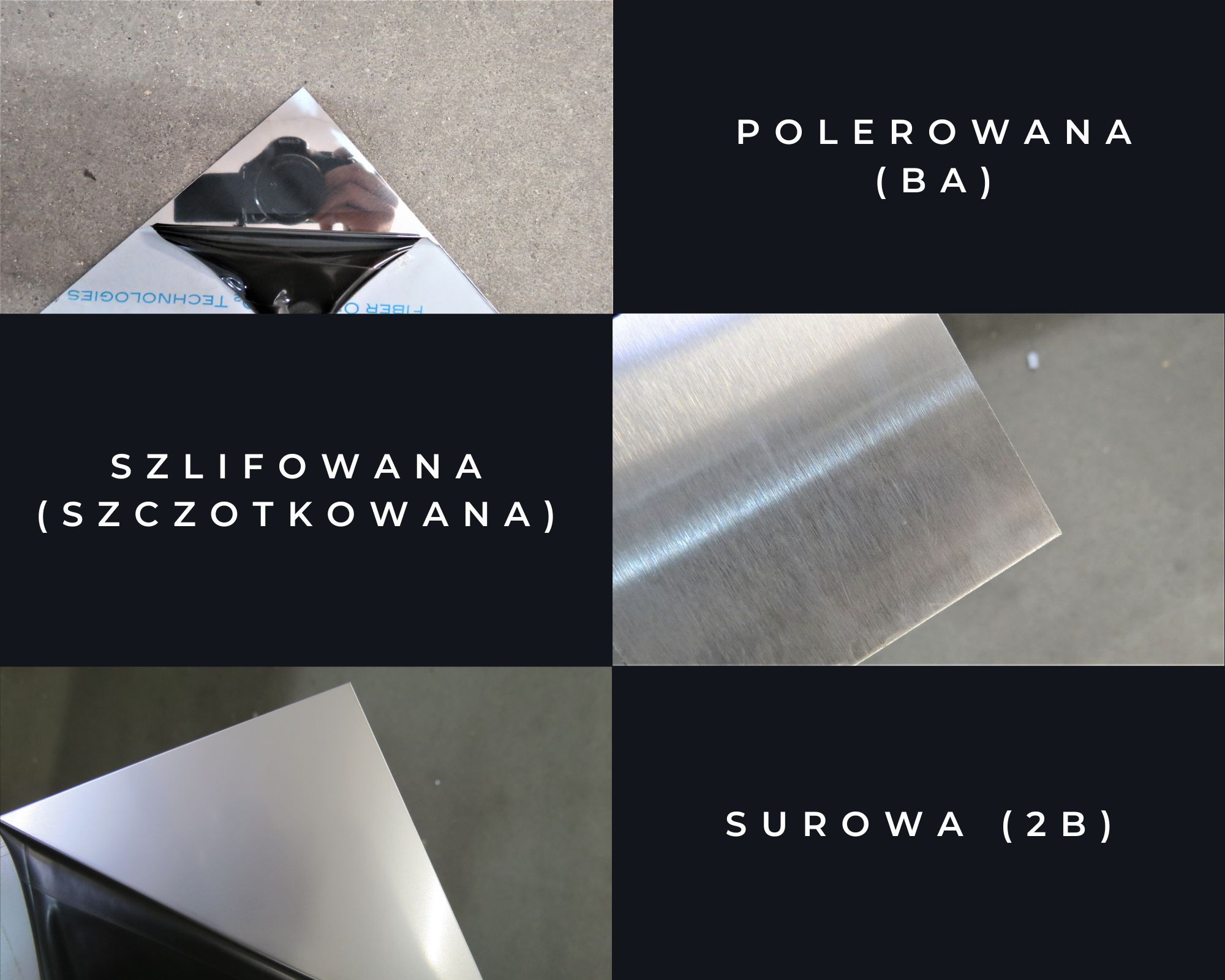
Stainless steel keeps its corrosion resistance after bending. It does, however, need more press force than mild steel, because austenitic grades work harden strongly as they are bent (see below). When bending aluminium where tool marks are a risk, we place a protective film under the sheet for mark-free bending. For a comparison of stainless steel grades, see stainless steel grades; the 2B, 2R (BA) and brushed finishes are explained under surface finishes.
Our bent parts go into machine enclosures, control panels and frames; cladding, window sills and gutters; commercial catering furniture and worktops, refrigeration cabinets and sinks. We also fold U and box sections for tables, as well as guards, brackets, ventilation ducting and balustrade components. One-off jobs for private customers are welcome too.
How to order sheet bending to your drawing
Bending cannot be added to the basket. To order it, use the enquiry form (the ‘Quick quote’ button at the bottom of this page). Describe the part and attach a drawing – up to 5 files in JPG, PNG, PDF, DWG or DXF format, each up to 10 MB. There is also a link to the enquiry form below the cut-to-size sheet calculator. The calculator prices the flat blank only; bending is quoted separately.
- A technical drawing (DXF, DWG or PDF) showing dimensions, bend angles and thickness. A hand sketch with notes is also fine.
- Material: grade (for example 304, 316L or 430) and finish.
- Sheet thickness.
- Quantity.
- Whether your dimensions are external, internal or centreline, and which side is the visible face (more on this under ‘What to check before ordering bending’).
- Whether we supply the material or you provide your own sheet.
No drawings? We can help you prepare them. Whether you supply an uncut sheet or order the material from us, we first cut the blanks on a guillotine or laser – see stainless steel cutting. We then select the punch and die to suit the thickness and radius, and write the CNC program. On a new job we bend a test piece first and check its dimensions. After bending, we inspect the angles and dimensions and check for cracking and distortion.
The price depends on the material, thickness, number of bends and quantity: the larger the batch, the lower the unit price. We usually send the quotation within one working day. Lead times are agreed for each job and depend on the size of the order, our machine workload and material availability. Once you accept the quotation, we issue a pro forma invoice and start work when it has been paid. Prices are in Polish złoty (PLN), and we deliver within Poland only. Payment methods are set out on our payment page.
Folded sections: stainless steel angle, channel and tee
Some folded sections can be added straight to the basket, with no need for a quote. These are angles, channels and tees cold-formed from sheet – made by us, not hot-rolled sections. The table shows size ranges rather than every combination of size and thickness; the items available are listed in each category.
| Folded section | Grade | Dimensions | Finish | Sold by |
|---|---|---|---|---|
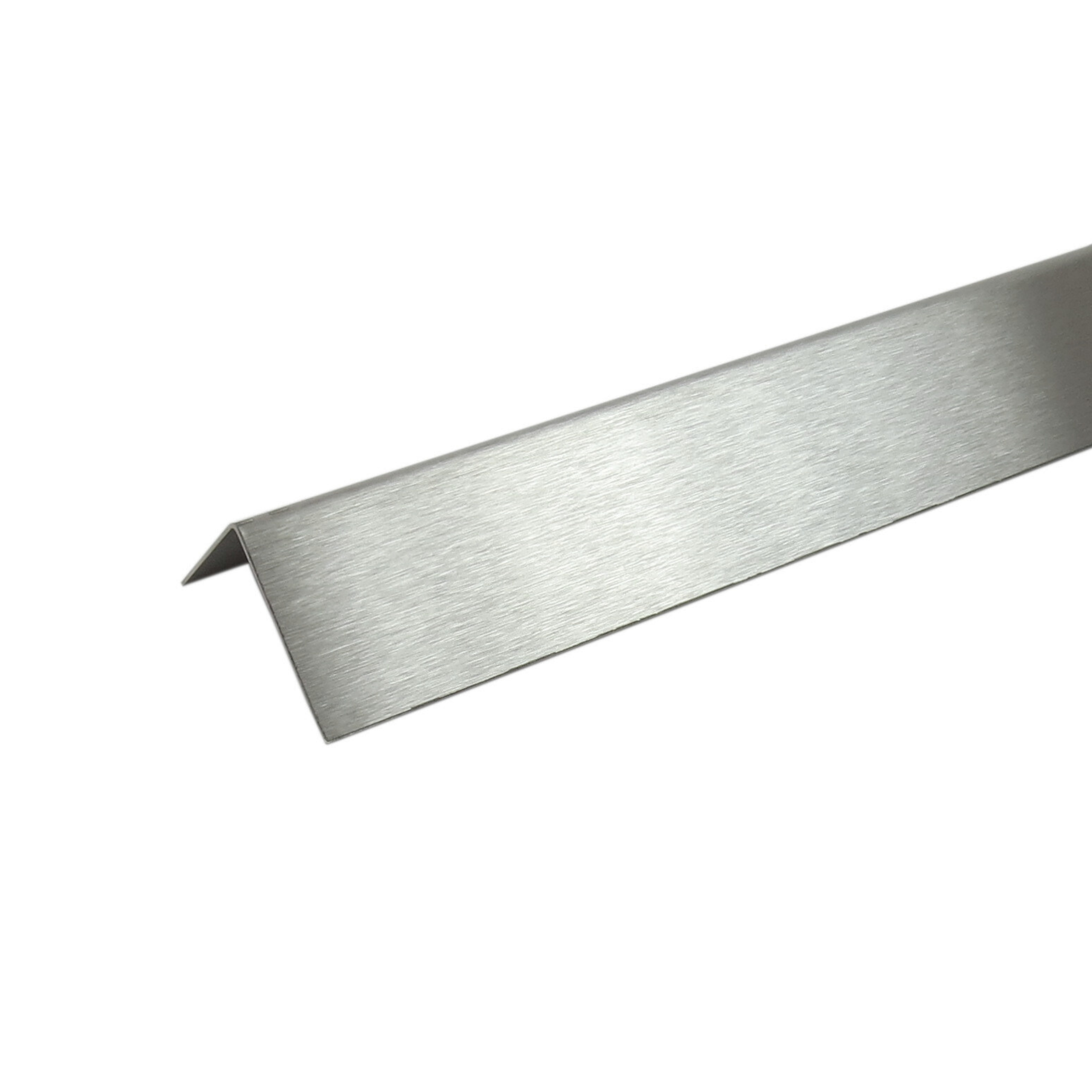
| Folded (cold-formed) stainless steel angle | 304 (1.4301) – most items | legs 25 × 25 to 100 × 100 mm, thickness 0.5–6 mm, 1000 mm lengths | brushed or 2R (BA) (listed in the catalogue as ‘POLER (BA)’); some items have no finish stated | piece |
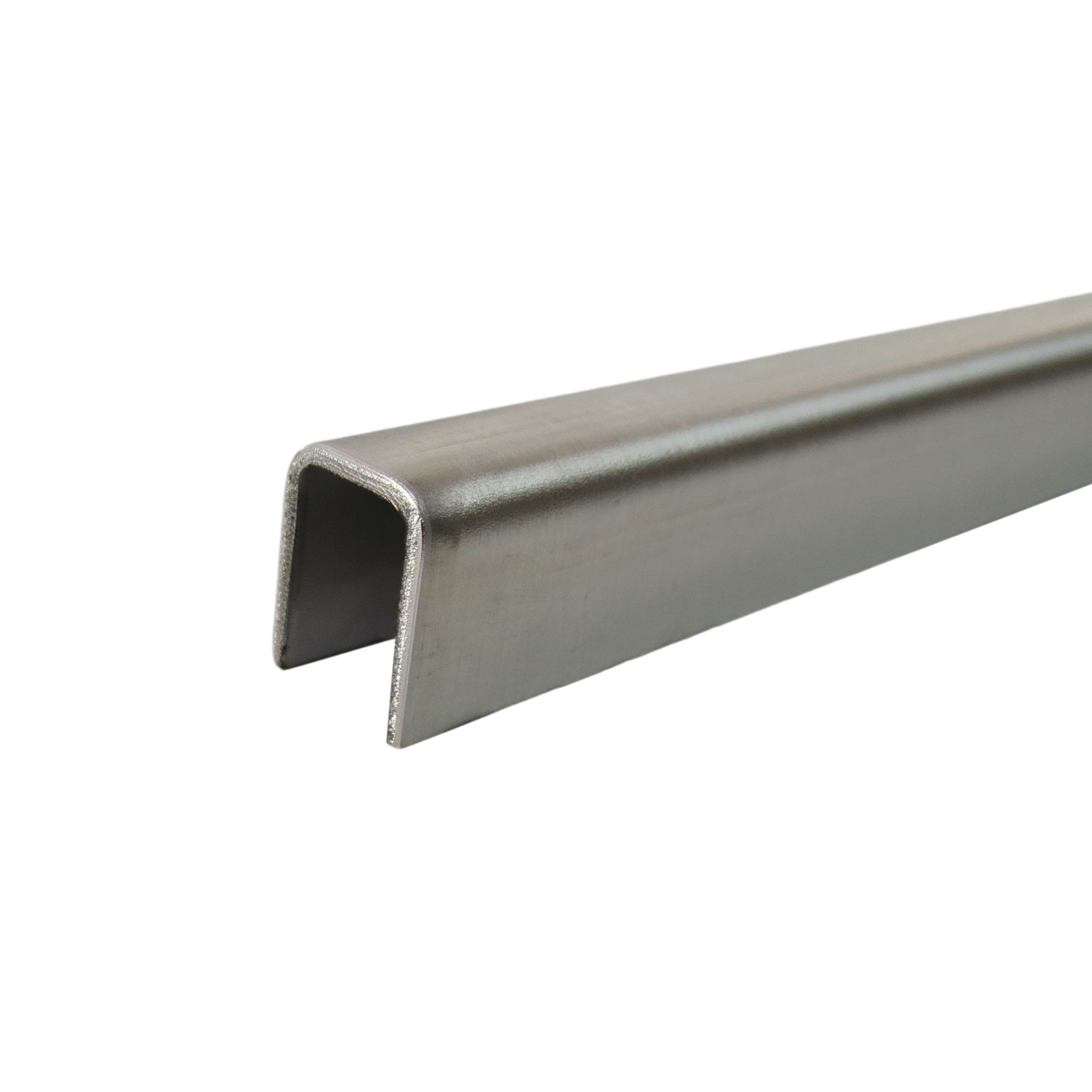
| Folded (cold-formed) stainless steel channel | AISI 304 | 15 × 12 × 15 × 1.5 mm (brushed); 30 × 30 × 30 × 2 mm (2B); external dimensions | brushed or 2B | metre |
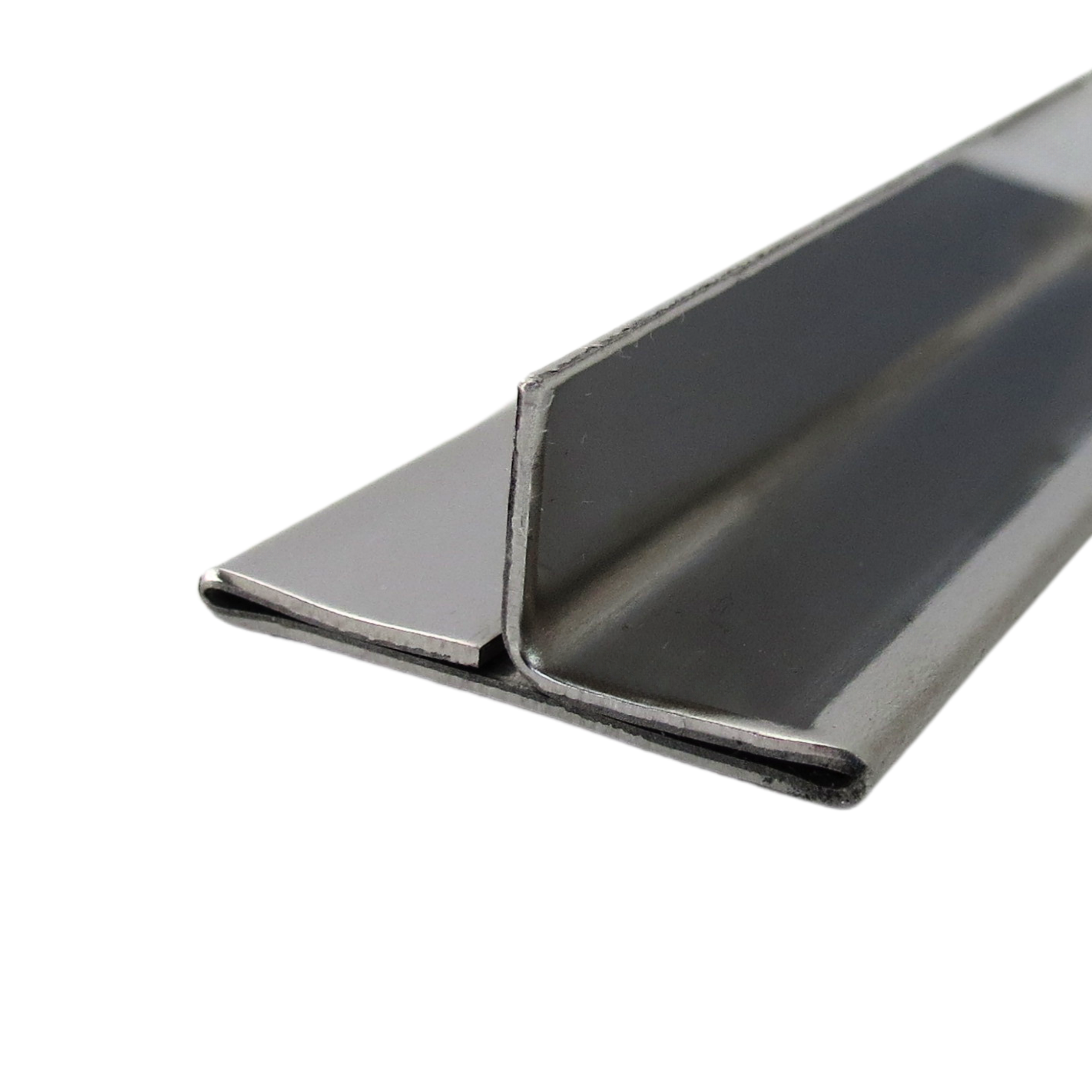
| Folded (cold-formed) stainless steel tee section | 304 (1.4301) | 15 × 15 × 15, 20 × 20 × 20 or 25 × 25 × 25 mm, thickness 0.8 mm, L = 1000 and 2500 mm | 2R (BA) (listed in the catalogue as ‘POLER (BA)’) | piece |
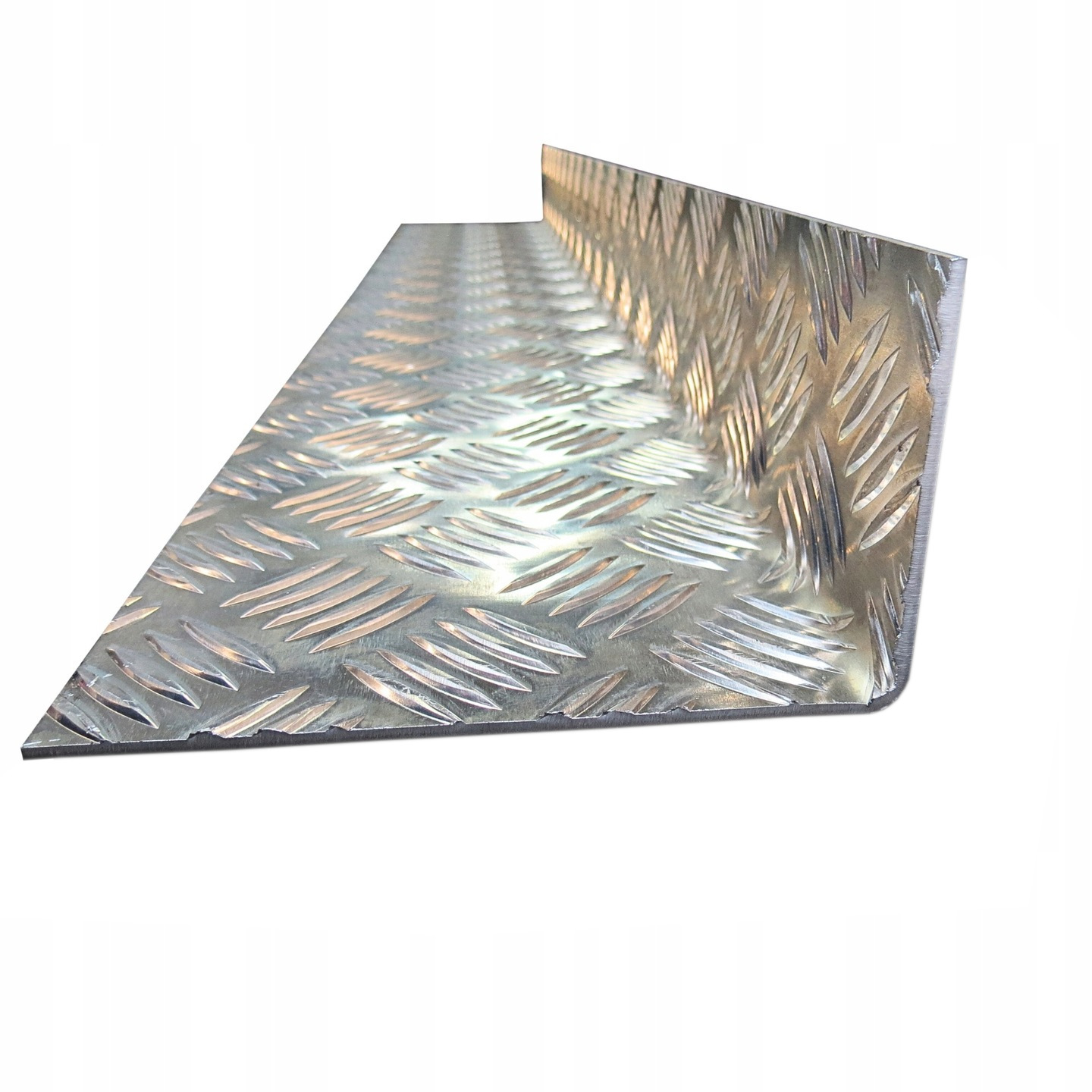
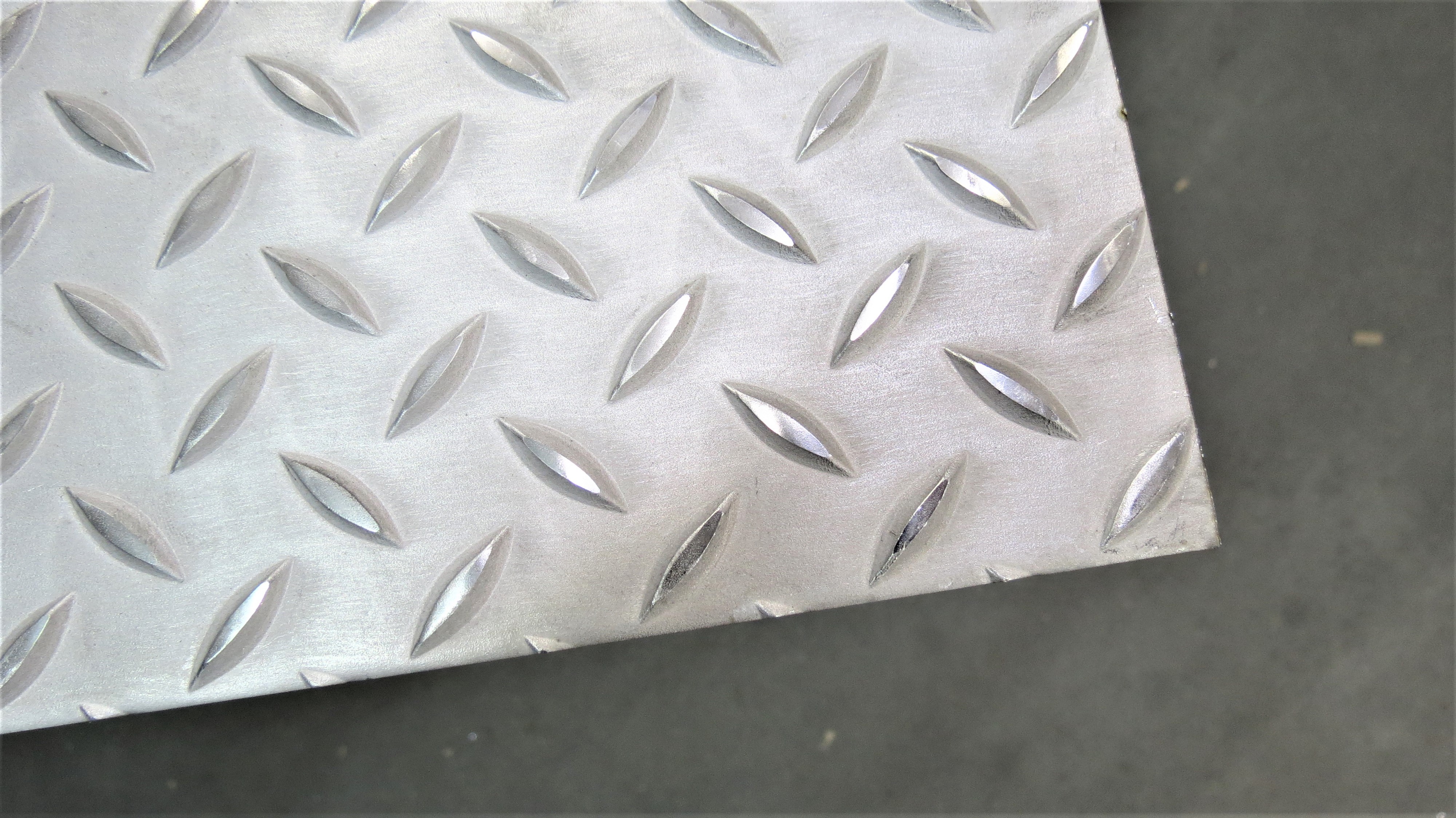
| Folded (cold-formed) aluminium angle | aluminium | legs from 25 × 25 to 120 × 150 mm, including unequal angles, thickness 3 mm | ribbed on the inside | piece |
Our angles have the visible face on the outside of the bend, with protective film on one side. The other, unprotected side may have scratches – bear this in mind if both faces will be on show. Stainless steel angle can also be made in lengths other than 1000 mm: up to 2000 mm in 0.5–0.8 mm thickness and up to 3000 mm in 1–6 mm. Our stainless steel channel is laser cut and CNC folded in-house. The 15 × 12 × 15 channel is made to order in other lengths, up to 1500 mm. For a length not listed in the shop, send us an enquiry. For other products cut to size, see stainless steel cut to size; aluminium angles are covered on our aluminium page.
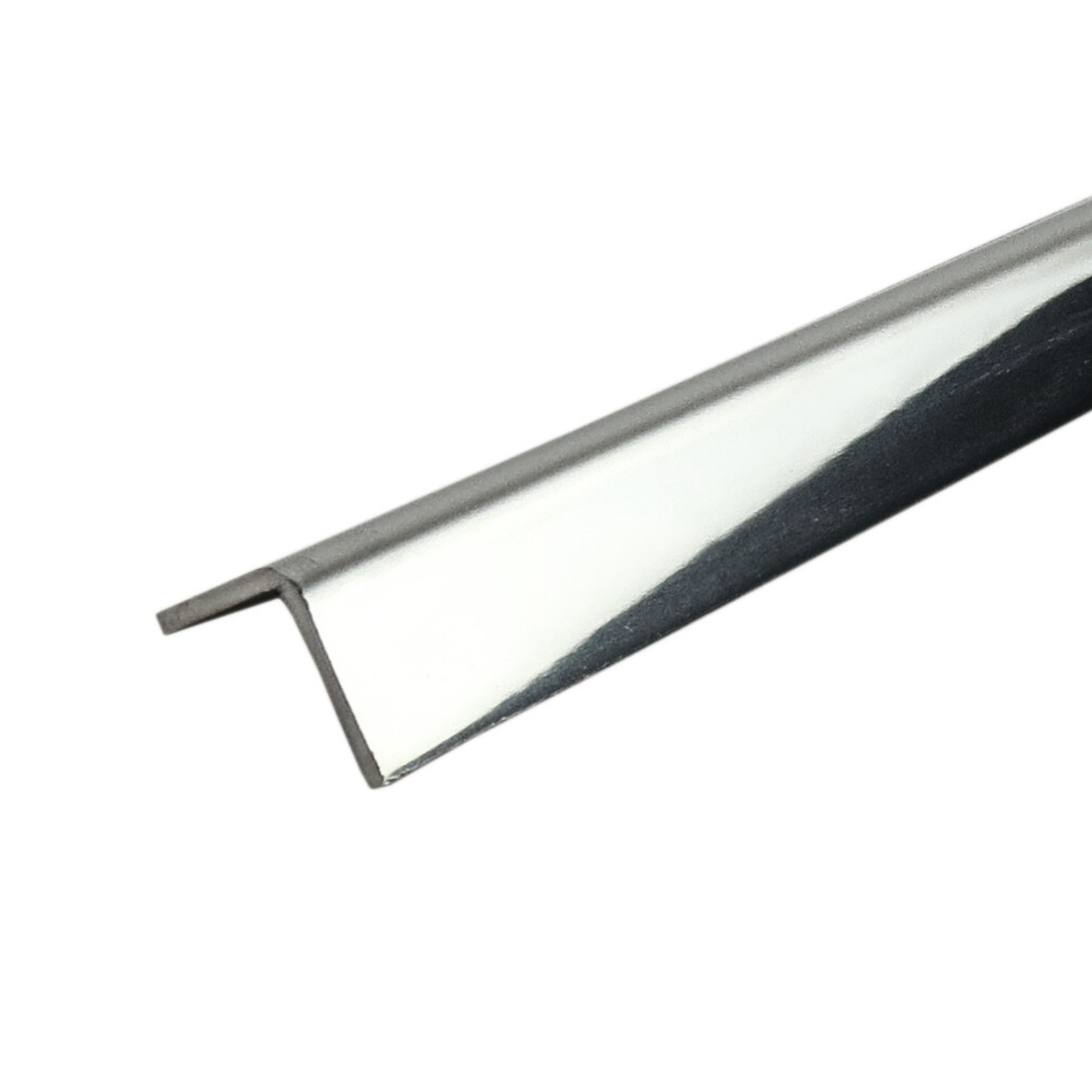
Kątownik nierdzewny zimnogięty 100x100x0,5 poler gat. 304
In stock · 10000 pcs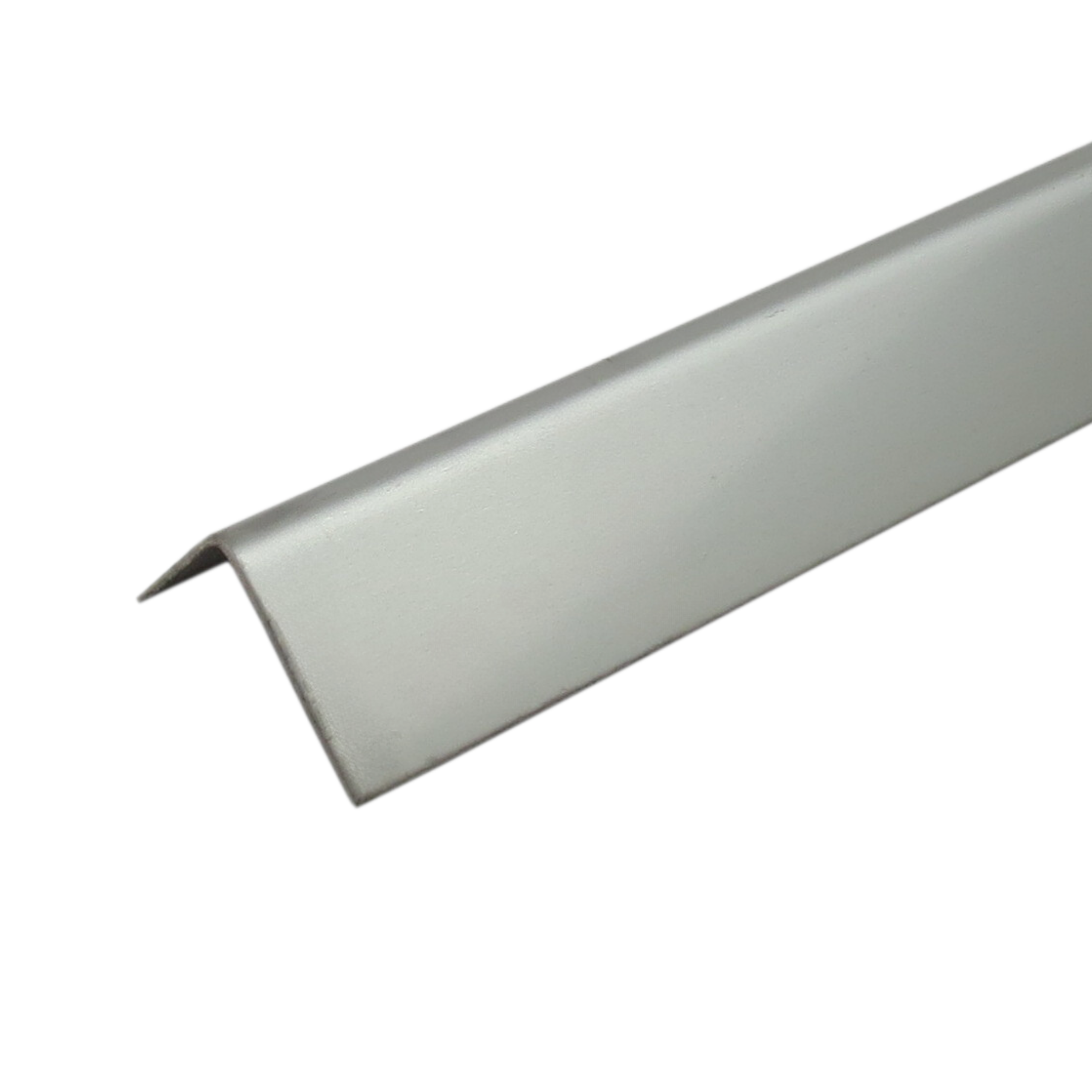
Kątownik nierdzewny zimnogięty 100x100x0,5 surowy gat. 304
In stock · 9993 pcs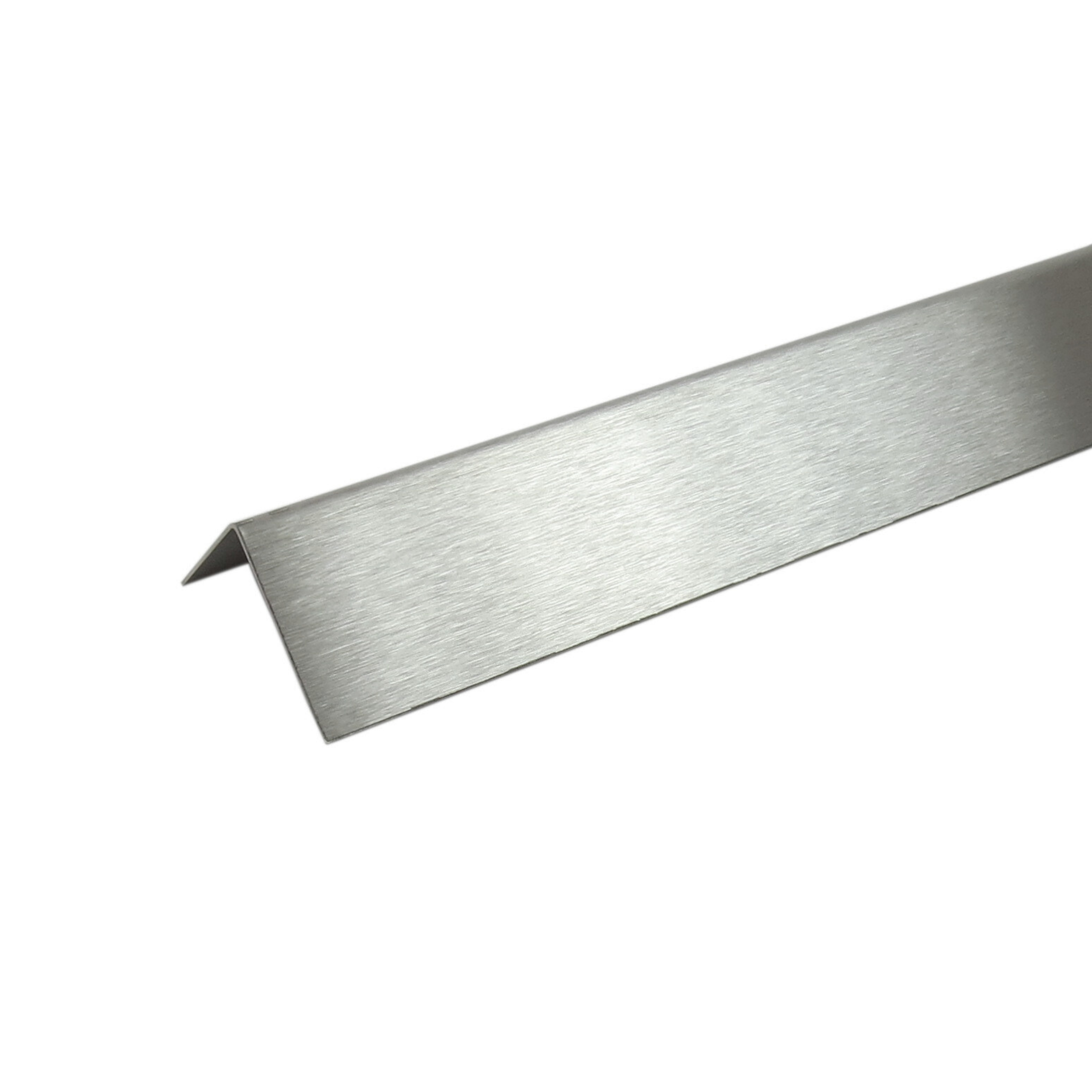
Kątownik nierdzewny zimnogięty 100x100x0,5 szlif gat. 304
In stock · 10000 pcs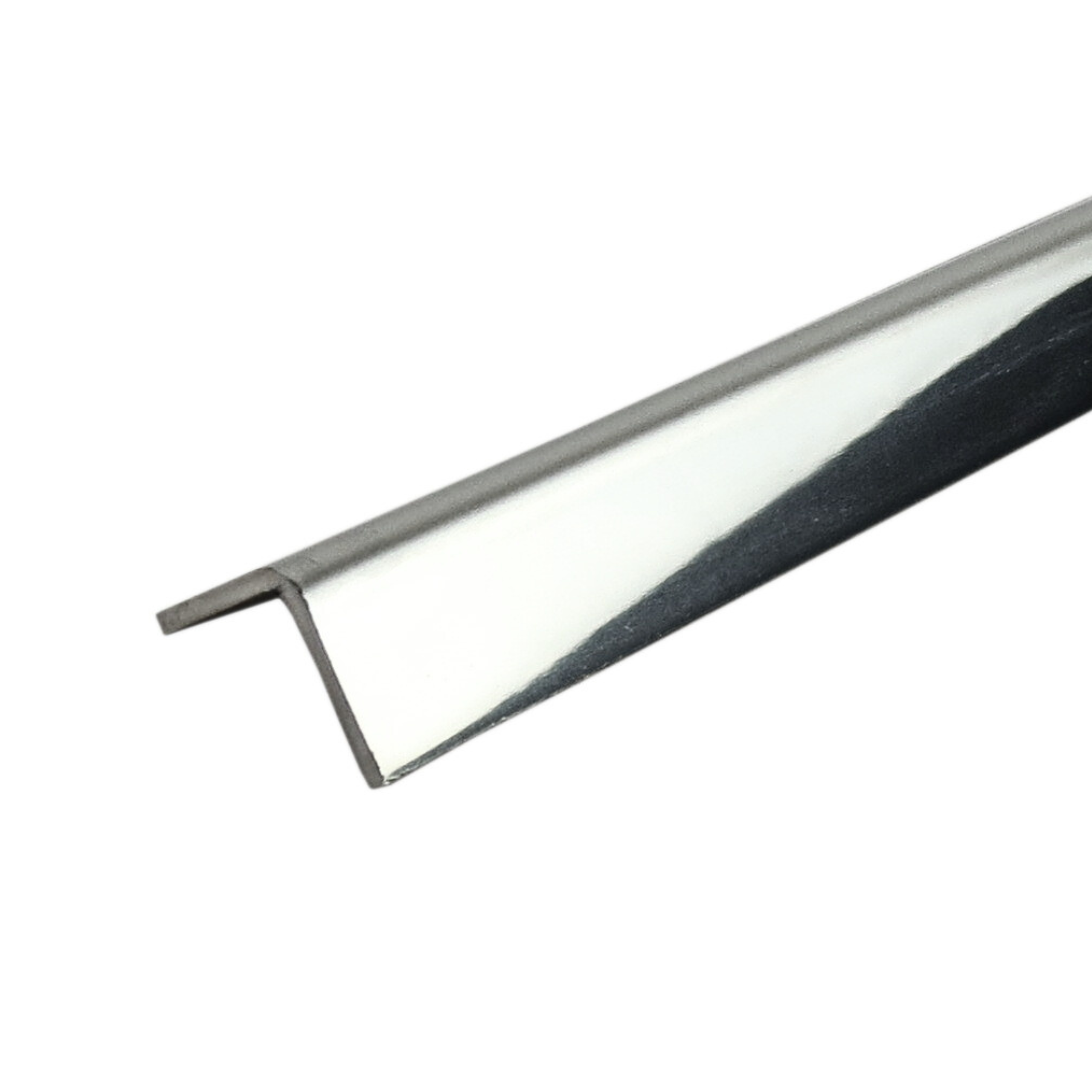
Kątownik nierdzewny zimnogięty 100x100x0,6 poler gat. 304
In stock · 10000 pcs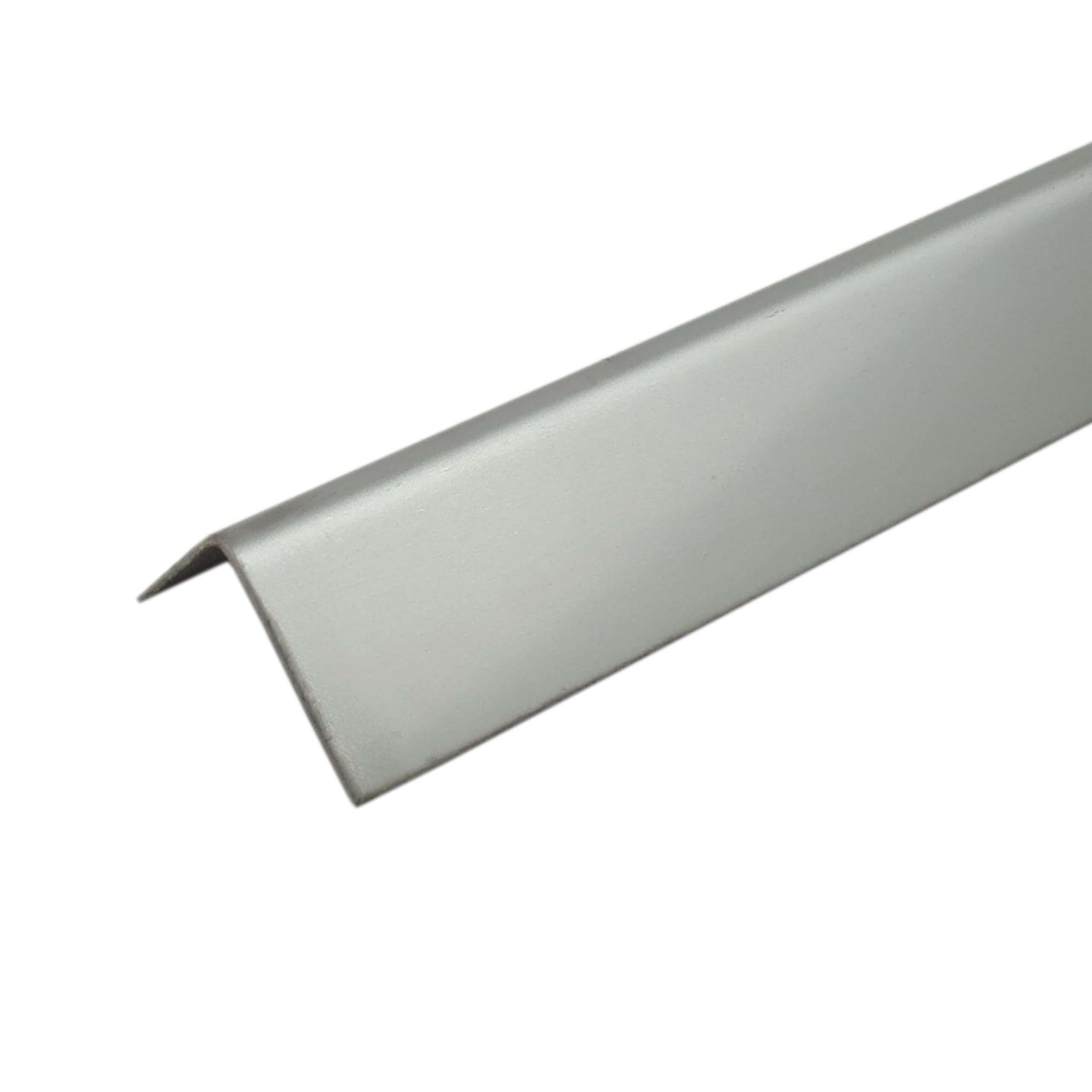
Kątownik nierdzewny zimnogięty 100x100x0,6 surowy gat. 304
In stock · 10000 pcs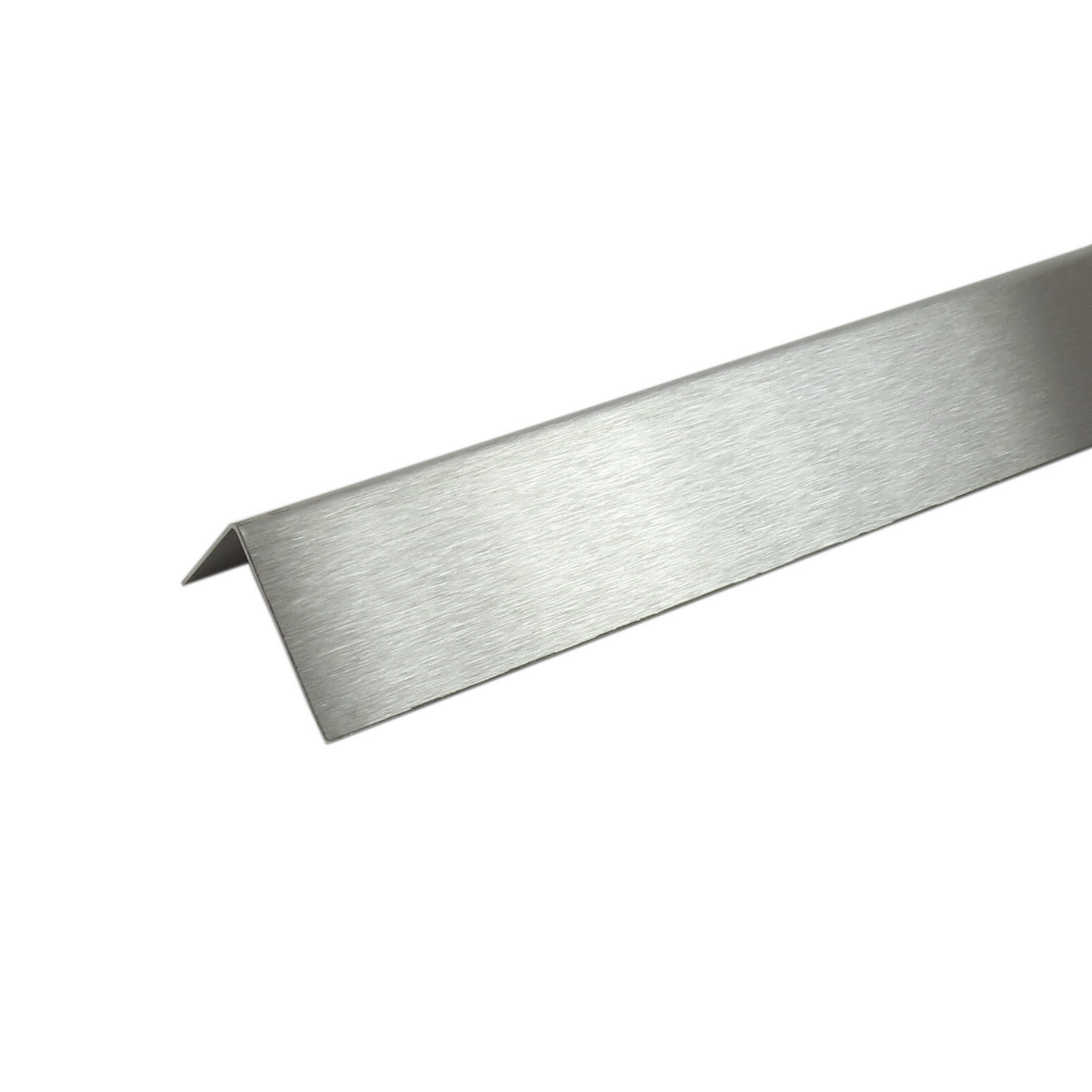
Kątownik nierdzewny zimnogięty 100x100x0,6 szlif gat. 304
In stock · 10000 pcs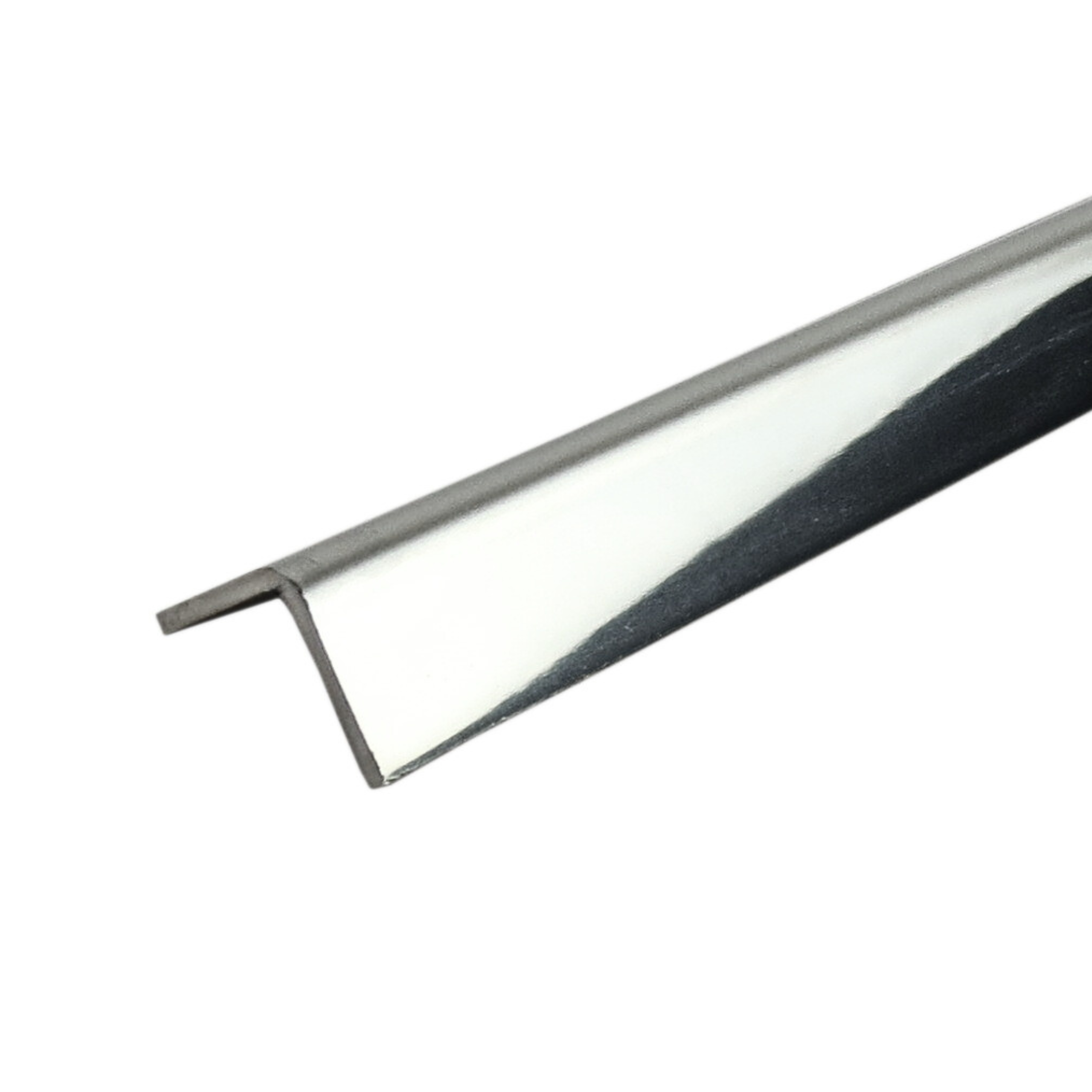
Kątownik nierdzewny zimnogięty 100x100x0,8 poler gat. 304
In stock · 10000 pcs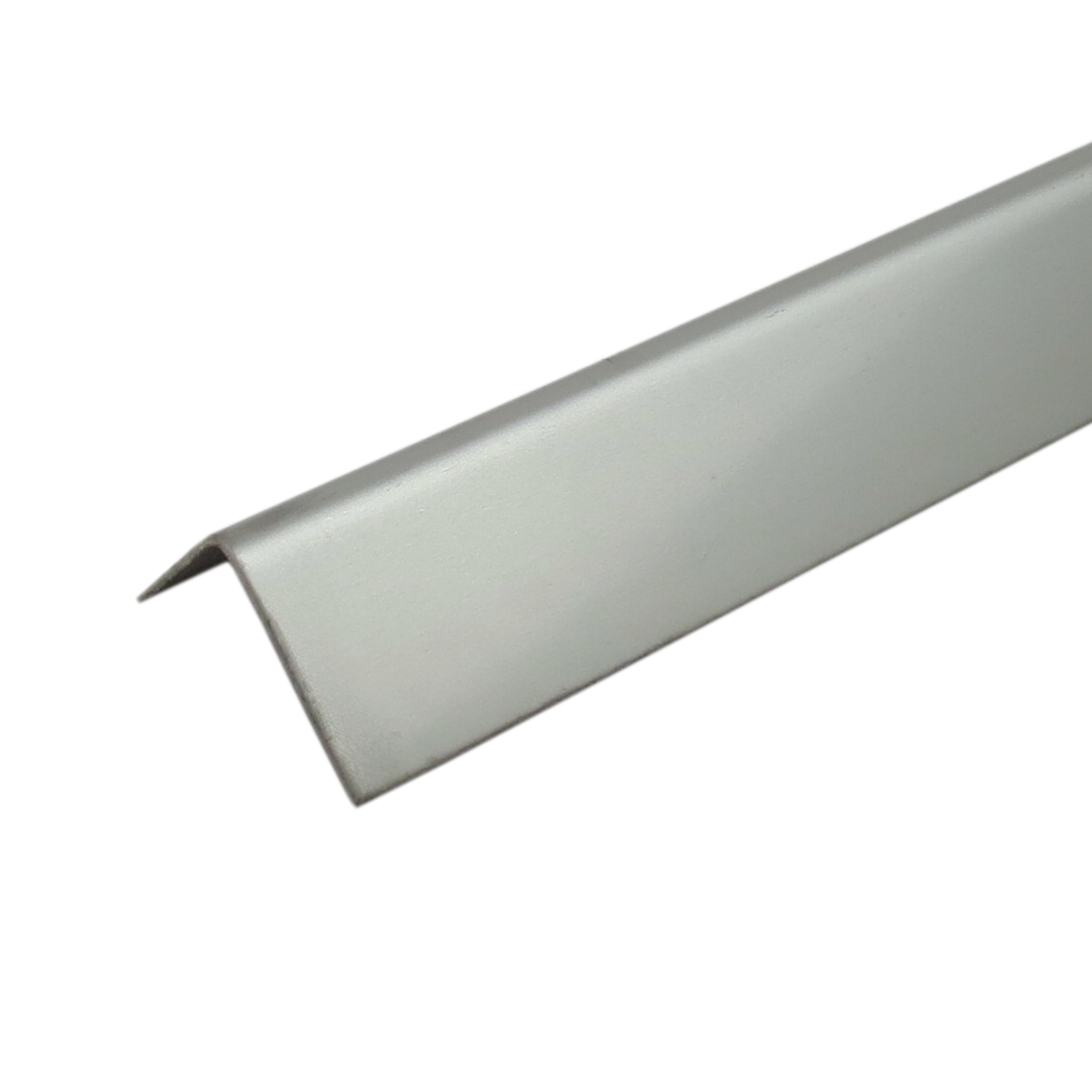
Kątownik nierdzewny zimnogięty 100x100x0,8 surowy gat. 304
In stock · 10000 pcsHow stainless steel bends: grades 304, 316 and 430
Austenitic grades 304 and 316 work harden more strongly during cold forming than non-alloy steels. According to the German stainless steel information centre, Informationsstelle Edelstahl Rostfrei (ISER, Merkblatt 822), the force needed to form them is 50–60% higher than for a non-alloy steel of the same strength. Springback is also greater, so the sheet has to be overbent to compensate. ISER gives the example of annealed 1.5 mm sheet with a 9 mm tool radius: the tool bends to 90°, but after springback the bend angle on the part drops to about 84° and the radius opens up to about 9.7 mm. This is why we bend a test piece before running any new part.
Ferritic grade 430 in the annealed condition bends much like non-alloy steel: it needs less force and springs back less than 304. Its elongation, however, is less than half that of 304, so it needs larger bend radii.
| Grade (cold-rolled sheet up to 8 mm) | 0.2% proof strength Rp0.2, min. | Tensile strength Rm | Elongation A, min. |
|---|---|---|---|
| 1.4301 (304) | 230 MPa | 540–750 MPa | 45% |
| 1.4404 (316L) | 240 MPa | 530–680 MPa | 40% |
| 1.4016 (430) | 260 MPa longitudinal / 280 MPa transverse | 450–600 MPa | 20% |
Values to EN 10088-2, taken from ISER 822 (Table 4). After heavy deformation, austenitic stainless steel may become slightly magnetic, as part of the structure transforms into deformation-induced martensite. This does not affect its corrosion resistance. The surface may roughen at the bend, which matters for parts with a visible brushed or 2R (BA) finish. According to ISER, the edges of stainless steel sheet can also be hemmed through 180°.
Minimum bend radius for stainless steel sheet
The minimum bend radius depends on the grade, the thickness and the rolling direction. For your part, it is set by our production engineer. The figures below are typical values from the technical literature, not the capabilities of our press brake.
| Steel family | Min. inside radius, thickness up to 3 mm | Min. inside radius, thickness over 3 mm |
|---|---|---|
| Austenitic (304, 316) | r = 0 (sharp bend) | r = ½ × thickness |
| Ferritic (430) and duplex | r = 1 × thickness | r = 2 × thickness |
Source: ISER 822. Tighter radii can be achieved when the bend line runs across the rolling direction. For austenitic sheet up to 12 mm, ISER gives a general radius of 0.5 × thickness – and the more heavily the material has been work hardened, the larger the radius needs to be. The British Stainless Steel Association (BSSA) is more cautious: inside radii smaller than the material thickness should not be attempted. Bend radii for steel sheet are covered by DIN 6935, and general tolerances for bent parts are often specified to DIN 6930-2. If you need a particular tolerance class, state it on the drawing.
According to ISER, modern CNC press brakes with angle measurement can achieve an angular accuracy of ±0.3° on cold-rolled sheet – this is what the technology is capable of, not a guaranteed tolerance. The same publication identifies the press brake as the appropriate method for small batches and for sections that would not be economical to roll form. Tooling for stainless steel should be made of hardened steel and kept clean, free of rust and iron particles; otherwise iron contamination can cause rust staining on the part.
What to check before ordering bending
- External, internal or centreline dimensions. Tell us which you are giving. External and internal dimensions differ by the sheet thickness on each leg. Our channels are dimensioned externally.
- Visible face. Mark which side is to be the visible surface: brushed, 2R (BA), film-protected or ribbed. On our angles, the visible face is on the outside of the bend as standard.
- Radius too tight. A radius that is too tight for the grade and thickness risks cracking – particularly in 430.
- Holes close to the bend line. A hole or cut-out too close to the bend will distort. A common rule of thumb: keep it at least a = r + 2 × t from the bend (r – radius, t – thickness). Otherwise, add bend reliefs.
- Tool marks. The punch and die can leave marks and scratches. According to ISER, protective film on the material and soft bottom tools reduce the risk. If the part will be on show, say so in your enquiry.
- Coating applied before bending. Always bend before painting and powder coating – and, for mild steel, before galvanising too. Otherwise the coating cracks at the bends.
After bending: welding and further processing
A part intended for welding or assembly is usually ready straight after bending. Before painting, it may need degreasing. If the part will be handled, it is worth deburring the edges. We can also weld bent parts – see stainless steel welding. For other processing services, just ask – see the list on our services page.
Sheet rolling
Cylinders, cones and curved sheet are a separate service: rolling. We roll stainless steel AISI 304, 304L, 316 and 316L, mild steel S235, S355 and DC01, aluminium and galvanised steel. We confirm the rolling parameters once we have your enquiry. ISER states that the smallest stainless steel cylinder diameter on a three-roll bending machine is about 2 × the diameter of the inner roll (about 1.5 × for non-alloy steel) – a value from the literature, not a parameter of our rolling machine.
Delivery, collection, inspection certificate and business account
We deliver within Poland only, and prices are in Polish złoty (PLN). Collection in person from our branches in Dębica (ul. Rzeszowska 139) and Mielec (ul. Racławicka 6), Poland, is free of charge; orders for collection are paid in advance. See stainless steel in Dębica and stainless steel in Mielec. For bent parts, please arrange delivery in your enquiry. Delivery charges for goods from the shop are listed on our delivery page.
On request, we supply an inspection certificate 3.1 to EN 10204 (often called a mill test certificate) free of charge with goods for which the manufacturer issues one – see 3.1 certificate. Need a document for a bent part? Say so in your enquiry. With a business account, you see prices excl. VAT (Polish VAT at 23%). The business account discount does not apply to cut-to-size products or to services.
Frequently asked questions
What length of stainless steel sheet can you bend?
Up to 3000 mm. Our Durma AD-S30175 CNC press brake has a press force of 175 tonnes. We confirm the maximum thickness for each individual part, so give the grade, thickness and bend length in your enquiry.
How much does stainless steel bending cost, and do you bend one-offs?
Yes – we bend anything from a single piece to production runs. The price depends on the material, thickness, number of bends and quantity: the larger the batch, the lower the unit price. Every job is quoted individually from the drawing, in PLN, usually within one working day, and the lead time is confirmed with the quotation.
Should I dimension a drawing for bending with external or internal dimensions?
Either, as long as you say which: external, internal or centreline. External and internal dimensions differ by the sheet thickness on each leg. Also mark which side is to be the visible surface (brushed, 2R (BA), film). Send a DXF, DWG or PDF drawing showing dimensions, bend angles and thickness, or a hand sketch with notes – up to 5 files of 10 MB each. Add the grade and quantity.
What is the minimum bend radius for 304 stainless steel sheet?
It depends on the grade, the thickness and the rolling direction. According to ISER 822, 304 and 316 up to 3 mm can be bent sharp (over 3 mm: ½ × thickness), while 430 up to 3 mm needs an inside radius equal to the thickness (over 3 mm: 2 × thickness). The BSSA is more cautious: an inside radius no smaller than the material thickness. These are values from the literature – the radius for your part is set by our production engineer.
Does stainless steel rust or become magnetic after bending?
Bending does not reduce the corrosion resistance of stainless steel. Rust staining can appear if iron particles from contaminated tools get onto the surface – which is why tooling for stainless steel must be kept clean. Heavily deformed 304 may become slightly magnetic, but this does not affect its corrosion resistance.
Can I return a part bent to my specifications?
The consumer right of withdrawal does not apply to goods made to the consumer’s specifications. Details are in our terms and conditions and on the returns and complaints page.
Can I supply my own sheet for bending?
Yes. If you supply an uncut sheet, we first cut the blanks from it on a guillotine or laser and then bend them. In your enquiry, give the grade, thickness and finish of the sheet. We bend stainless steel, aluminium (including 5754, PA11) and mild steel S235, S355 and DC01.
Have a drawing, or just an idea for a part? Contact customer service on +48 533 251 824 (Monday to Friday, 7am to 3pm Polish time) or at bok@jannierdzewny.pl. Other details are on our contact page. For sheet to bend, see our range of stainless steel sheet.
Need a different size, a larger quantity or cutting services? Send us an enquiry and we will reply with a quote, usually within one working day.